Freeze Dried Food Storage
If you've ever wondered whether freeze dried food storage actually lives up to the hype, the short answer is yes, but only if you pack it right. Freeze-dried food can last 25 to 30 years on the shelf, but that number depends entirely on how you store it. Get the packaging wrong, and you'll find soggy, spoiled meals long before an emergency.
Get it right, and your pantry is a quiet, reliable safety net.
Manufacturer specifications consistently point to three main enemies: moisture, oxygen, and heat. Per USDA and food-science research, keeping moisture content below 5% is what stops bacteria and mold from waking up. As of 2026, most commercial freeze-dried food arrives in Mylar bags or #10 cans, but those only help if you handle them correctly.
Let's walk through the plan step by step.

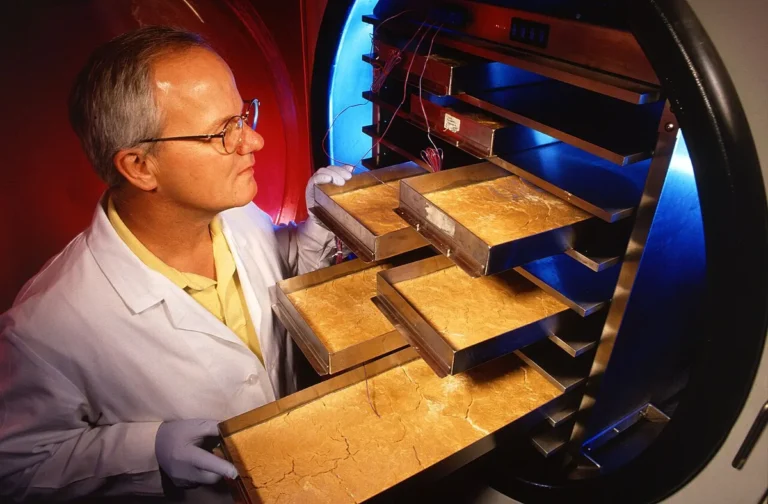
Image source: Wikimedia Commons / U.S. Department of Agriculture
Quick Answer
Freeze dried food storage keeps food edible for decades. Start with dry food, airtight containers, oxygen absorbers, and a cool, dark spot. Match the packaging to how long you plan to store.
That's it.
Start Here: What Are You Storing For?
What are you actually trying to accomplish? That single question determines everything else in your freeze dried food storage setup.
If you're packing meals to eat within a month, say, a few weekends of camping or a busy season where you don't feel like cooking, then airtight Mason jars or even high-quality resealable bags will do. The food won't sit long enough for oxygen to matter much. A cool pantry is fine.
If you're building a long-term emergency reserve, the rules change. That same food needs to survive unpouched for years. Here, you need true oxygen barriers, oxygen absorbers, and a room that stays under 70°F.
The materials cost a bit more, but the payoff is decades of shelf life.
There's also a middle path: a working pantry you rotate while keeping a deep reserve. That's where most families end up. You use freeze-dried foods for normal dinners, then repurchase and restock.
This way, you get convenience without wasting money on bins you never open. The key is to keep the short-term and long-term systems separate, because they demand different packaging.
The Three Variables That Decide Your Storage Setup
Three environmental factors will make or break your freeze dried food storage: moisture, oxygen, and heat. Control these, and shelf life climbs dramatically. Ignore any one of them, and your food starts aging on fast-forward.
| Variable | Ideal Range | What Happens If You Ignore It |
|---|---|---|
| Moisture | Below 5% in the food | Mold, off-flavors, clumping |
| Oxygen | Below 0.5% headspace | Fat rancidity, color loss |
| Temperature | 50–70°F (10–21°C) | Shelf life halves every 18°F rise |
Moisture is the biggest risk. Freeze-dried food has a moisture content around 1% to 4%. Above that, mold and enzymes wake up.
That's why sealing must happen fast, in a low-humidity room. Pack on a dry day or run a dehumidifier beforehand.
Oxygen causes oxidation. It dulls color, ruins fats, and lets aerobic bacteria thrive. Oxygen absorbers handle this, but only if you use the right size and seal the container promptly.
Heat accelerates every chemical reaction. For every 18°F increase, shelf life drops by roughly half. Basements and pantry closets work, but a garage that hits 90°F in August is a food destroyer.
If you wouldn't store fine wine there, don't store freeze-dried food there.
Decision Branch: Match Your Packaging to Your Starting Point
Your starting point determines your next step. Here's the decision tree.
If you have unopened #10 cans or commercial Mylar pouches: Leave them alone. They're already in oxygen-barrier packaging designed to last decades. Just protect them from physical damage and temperature swings.
If you bought freeze-dried food in bulk bags: Repackage immediately. Bulk pouches from commercial suppliers often use light-duty film that isn't built for long-term storage. Transfer contents into Mylar bags or jars with oxygen absorbers.
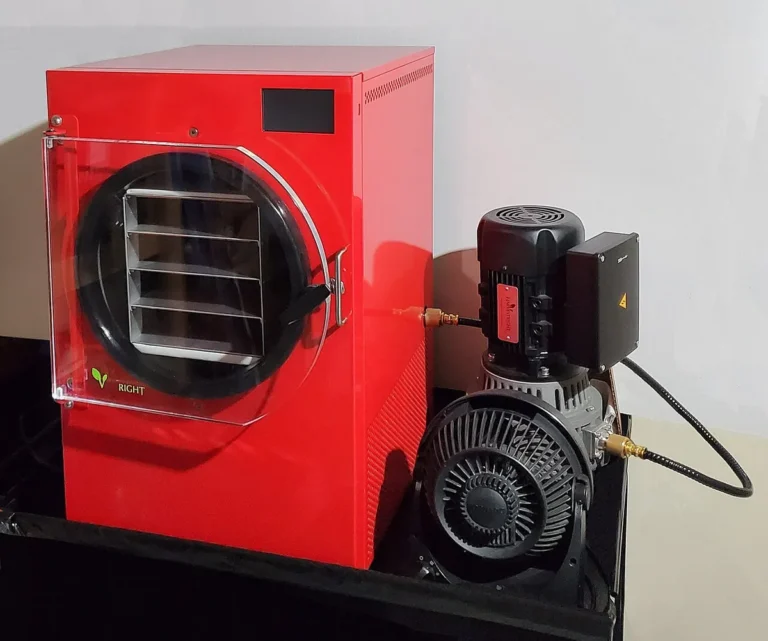
If you run a home freeze dryer: You have the highest stakes. Your food is dry, but the drying cycle leaves it vulnerable to humidity the second you open the chamber. Work fast, in a low-humidity room, and seal within minutes.
If you've opened a #10 can or pouch and used part of it: You have two options. For food you'll eat within a month, a zipper bag with a desiccant pack works fine. For longer, remeasure the food into small Mylar bags with oxygen absorbers.
If you're dealing with store-bought freeze-dried meals: Check the original packaging. If it feels flimsy and crinkly, treat it like bulk food and repack. If it's a sturdy foil pouch, you can trust it for a few years.
How to Pack Freeze-Dried Food: Mylar Bags vs. Mason Jars
This is where the rubber meets the road. Both Mylar bags and Mason jars genuinely work for freeze dried food storage, but they suit different situations. The good news is, the packing process is nearly identical either way.
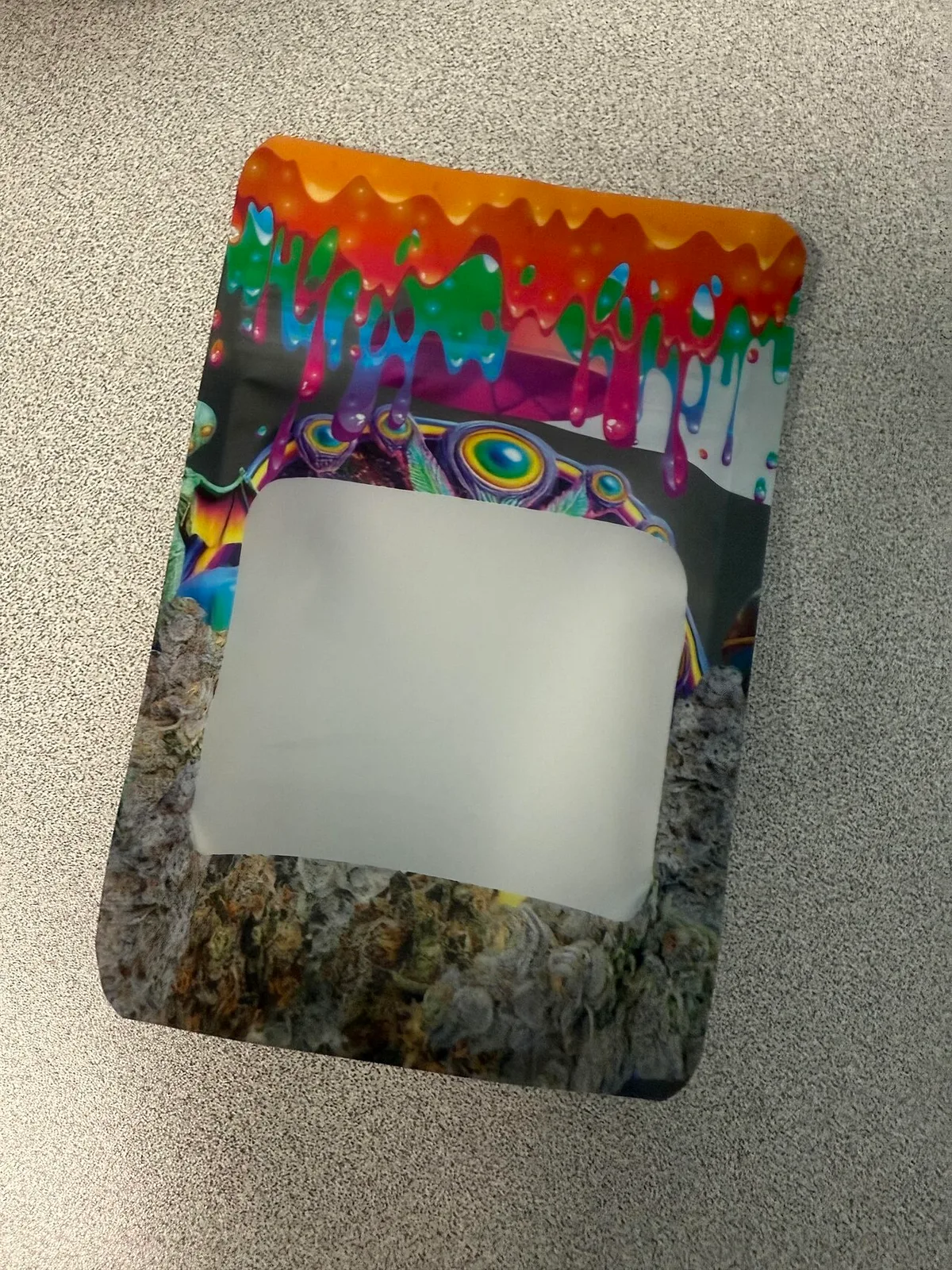
Image source: Wikimedia Commons / Brandmydispollc
Mylar bags are the long-term champion. They're light, stack easily, and provide an excellent oxygen barrier when sealed with a heat sealer. Use them for anything you plan to store beyond a year. Pick a 5-mil or 7-mil bag; anything thinner risks punctures.
Mason jars shine for food you'll eat within six to twelve months. They're reusable, easy to open and close, and you can vacuum-seal them with a jar attachment. The downside is glass breaks, takes up space, and lets in light. Keep them in a dark pantry.
Here's the step-by-step packing process:
- Measure the right oxygen absorber size. Use 300cc for quart jars and 500-1000cc for Mylar bags, depending on bag size.
- Fill the container to within an inch of the top. Leave minimal headspace.
- Drop in the oxygen absorber and seal quickly.
- For Mylar, use a heat sealer. For jars, use a vacuum sealer or tighten the lid immediately.
- Label with contents and date.
The biggest mistake people make is hesitating. Every second the bag sits open, your food is pulling in humid air. Work quickly and keep your supplies organized.
If you're torn between the two containers, our full comparison of Mason jars vs. Mylar for freeze-dried food breaks down every tradeoff, from cost to resealability to storage efficiency. It's a quick read that saves you from buying the wrong stack of supplies.
Mistakes That Quietly Ruin Freeze-Dried Food
Even careful people make these errors. Here's what to avoid, and why.
Packing in a humid room. If the air is above 40% relative humidity, your freeze-dried food will absorb moisture before you ever seal it. Pack on a dry day, or run a dehumidifier a few hours first.
Oxygen absorbers that are too small. A 100cc absorber won't protect a #10 can or a large Mylar bag. Match the absorber to the container volume. Resealable Mylar bags need 300-1000cc depending on size.
Skipping oxygen absorbers for short-term storage. It's fine if you're eating within a month, but longer than that and fats start going rancid. The National Center for Home Food Preservation explains that oxygen absorbers are the only reliable way to maintain low oxygen levels in shelf-stable packaging. Check their guidance online for exact specs.
Trusting flimsy resealable bags. Ziplocs are not oxygen barriers. They're fine for a week, not years.
Not labeling containers. Freeze-dried ground beef and freeze-dried onions look identical in a jar. You won't remember which is which in two years. Label everything with contents and the date you packed it.
Storing in the garage or attic. Temperature swings create condensation inside containers, breaking seals and ruining food. Keep storage in a climate-controlled spot.
Forgetting to check seals. A bag that doesn't hold a tight seal after heat-sealing is a failure. Test by pressing the bag: it should feel rigid, not spongy. If it's spongy, add an oxygen absorber and reseal.
Long-Term Storage Setup: Shelving, Buckets, and Rotation
Once your food is packed, the work shifts to keeping it that way for years. A garage shelf with direct sunlight and summer heat can cut shelf life dramatically. Choose a basement or an interior closet that stays between 50°F and 70°F.
Add a thermometer and humidity gauge to keep an eye on things.
Food-grade buckets act as armor for your Mylar bags and #10 cans. They protect against rodents, impacts, and accidental punctures. You also get easy stacking.
A 5-gallon bucket holds roughly five to six standard Mylar bags. Just avoid restacking heavy items on top.
Labeling and rotation keep everything usable. Write the contents and pack date on each container. Use a permanent marker.
Then follow FIFO: first in, first out. When you use a stored item, shift older stock to the front and place new purchases in the back.
Keep a seasonal inspection checklist. Twice a year, check a few random seals. Press the Mylar bags; they should feel firm, not spongy.
Look at the buckets for cracks or signs of pests. Replace oxygen absorbers if you find a failed seal. The National Center for Home Food Preservation publishes research-backed guidance on shelf-stable food storage, and their temperature and packaging recommendations are the standard reference.
FAQ: Freeze-Dried Food Storage Questions
How long does freeze-dried food really last?
Properly packaged freeze-dried food stores for 25 to 30 years. That's the commonly accepted figure in both commercial and home storage guidance. Realistically, quality fades faster than safety does.
After two decades, texture and flavor may weaken, but the food stays edible if the seal holds.
Do I need oxygen absorbers if I vacuum seal?
Yes, for long-term storage. Vacuum sealing removes most atmospheric oxygen, but it can't remove oxygen trapped inside the food particles. Oxygen absorbers continue working after the seal, pulling out residual oxygen over several hours.
For home freeze-dried food, combine both methods for the best shelf life.
Can I store freeze-dried food in regular glass jars?
Yes, if the jars are truly airtight. Mason jars with new lids work well. Regular reused pasta sauce jars do not.
They rarely seal tight enough to block oxygen. If you use specialty jars with rubber gaskets, replace the seals and test the vacuum with a pull-tab indicator.
How do I know if a seal failed before I need it?
Press the lid or bag surface firmly. A good seal has no give; a failed one feels soft and springs back. For Mylar bags, the material should feel rigid after the oxygen absorber works.
For jars, the lid should be slightly concave. If it pops up and down, the seal is broken.
Can I repack bulk freeze-dried food into smaller portions?
Yes, and it's often a smart move. Large bags lose value the moment you open them repeatedly. Diving into a #10 can every week exposes the food to humidity.
Measure out meal-sized portions into small Mylar bags with oxygen absorbers. This preserves the bulk and gives grab-and-go convenience.
Final Decision Guide: Pick Your Storage Path
A quick flow matches your situation to the right setup. Ask where the food will be eaten. If it's within a month, a sealed jar or zipper bag works.
If it's within a year, Mason jars with oxygen absorbers or small Mylar bags are fine. If you need decades, use #10 cans or thick Mylar bags with oxygen absorbers, stored in a cool room.
Here's a side-by-side reference for common scenarios.
| Scenario | Best Packaging | Oxygen Absorber? | Typical Shelf Life |
|---|---|---|---|
| Eating this month | Zipper bag, jar | No | Up to 1 month |
| Weekly pantry rotation | Mason jar | Yes, 300cc | 6 to 12 months |
| Emergency reserve | Mylar or #10 can | Yes, 500cc+ | 25 to 30 years |
| Repacking opened bulk | Small Mylar bags | Yes | Up to 25 years |
No universal right answer exists. There's only what fits your timeline, space, and budget. Start with the shortest-term system you actually use, then build up a long-term layer as your supply grows.
Follow the moisture, oxygen, and temperature rules, and your freeze-dried food will be there when you need it.
Hayden is a passionate urban farmer dedicated to cultivating sustainable food sources. He specializes in growing tomatoes and basil, and his favorite moments are spent in his garden, basket in hand, harvesting the fruits of his labor.