Freeze Dryer vs Jar Vacuum Sealer
You're not really deciding between a freeze dryer and a jar vacuum sealer. You're deciding what kind of food storage life you want. The two tools sit at opposite ends of the preservation spectrum, one costing a few hundred dollars and the other a few thousand.
That's why the Freeze Dryer vs Jar Vacuum Sealer question gets so much confusion.
As of 2026, most home freeze dryers run between $2,000 and $4,500. A quality jar vacuum sealer kit costs around $30. Per National Center for Home Food Preservation guidelines, neither method replaces pressure canning for low-acid foods.
Let's break down what each one actually does, so you can spend your money on the right tool for your pantry.
Quick Answer
A freeze dryer preserves food for 20 to 25 years. A jar vacuum sealer extends freshness for weeks or months. Freeze drying removes up to 99% of moisture.
Jar vacuum sealing only removes oxygen. If you want long-term emergency storage, choose the freeze dryer. If you want fresh coffee and pantry staples, buy the jar sealer.
Why This Comparison Matters More Than You Think
Most people assume both tools solve the same problem. They don't. A freeze dryer is a food transformation machine.
It changes the structure of food at a molecular level. A jar vacuum sealer is a packaging helper. It keeps what you already have from going stale quickly.
The real difference comes down to your goals. If you're preserving a garden harvest for next winter, the jar sealer won't cut it. If you're just tired of stale coffee and buggy flour, the freeze dryer is massive overkill.
Understanding that distinction saves you thousands of dollars.
Your time, space, and patience matter too. The freeze dryer demands a full day of work and constant attention. The jar sealer finishes in about two minutes.
Budget isn't the only variable, but it's the one most people start with.
What a Freeze Dryer Does (and What It Really Costs to Own)
A home freeze dryer, also called a lyophilizer, freezes food solid, then pulls vacuum to sublimate the ice directly into vapor. The process removes nearly all moisture. That's why freeze-dried strawberries stay crunchy for decades and rehydrate with the same texture and flavor as fresh ones.
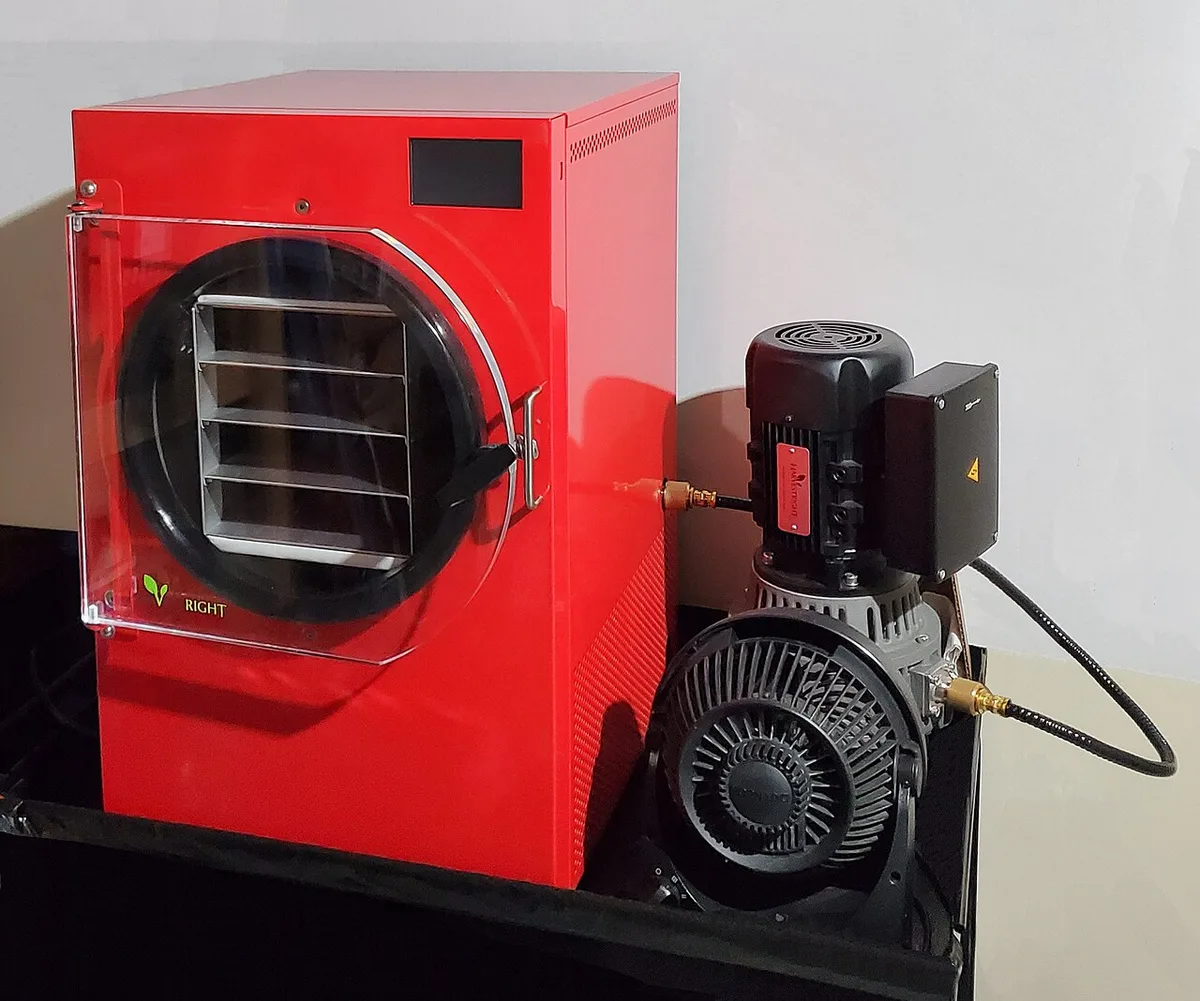
Image source: Wikimedia Commons / JK Nair (CC BY-SA)
The machine zaps nutrients better than any other preserving method. Research shows it retains up to 97% of vitamin content in fresh foods. Dehydrators, canning, and freezing all lose more nutrition.
If you care about long-term food quality, that's a huge advantage.
Now the real cost. The machine itself runs $2,000 to $4,500. You'll also need a dedicated 15-amp circuit, a sturdy countertop, and somewhere for the 100+ pounds unit to live.
Each batch takes 20 to 40 hours and draws about as much power as a small space heater. Factor in $50 to $100 per year for vacuum pump oil and maintenance.
Manufacturer specifications show roughly 300 to 1,500 watts during operation. That's not trivial. Your electric bill will notice.
At the end of a batch, you get food that stores for 25+ years in regular canning jars or Mylar bags. If that payoff matches your goals, the freeze dryer is worth every penny. Wondering whether the whole setup makes sense for your home?
See can you freeze dry at home for a realistic look at the setup process.
What a Jar Vacuum Sealer Does (and Its Real Limits)
A jar vacuum sealer is a simple accessory. You attach a special lid with a vacuum port, place it over a mason jar, and pump out the air. The tool removes oxygen, which slows oxidation, mold growth, and the bugs that get into pantry staples.
It's genuinely great for dry goods. Coffee stays aromatic for weeks. Flour, sugar, rice, cereal, and crackers all stay fresh far longer than they would in a loosely closed jar.
If you bake regularly or buy in bulk, this little tool earns its $30 price tag quickly.
But it has real limits. Vacuum sealing does not kill bacteria. Per USDA guidance, low-acid foods like vegetables and meats still need refrigeration or pressure canning to be safe.
Botulism spores survive without oxygen. That's not a warning to scare you, it's a hard safety fact. Dry goods are fine.
Wet or low-acid foods are not.
Shelf life is modest too. Vacuum-sealed jars keep dry staples fresh for one to two months at room temperature, sometimes up to a year with oxygen absorbers added. Compare that to a freeze dryer's twenty-plus years and you see the gap.
The jar sealer is a freshness tool, not a survival food tool.
Side-by-Side: Shelf Life, Cost, Workflow, and Convenience
Here's the whole comparison laid out without the fluff. Use this table to decide which direction fits your kitchen and your budget.
| Factor | Freeze Dryer | Jar Vacuum Sealer |
|---|---|---|
| Initial cost | $2,000 to $4,500 | $15 to $60 |
| Cost per batch | $2 to $5 in electricity | next to nothing |
| Time per batch | 20 to 40 hours | 1 to 2 minutes |
| Shelf life | 20 to 25 years | 1 to 12 months |
| Nutrition retention | up to 97% | exact same as fresh |
| Works with liquids | yes | no |
| Food weight after | loses most moisture | stays the same |
| Space needed | 100+ lb appliance | fits in a drawer |
| Noise level | 50 to 70 dB | very quiet |
| Skill required | moderate learning curve | beginner-friendly |

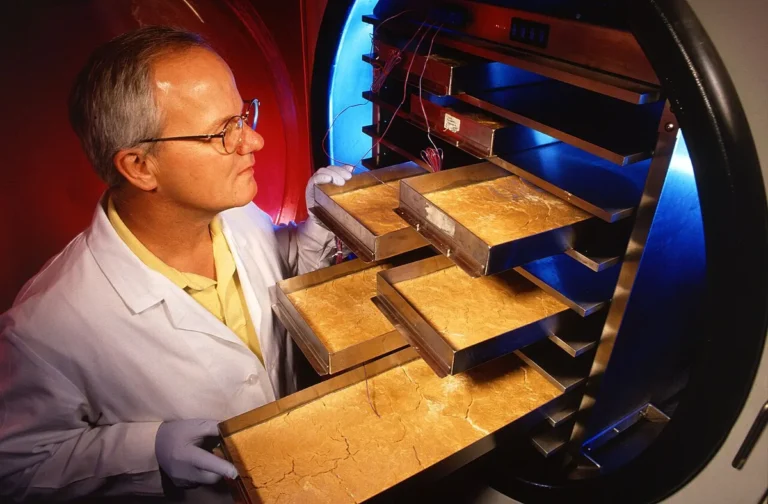
Image source: Wikimedia Commons / U.S. Department of Agriculture
The workflow tells the real story. With a freeze dryer, you prep food, load trays, run the cycle overnight, then test for residual moisture before packaging. It's a project.
With a jar sealer, you screw on the lid, attach the pump, pull vacuum, and you're done. That convenience is why so many households start with the jar sealer and never upgrade.
But remember, you can buy a lot of freeze-dried commercial meals for the price difference. The decision isn't just about capability. It's about whether you want the capability often enough to justify the machine.
A freeze dryer makes sense for gardeners with big harvests. A jar sealer makes sense for almost everyone else.
Which One Is Right for You: Use Cases and Audiences
Let's walk through realistic scenarios and match each one to the right tool.
If you're a homesteader preserving meat, eggs, and dairy, you want the freeze dryer. Those foods can't be safely canned at home without pressure canning equipment. Freeze drying gives you shelf-stable protein without the texture loss.
If you also have a big garden, you'll run batches constantly during harvest season.
If you're a backpacker or camper, the freeze dryer is a game changer. You can make lightweight, nutrient-dense meals for trail days. Freeze-dried chili, scrambled eggs, and fruit rehydrate perfectly in a camp pot.
No other home method produces that quality of portable food.
If you're a busy parent who just wants to waste less food, get the jar vacuum sealer. You'll seal leftover produce, cheese, and dry cereals. The simplicity means you'll actually use it every single day.
That daily use delivers more practical value than an expensive machine you run once a month.
Preppers and emergency storage planners should seriously consider the freeze dryer. Long-term food independence requires it. But if your budget says no, a jar sealer and canned goods still build a decent pantry.
The freeze dryer is a commitment. The jar sealer is an entry point. And if you've wondered what foods freeze dry poorly, check can you freeze dry anything before buying.
Common Mistakes to Avoid With Both Methods
The biggest jar sealer mistake is trying to vacuum seal wet foods. Wet or low-acid foods stored without refrigeration create a botulism risk, per USDA guidance. Keep jar vacuum sealing to dry pantry goods.
Overpacking jars is another classic failure. It leaves no headroom for the vacuum. The lid pops loose and air slips right back in.
Fill jars two-thirds full for a reliable seal.
For freeze dryers, moisture testing trips up beginners. Skipping the residual moisture check means mold growth months later. Always test a few samples before packaging your batch.
Skipping pump maintenance also kills freeze dryers. The vacuum pump needs regular oil changes. Aggregate reviews cite pump failure as the top service complaint.
That repair bill can reach hundreds of dollars.
Food prep matters too. Avocados freeze dry poorly unless you mash them flat first. Learn the right prep for tricky foods before committing a whole batch.
See can you freeze dry avocados for the details.
Frequently Asked Questions
Can a jar vacuum sealer replace a freeze dryer?
No. A jar vacuum sealer only removes oxygen. Freeze drying removes nearly all moisture, which stops bacterial and enzyme activity.
For shelf life beyond a few months, you need a freeze dryer or another preservation method like canning.
How long do vacuum-sealed jars stay fresh?
Dry staples last one to two months at room temperature. With oxygen absorbers, some foods last up to a year in a cool, dark place. Flavor and texture decline well before spoilage.
For daily freshness, that's usually fine.
Is a home freeze dryer worth the cost?
Only if you use it regularly. Owners typically run batches for garden harvests, meat, or emergency food supplies. If you're preserving less than a few hundred pounds of food annually, a jar sealer makes more financial sense.
Can I make camping meals with a freeze dryer?
Yes. Freeze-dried meals rehydrate well and weigh very little. Make chili, scrambled eggs, or fruit for trail use.
You'll save money compared to store-bought backpacking meals, though the upfront cost takes a while to break even.
Final Verdict: The Smart Buying Decision
The right choice comes down to your food storage goal. If you want stability measured in decades, the freeze dryer wins clearly. If you want to stop wasting coffee and rice, the jar sealer is the practical buy.
Here's a simple rule of thumb. If you can afford the freeze dryer and have the space, it's the superior tool for serious preservation. If you're new to food storage or working with a small budget, buy a jar sealer first.
Use it for a month, then decide if you truly need the bigger machine.
For most households, the jar vacuum sealer delivers most of the daily convenience at a tiny fraction of the cost. The freeze dryer becomes essential only when you're preserving meat, eggs, or bulk harvests. Start small, see how your habits evolve, and upgrade only when your jars outgrow you.

Hayden is a passionate urban farmer dedicated to cultivating sustainable food sources. He specializes in growing tomatoes and basil, and his favorite moments are spent in his garden, basket in hand, harvesting the fruits of his labor.