8 Beautiful ZZ Plant Varieties to Grow Indoors
Botanical Horticulturist & Food Preservation Specialist at Brittle Bloom · Certified Master Gardener & Master Food Preserver · 12+ Years in Plant Propagation & Food Preservation
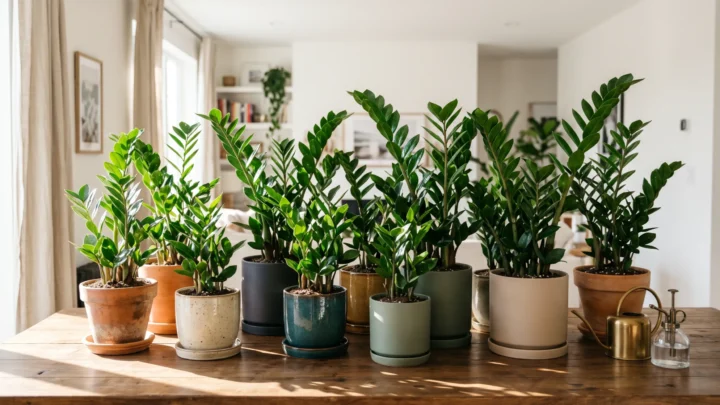
Walk into any garden centre and the ZZ plant looks like one plant. Look closer and you will find near-black leaves, pint-sized dwarfs and foliage that changes colour as it matures.
This guide walks you through eight ZZ plant varieties, so you can see how each differs in size, colour and personality before you buy. We start with the widely available classics, move through dark and compact types, and finish with the rarer colour-shifting and variegated selections.
One honest note: every ZZ plant belongs to the same species, Zamioculcas zamiifolia, so the care is much the same across all of them. What changes is the look, the final size and how easy each one is to find.
8 Beautiful ZZ Plant Varieties to Grow Indoors
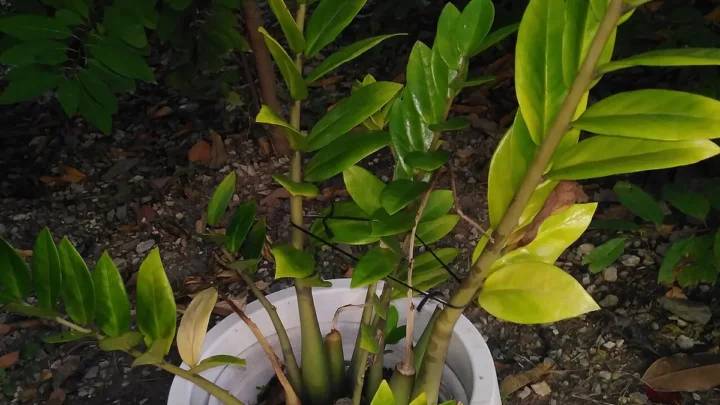
1. Classic Green ZZ Plant (Zamioculcas zamiifolia)
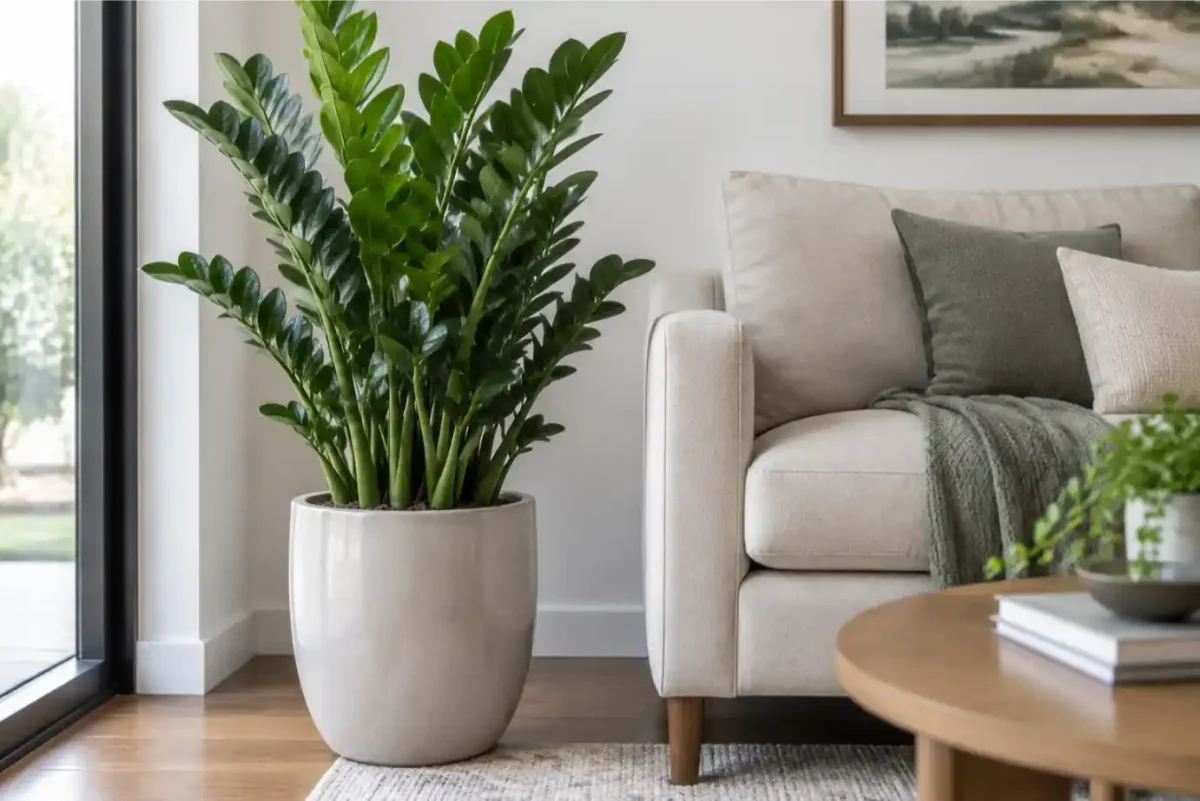
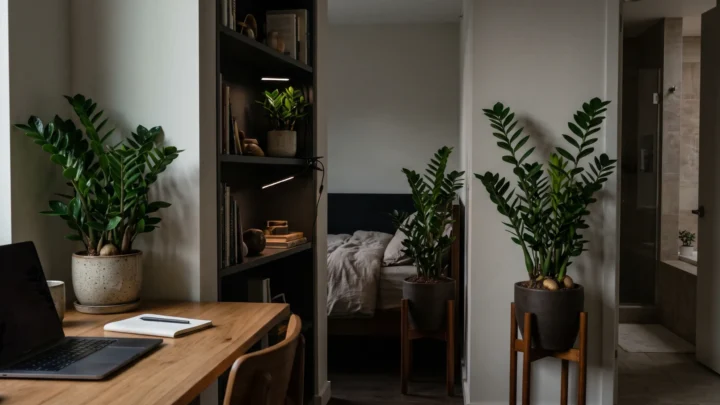
The original ZZ plant has glossy, deep green leaflets arranged along upright, arching stems. It is the form most people picture, and the one you will find most easily. According to Clemson Cooperative Extension, it grows upright and can reach 3 to 4 feet tall.
Best for: Beginners, offices, and larger floor spaces that need a bold, low-effort plant.
Practical details: Cost level is low. It does well in bright, indirect light and tolerates lower light. Water only after the soil has dried out, because the plant stores water in its thick underground rhizomes.
Quick tip: The most common mistake is overwatering. If in doubt, wait another week.
2. Lucky Classic ZZ Plant
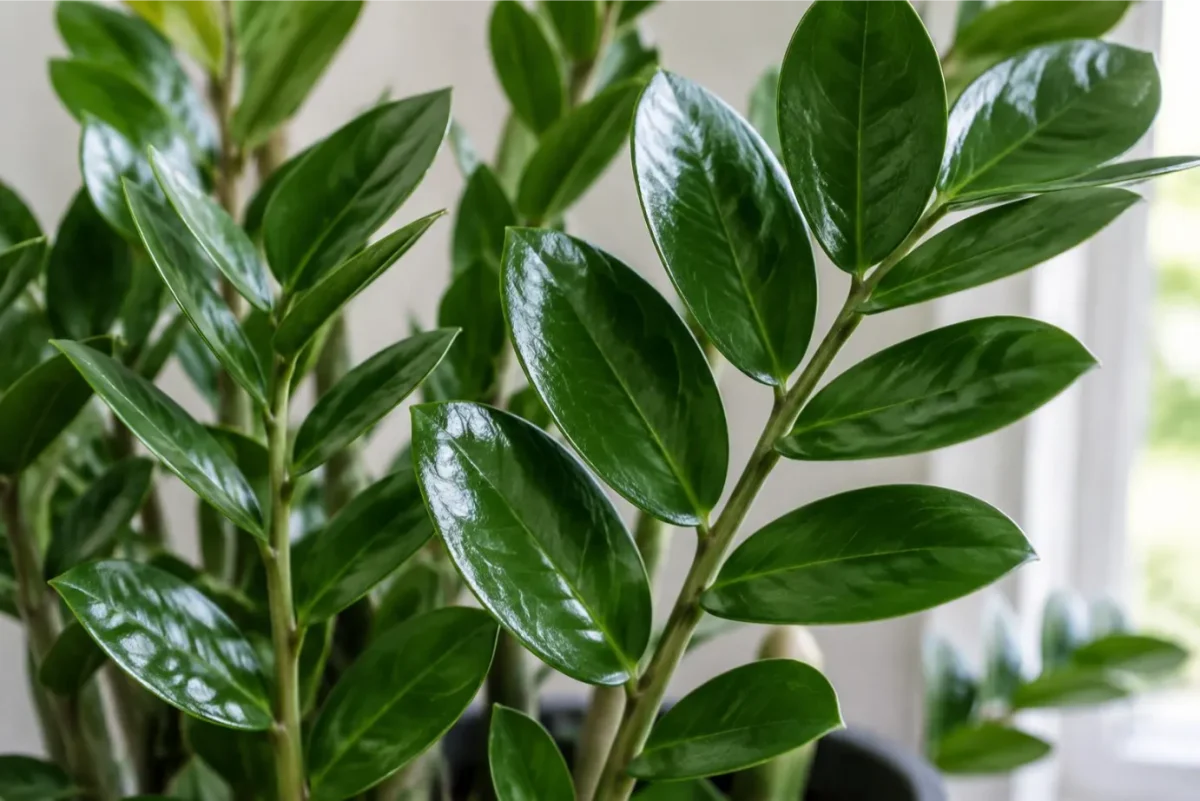
‘Lucky Classic’ is sold as a classic-style ZZ with glossy, dark green leaves and a vertical growth habit.
It is widely sold in the trade under “Lucky” plant labels. Information on this cultivar is thinner than for others on the list, so treat it as a close cousin of the standard ZZ rather than a dramatically different plant.
Best for: Shoppers who want a standard-looking ZZ and may find it under this label.
Practical details: Cost level is low. Care matches the classic: bright indirect light, infrequent watering, and a well-draining potting mix.
Quick tip: Labels vary between nurseries, so check the botanical name on the tag and ask the seller about size before you buy.
3. Raven ZZ Plant

The ‘Raven’ is the showstopper. New leaves emerge green and then mature to an almost black, deep purple-black shade.
It grows more slowly than the classic and reaches about 2.5 feet at most. You may also see it sold as ‘Dowon’, which is the same plant under another name.
Best for: Modern interiors, contrast against light walls, and plant lovers who want drama without fuss.
Practical details: Cost level is medium. Give it bright, indirect light for the best colour, and keep to the same dry-between-waterings routine.
Quick tip: Expect the colour to develop over time. A young green leaf is not a sign that you bought the wrong plant, and “Black ZZ” is not a separate species.
4. Zenzi ZZ Plant

‘Zenzi’ is a dwarf ZZ with dark green leaves that are slightly smaller than the classic. Clemson Extension notes it reaches a maximum of 10 to 12 inches. Its leaflets are denser and appear to curl, giving it a tidy, bushy look.
Best for: Desks, shelves, windowsills and small apartments.
Practical details: Cost level is low to medium. Light and watering needs are the same as other ZZ types, but its small pot dries out faster, so check the soil with a finger first.
Quick tip: Don’t expect fast growth. Compact does not mean quick, and repotting is rarely needed.
5. Zamicro ZZ Plant
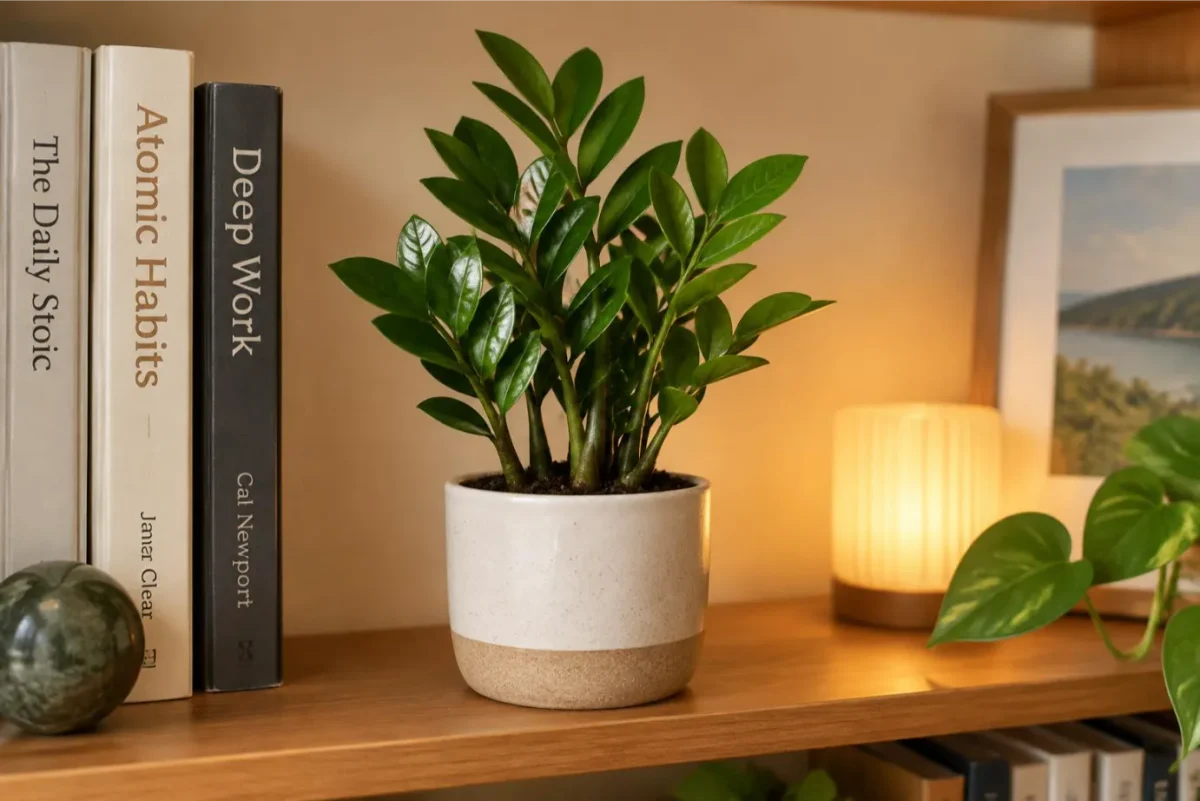
‘Zamicro’ is another compact selection, with glossy, dark green leaves that are smaller than a standard ZZ’s and a smaller overall habit.
Some sources describe it as a smaller-leaflet form of the standard plant. Because descriptions differ between growers, look at the plant in person or check the grower’s size notes if exact dimensions matter to you.
Best for: Small spaces, mini plant collections and gifts.
Practical details: Cost level is low to medium. It needs the same bright-indirect-light, water-sparingly care as the larger types.
Quick tip: If you want a dwarf, compare ‘Zamicro’ and ‘Zenzi’ side by side before buying. They are often confused on plant tags.
6. Zamicro Black (Dark Zamicro) ZZ Plant

This is a small, dark-leaved selection that combines the compact size of ‘Zamicro’ with near-black foliage similar to ‘Raven’. Information on it comes mainly from nurseries and retailers rather than extension or botanical sources, so check the seller’s description carefully.
Best for: Collectors who want a mini dark plant.
Practical details: Cost level is medium to high, depending on availability. Treat it like the other ZZ types: indirect light and dry-between-waterings.
Quick tip: Buy from a seller who shows photos of the actual plant, since colour descriptions vary between listings.
7. Chameleon ZZ Plant
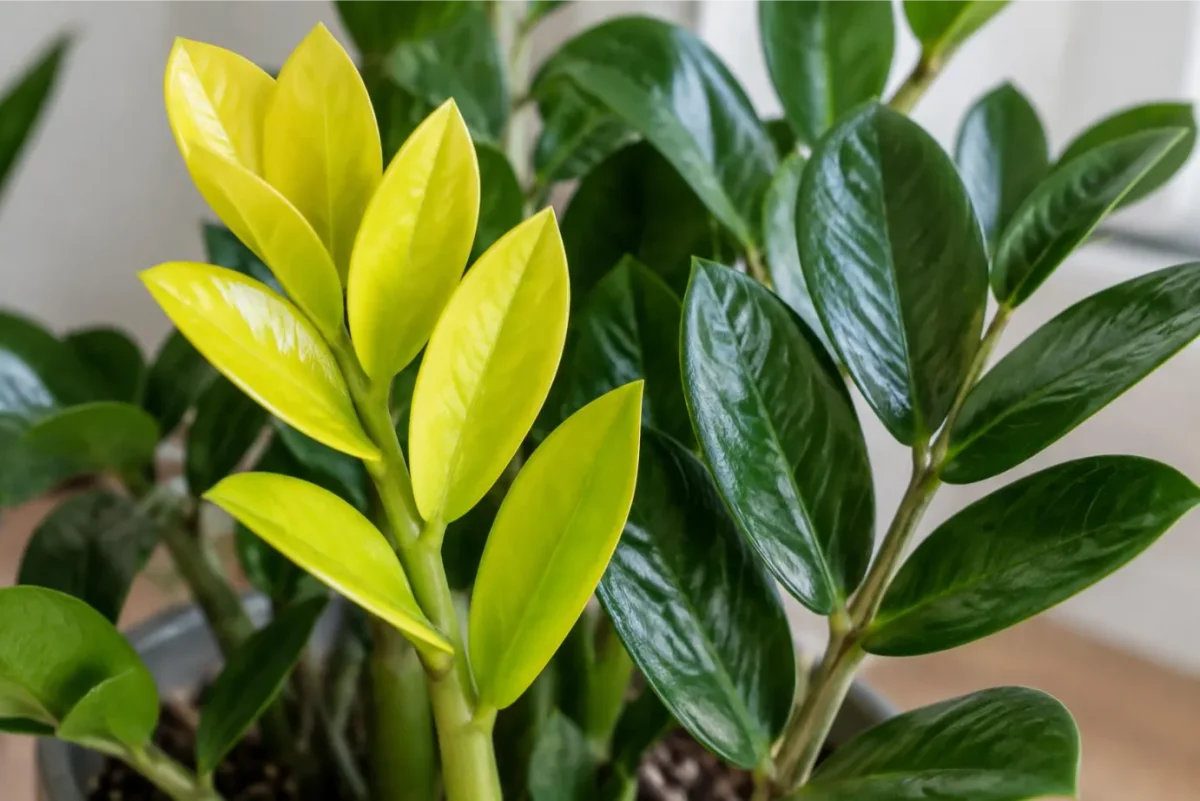
‘Chameleon’ is the colour-shifting ZZ. Clemson Extension notes its new leaves emerge yellow and then mature to dark green, and that it can grow up to 4 feet tall. Other growers describe it as mottled or variegated, and give smaller height ranges, so descriptions of this cultivar vary between sources.
Best for: Plant lovers who enjoy watching a plant change as it grows.
Practical details: Cost level is medium. Bright, indirect light helps bring out the contrast between new and mature growth.
Quick tip: Ask the seller what to expect for size and colour, because sources do not fully agree on it.
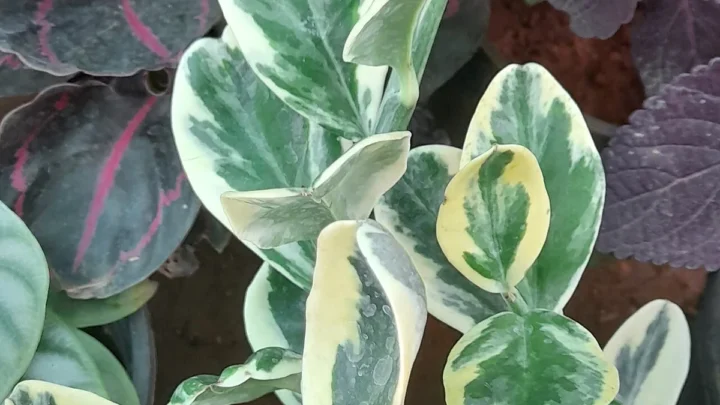
8. Variegated ZZ Plant
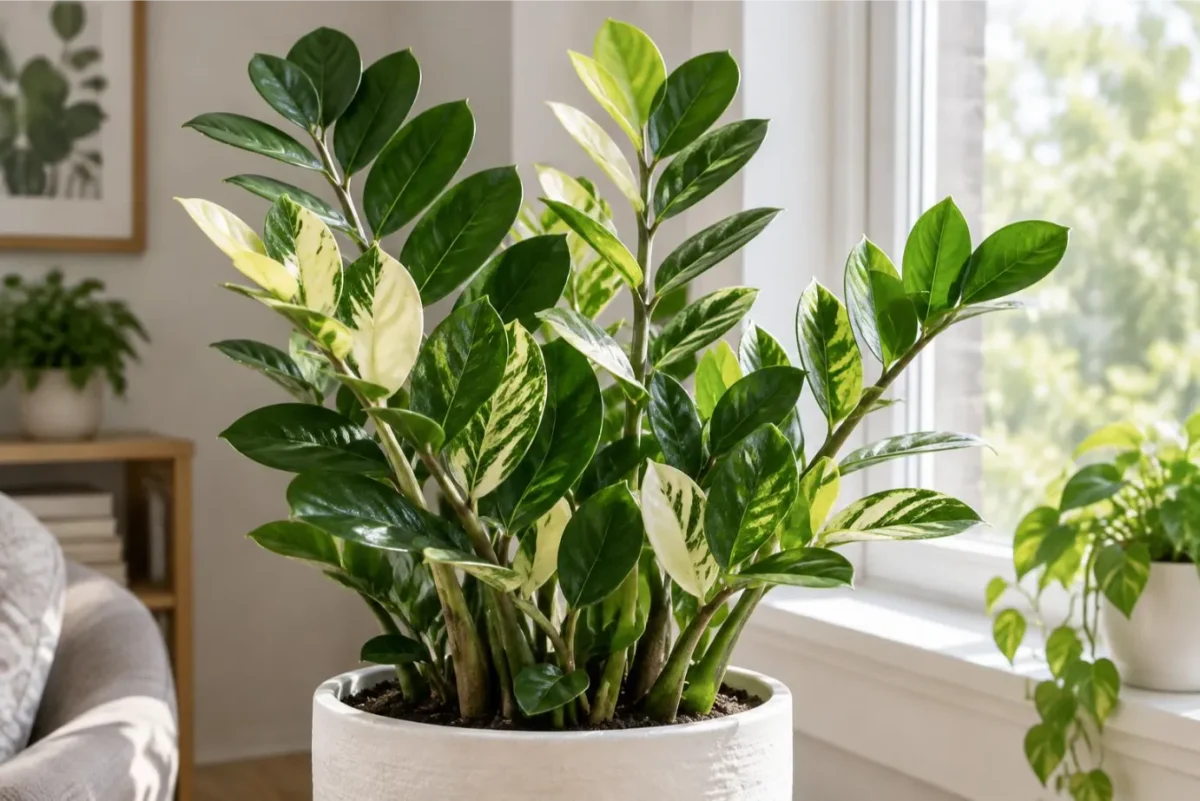
The variegated ZZ has glossy green leaves with cream or white variegation, and Clemson Extension lists it at roughly 1.5 to 3 feet tall. It is the rarest-looking plant on this list, and often the priciest.
Best for: Collectors, and anyone who wants a brighter, more decorative ZZ.
Practical details: Cost level is high. Variegated plants often need a little more light to keep their patterning, so a bright spot with no harsh direct sun is a sensible choice.
Quick tip: Check that the variegation is clear on the leaves before buying, and expect it to grow slowly.
How to Choose the Right ZZ Plant
- Want the easiest, most available option? Choose the classic green.
- Want drama? Go for ‘Raven’, or ‘Zamicro Black’ if you want a mini version.
- Short on space? ‘Zenzi’ or ‘Zamicro’ will suit a shelf or desk.
- Want something unusual? ‘Chameleon’ or the variegated ZZ.
Growing conditions and availability vary by region, so check what is sold locally and ask your nursery about the specific cultivar before you buy.
Safety note: ZZ plants are considered toxic if eaten, and the sap can irritate skin. Keep them away from pets and small children, and wash your hands after handling or repotting.
Frequently Asked Questions
1. Are all ZZ plants the same species?
Yes. All the varieties here are cultivars of Zamioculcas zamiifolia, the only species in its genus. That is why their care needs are so similar.
2. Is the Raven ZZ plant really black?
Not at first. New growth emerges green and darkens over time to a deep purple-black. Strong, bright indirect light tends to show off the colour best.
3. What is the smallest ZZ plant variety?
‘Zenzi’ is listed by Clemson Extension at 10 to 12 inches maximum. ‘Zamicro’ is also a compact selection, though descriptions of its exact size vary.
4. Do different ZZ plant varieties need different care?
Broadly no. All prefer bright indirect light, tolerate lower light, and need the soil to dry between waterings. Variegated types may want a little more light.
5. Are ZZ plants safe around pets?
They are generally considered toxic if chewed or eaten. Keep them out of reach of pets and children, and contact a vet or poison helpline if you are worried.
Conclusion
There is no wrong choice among these ZZ plant varieties, only a best fit for your space and taste. Pick the classic if you want simplicity, a ‘Raven’ for contrast, a ‘Zenzi’ or ‘Zamicro’ for tight spots, or a ‘Chameleon’ or variegated plant if you enjoy the unusual. Whichever you choose, go easy on the watering, give it bright indirect light and let it settle in. Please check your local nursery for what is available in your region.
Sources for editor review: Clemson Cooperative Extension (hgic.clemson.edu), ZZ Plant factsheet. Please also verify against NC State Extension and the Royal Horticultural Society before publishing.

Similar Posts