Indoor Plant VPD Calculator
Botanical Horticulturist & Food Preservation Specialist at Brittle Bloom · Certified Master Gardener & Master Food Preserver · 12+ Years in Plant Propagation & Food Preservation
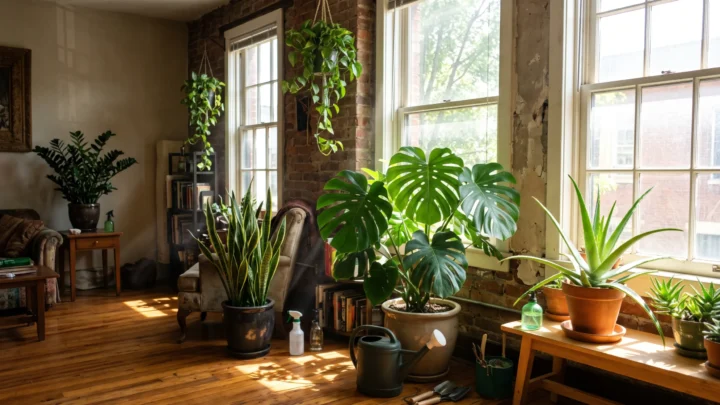
If you have ever bought a humidifier for your tropical houseplants only to watch their leaf tips turn brown anyway, you are not alone. Focusing on humidity alone is one of the most common traps in indoor plant care. A room sitting at 60% relative humidity feels completely different to a Monstera at 68°F (20°C) than it does at 82°F (28°C).
To understand how your plants actually experience the air around them, you need to look at how temperature and humidity work together. That measurement is called Vapor Pressure Deficit, or VPD.
Using an Indoor Plant VPD Calculator—or learning how to read a simple VPD chart—takes the guesswork out of dialing in your indoor growing environment.
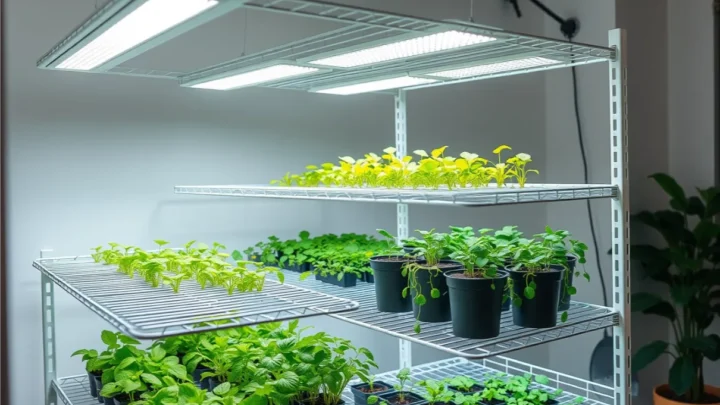
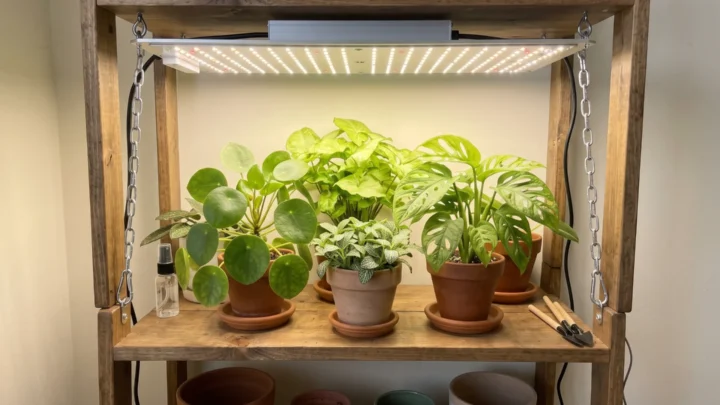
Whether you are managing a sunny living room shelf, an IKEA greenhouse cabinet, or an indoor seed-starting rack, understanding VPD helps you prevent crispy edges, encourage steady growth, and keep fungal issues at bay.
What Is Vapor Pressure Deficit (VPD) in Simple Terms?
Vapor Pressure Deficit is the difference between the amount of moisture currently in the air and the maximum amount of moisture the air could hold at that specific temperature.
Think of the air in your home like a sponge. Warm air is a large sponge capable of holding a lot of water vapor, while cool air is a small sponge that fills up quickly.
VPD measures how “thirsty” that air sponge is. It is typically expressed in kilopascals (kPa).
- Low VPD (0.0 to 0.4 kPa): The air is nearly saturated with moisture. Because the air sponge is already full, water struggles to evaporate from your plant’s leaves. Transpiration slows down, nutrient transport stalls, and damp surfaces create an inviting environment for mold, mildew, and root rot.
- Optimal VPD (0.4 to 1.2 kPa for most houseplants): The air has just enough drying power to gently pull water vapor out of the tiny pores (stomata) on the undersides of the leaves. This steady pull draws fresh water and dissolved nutrients up from the roots, fueling healthy photosynthesis.
- High VPD (1.5 kPa and above): The air is very dry relative to its temperature. It pulls moisture out of the leaves faster than the roots can replace it. To protect itself from wilting, the plant closes its stomata, which stops growth and often leads to brown, crispy leaf margins.
According to agricultural extension research from institutions like the University of Florida IFAS Extension and Penn State Extension, managing VPD gives growers a much more accurate picture of plant water stress than relative humidity alone, because VPD directly reflects the physical driving force behind plant transpiration.
How to Use an Indoor Plant VPD Calculator
Indoor Plant VPD Calculator
Find your room’s Vapor Pressure Deficit and create a healthier growing environment for your plants.
Your environment is in good shape.
🌿 Great growing conditions!
Vapor Pressure Deficit measures the difference between the moisture the air could hold at saturation and the actual moisture in the air. It helps growers understand how atmospheric conditions influence plant transpiration.
Plants generally experience less atmospheric water demand.
Plants generally experience greater atmospheric water demand and may lose water faster.
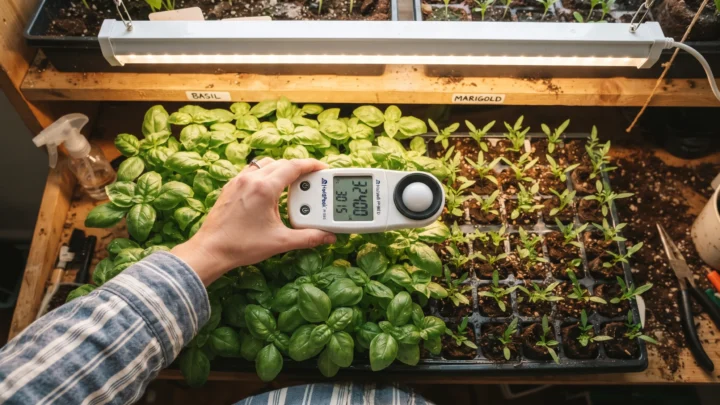
To calculate VPD accurately, you only need three pieces of information from your growing space. You do not need expensive lab equipment—a basic digital thermo-hygrometer and an inexpensive infrared thermometer gun will give you everything required.
Step 1: Measure Ambient Air Temperature
Place a reliable digital thermometer at the same height as your plant canopy, away from direct heater vents or drafty windowpanes. Record the temperature in either Fahrenheit or Celsius.
Step 2: Measure Relative Humidity (RH)
Read the relative humidity percentage from your hygrometer at the exact same time and location as your temperature reading. Make sure your hygrometer is calibrated, as inexpensive sensors can drift by 5% or more over time.
Step 3: Account for Leaf Temperature Offset
This is the step most beginners miss, yet it makes a noticeable difference. Plant leaves are almost always slightly cooler than the surrounding room air because evaporating water cools the leaf surface—much like sweat cools your skin.
If you have an infrared (IR) temperature gun, point it directly at the middle of a healthy leaf to get the exact leaf surface temperature. If you do not have an IR thermometer, standard horticultural practice uses a leaf temperature offset of -2°F (-1.1°C) for standard indoor room lighting, or -3°F to -4°F (-1.5°C to -2°C) for plants sitting directly under bright LED grow lights.
The VPD Formula (If You Want to Calculate It by Hand)
Most indoor gardeners prefer plugging their numbers into an online Indoor Plant VPD Calculator or checking a reference table, as the math involves exponential equations. However, if you enjoy the science or want to set up your own spreadsheet, here is how the calculation works in Celsius and kilopascals (kPa):
- Calculate Leaf Saturation Vapor Pressure ($VP_{leaf}$):$$VP_{leaf} = 0.61078 \times e^{\frac{17.27 \times T_{leaf}}{T_{leaf} + 237.3}}$$
- Calculate Air Saturation Vapor Pressure ($VP_{air}$):$$VP_{air} = 0.61078 \times e^{\frac{17.27 \times T_{air}}{T_{air} + 237.3}}$$
- Calculate Actual Vapor Pressure of the Air ($VP_{actual}$):$$VP_{actual} = VP_{air} \times \left(\frac{RH}{100}\right)$$
- Subtract to find VPD:$$VPD = VP_{leaf} - VP_{actual}$$
(Note: $T_{leaf}$ and $T_{air}$ must be in degrees Celsius, and $e$ is Euler's number, approximately 2.71828.)
Indoor Plant VPD Quick-Reference Chart
If you do not want to run equations every morning, use the chart below to find your room's approximate VPD. This table assumes a standard indoor leaf temperature offset of -2°F (-1.1°C) below ambient air temperature.
| Air Temp (°F / °C) | 30% RH | 40% RH | 50% RH | 60% RH | 70% RH | 80% RH |
| 65°F (18.3°C) | 1.32 kPa | 1.11 kPa | 0.90 kPa | 0.69 kPa | 0.48 kPa | 0.27 kPa |
| 68°F (20.0°C) | 1.48 kPa | 1.24 kPa | 1.01 kPa | 0.78 kPa | 0.54 kPa | 0.31 kPa |
| 70°F (21.1°C) | 1.59 kPa | 1.34 kPa | 1.09 kPa | 0.84 kPa | 0.59 kPa | 0.34 kPa |
| 72°F (22.2°C) | 1.71 kPa | 1.44 kPa | 1.17 kPa | 0.91 kPa | 0.64 kPa | 0.37 kPa |
| 75°F (23.9°C) | 1.91 kPa | 1.61 kPa | 1.31 kPa | 1.01 kPa | 0.72 kPa | 0.42 kPa |
| 78°F (25.6°C) | 2.12 kPa | 1.79 kPa | 1.46 kPa | 1.13 kPa | 0.80 kPa | 0.47 kPa |
| 80°F (26.7°C) | 2.27 kPa | 1.92 kPa | 1.57 kPa | 1.22 kPa | 0.86 kPa | 0.51 kPa |
| 85°F (29.4°C) | 2.69 kPa | 2.28 kPa | 1.87 kPa | 1.45 kPa | 1.04 kPa | 0.63 kPa |
Values in bold (0.40 kPa to 1.20 kPa) represent the comfortable sweet spot for the vast majority of common indoor foliage plants.
Notice how dramatically temperature changes the picture. At 70°F (21.1°C), 50% humidity gives you a healthy 1.09 kPa. Raise the room temperature to 80°F (26.7°C) at that exact same 50% humidity, and your VPD jumps to 1.57 kPa—pushing tropical plants into mild moisture stress.
Ideal VPD Ranges by Houseplant Type
Not every indoor plant comes from the same native ecosystem, so different groups thrive in slightly different VPD zones. Rather than trying to hit one exact decimal point, aim to keep your plants within their preferred target range.
1. Cuttings, Seedlings, and Propagation Boxes (0.4 to 0.8 kPa)
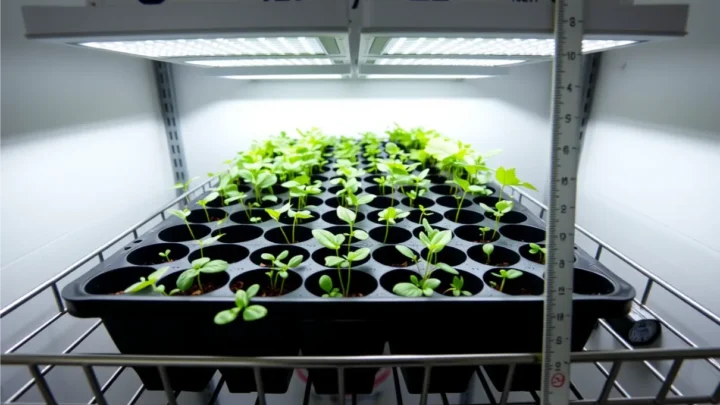
Unrooted stem cuttings and newly sprouted seeds do not have established root systems to pull water from the soil. Keeping VPD low (high humidity paired with gentle warmth) prevents them from drying out while they focus their energy on growing new roots. This is why humidity domes and propagation tubs work so well.
2. Tropical Foliage & Aroids (0.6 to 1.1 kPa)
Popular houseplants like Monsteras, Philodendrons, Anthuriums, Calatheas, Ferns, and Pothos originate in warm, humid forest understories. In this range, their stomata stay open comfortably throughout the day, allowing steady transpiration and lush, unblemished leaf unfurling.
3. Flowering Houseplants & Indoor Herbs (0.8 to 1.2 kPa)
Plants like African violets, peace lilies, orchids, and sunny windowsill herbs (such as basil or mint) appreciate slightly stronger air movement and moderate transpiration. Keeping VPD near 1.0 kPa encourages sturdy stems and helps prevent fungal spotting on flower petals.
4. Succulents, Cacti, and Snake Plants (1.0 to 1.6+ kPa)
Desert and arid-adapted plants have thick, waxy cuticles and specialized metabolisms (CAM photosynthesis) designed to conserve water. They handle higher VPD levels easily and actually suffer in low-VPD, damp environments, which can trigger stem rot and fungal infections.
Regional Climate and Seasonal Shifts Matter
Where you live—and the current season—dramatically changes how your home’s indoor VPD behaves. A houseplant setup in a coastal Pacific Northwest apartment faces very different baseline conditions than the exact same plant shelf in a dry Rocky Mountain home or a humid Gulf Coast sunroom.
- Winter Heating Challenges: In colder climate zones, running a furnace or radiator in winter warms indoor air while pulling outdoor air with very low moisture content inside. Indoor relative humidity often drops to 20%–30% at 70°F, driving VPD up to 1.6–1.8 kPa. Even hardy houseplants can develop brown tips during January and February if you do not adjust.
- Summer Air Conditioning: Central air conditioning cools the air, which lowers the air's water-holding capacity, while simultaneously acting as a dehumidifier. Check your hygrometer near AC vents, as cold drafts can create sudden localized shifts.
- Local Microclimates: Always measure conditions in the exact spot where your plants live rather than relying on your wall thermostat. A south-facing window sill can run 8°F to 10°F warmer during peak afternoon sun than a hallway six feet away.
Practical Ways to Adjust Your Indoor VPD
Once you calculate your VPD and see whether your number is too high or too low, you only have two levers to pull: temperature and humidity. Small adjustments usually work better than drastic changes.
How to Lower a High VPD (When the Air Is Too Thirsty)
If your VPD is above 1.3 kPa and your tropical plants are curling or developing crispy edges:
- Add Targeted Humidity: Run a cool-mist humidifier near your plant grouping. Using distilled or filtered water helps prevent white mineral dust from settling on leaves and clogging stomata.
- Lower the Room Temperature Slightly: Dropping your thermostat by just 2°F or 3°F reduces the air’s moisture-holding capacity and brings VPD down immediately—without using a drop of extra water.
- Group Plants Together: Plants naturally release moisture vapor through transpiration. Clustering five or six houseplants on a shared shelf creates a slightly more humid microclimate around their foliage.
- Move Plants Away from Heat Sources: Relocate pots away from heating vents, radiators, and electronics that throw off dry warmth.
How to Raise a Low VPD (When the Air Is Too Damp and Stagnant)
If your VPD drops below 0.4 kPa—common in closed glass cabinets, basements, or rainy climates—your plants cannot transpire properly, increasing the risk of powdery mildew and edema (water-soaked blisters on leaves):
- Increase Gentle Airflow: Add a small oscillating fan or a low-speed USB fan inside a plant cabinet. Moving air disrupts the thin layer of saturated moisture clinging to leaf surfaces (the boundary layer) and encourages healthy transpiration.
- Warm the Space Slightly: Raising the ambient temperature by a few degrees increases the air's capacity to hold moisture, raising VPD into the safe zone.
- Ventilate Closed Enclosures: Crack open the doors of a terrarium or greenhouse cabinet for 30 to 60 minutes a day to let stagnant, saturated air exchange with drier room air.
- Avoid Misting Foliage: Misting only spikes humidity for a few minutes while leaving standing water on leaves—a prime trigger for bacterial and fungal leaf spots when VPD is already low.
Common Mistakes When Tracking VPD at Home
Even experienced plant enthusiasts can get tripped up when they first start monitoring VPD. Keep these three practical guardrails in mind:
- Chasing Perfection Instead of a Range: Your VPD does not need to stay glued to 0.85 kPa around the clock. In nature, VPD rises in the warm afternoon and drops at night. As long as your daytime average sits comfortably inside your plant's target zone, minor fluctuations are completely normal and healthy.
- Ignoring Nighttime Drops: When the sun goes down or your grow lights turn off, room temperatures drop while humidity rises. If your daytime humidity is 75% at 78°F (0.63 kPa) and the room cools to 64°F overnight without dehumidification, relative humidity can spike past 90%, pushing VPD near 0.1 kPa and inviting condensation on leaves.
- Over-Watering During Low VPD Periods: Because plants transpire much more slowly when VPD is low, their potting mix stays wet for much longer. Always check the top inch or two of soil with your finger before watering rather than sticking to a rigid calendar schedule.
Frequently Asked Questions
1. What is the best VPD for most indoor houseplants?
For the majority of common tropical houseplants—including Monstera, Philodendron, Pothos, Ficus, and Calathea—an ideal daytime VPD falls between 0.6 kPa and 1.1 kPa. This range balances steady moisture uptake with comfortable transpiration so leaves can unfurl smoothly without drying out.
2. Do I really need an infrared thermometer to calculate VPD?
You do not strictly need one, though it makes your calculation more precise. If you do not own an infrared thermometer, simply subtract 2°F (1.1°C) from your room’s air temperature to estimate your leaf temperature. For most home plant shelves, this standard offset is accurate enough to guide your humidity and temperature adjustments.
3. Why does my VPD change even when my humidifier stays at the same setting?
Relative humidity is a ratio that depends entirely on air temperature. If your humidifier holds the room steady at 55% relative humidity, your VPD will still rise during the warmest part of the afternoon and fall at night when the room cools down. Temperature shifts change how much moisture the air can hold.
4. Is a high VPD or a low VPD worse for houseplants?
Both extremes cause distinct problems, though prolonged low VPD (below 0.4 kPa) tends to cause faster damage in enclosed spaces because stagnant, damp air encourages fungal infections, powdery mildew, and root rot. High VPD (above 1.5 kPa) causes slower cosmetic stress like brown leaf tips and stalled growth, which most established houseplants can recover from once conditions improve.
5. Should I adjust VPD differently at night?
It is completely normal for VPD to drop at night when temperatures cool and plant stomata naturally close. You do not need to force daytime VPD numbers overnight. However, if you use a humidifier in a small bedroom or plant cabinet, consider turning it down or off at night so cooling temperatures do not cause moisture to condense on leaves.
Conclusion
Learning how to use an Indoor Plant VPD Calculator bridges the gap between guessing what your houseplants need and actually seeing how they experience your home. Instead of cranking up a humidifier blindly or wondering why healthy-looking plants suddenly stall out in winter, you have a clear, reliable metric that connects temperature and humidity together.
Start simple: place a digital thermo-hygrometer near your favorite plant shelf, check your numbers against the VPD chart during the middle of the day, and make small, gradual tweaks to airflow, warmth, or humidity. When your indoor space settles into that comfortable 0.6 to 1.1 kPa sweet spot, your plants will reward you with stronger roots, cleaner foliage, and steady, stress-free growth all year long.

Similar Posts