Pick the Best Grow Lights for Indoor Plants (No Guesswork)
Botanical Horticulturist & Food Preservation Specialist at Brittle Bloom · Certified Master Gardener & Master Food Preserver · 12+ Years in Plant Propagation & Food Preservation
Let's be honest about why you're here. You've got a windowsill full of sad-looking plants, or maybe you're trying to start seedlings in February, and you've finally realized that natural light just isn't cutting it. That's where grow lights for indoor plants come in.
They're not just for cannabis growers in secret basements anymore. They're for anyone who wants a thriving monstera in a dark apartment or basil in the dead of winter.
The tricky part is that the market is flooded with options, and most of the marketing is pure noise. Manufacturer specifications indicate that a "1000W equivalent" LED might actually draw only 100 watts from the wall. Understanding the real metrics, like PPFD and DLI, is the difference between spending $40 on a useless purple glow stick and $60 on a fixture that genuinely transforms your space.
Let's cut through the hype and figure out what your plants actually need.
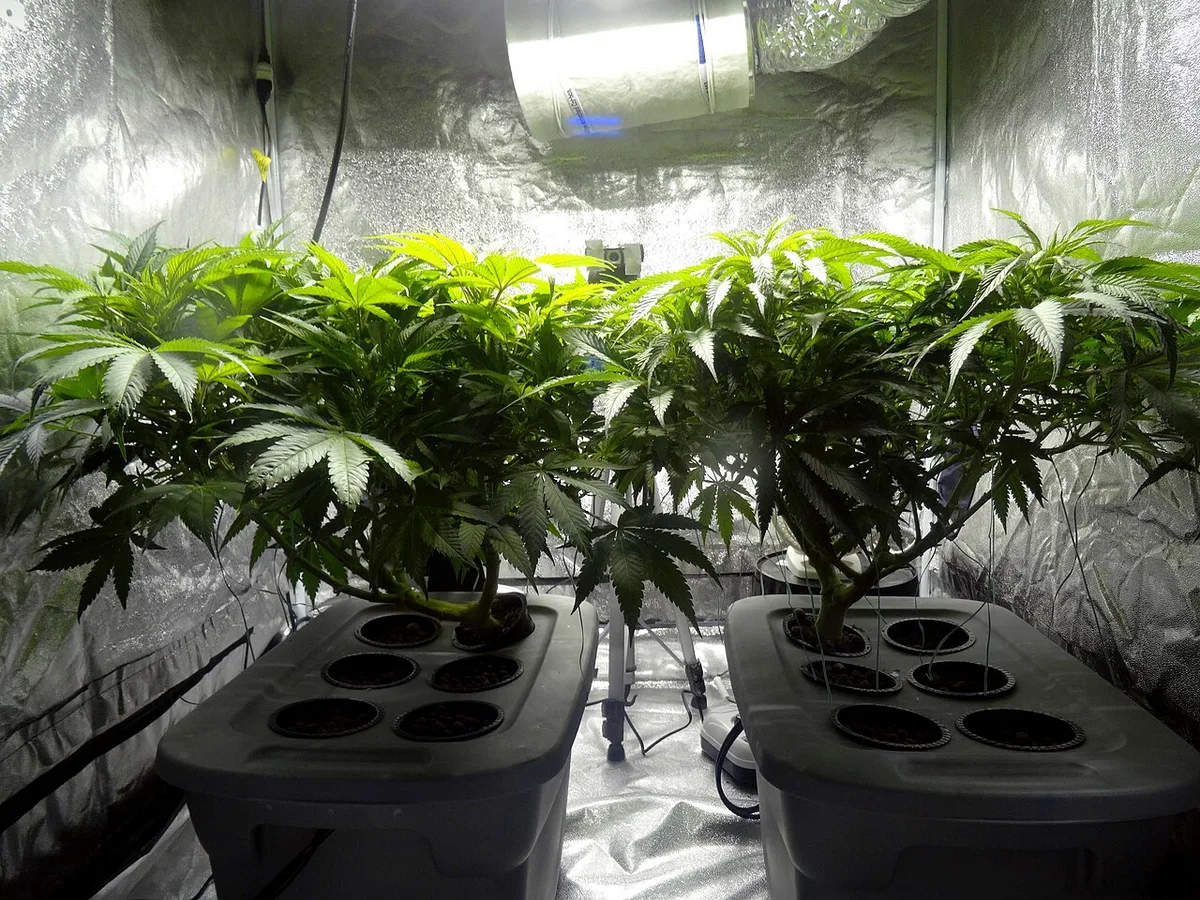
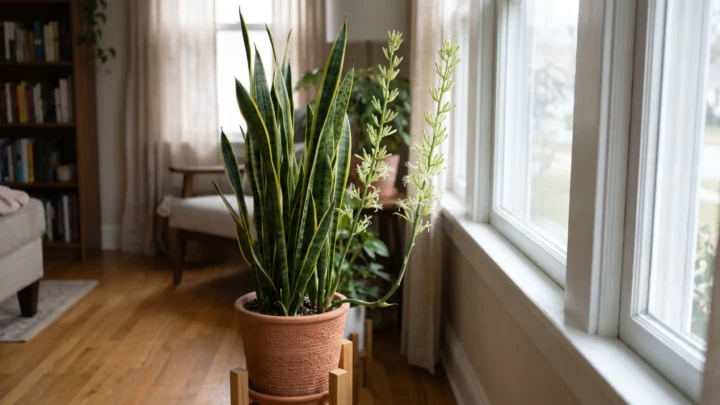
Image source: Wikimedia Commons / Plantlady223 (CC BY-SA)
Quick Answer
Grow lights for indoor plants are artificial light sources that replace or supplement sunlight. The best choice is a full-spectrum LED fixture. You need to match light intensity to your specific plants.
Low-light plants need around 150 PPFD. Fruiting plants need over 800 PPFD. Measure your grow area and buy accordingly.
Why "Equivalent Wattage" Is Lying to You
Walk into any grow store, and you'll see boxes screaming "2000W Equivalent!" and "Best for Blooming!" Don't buy based on that number. It's a marketing trick that compares the LED's light output to an old-school High-Pressure Sodium bulb that it replaces. The actual power draw, what you pay for on your electric bill, is printed in smaller text on the back.
That's the number that matters.
What actually drives photosynthesis is the number of usable photons hitting your plant's leaves. You'll see this measured as PPFD for a single point or DLI for the total over a day. If you're using the "equivalent wattage" scale, a cheap blurple panel claiming 1000W is probably a dim, 100-watt light that will stretch your succulents into ugly, etiolated messes.
Always check the real wattage draw and the PPFD chart in the manual.
A practical example: a quality 150-watt full-spectrum LED with proper lenses absolutely destroys a generic 300W blurple panel. The photons are focused, efficient, and have a balanced spectrum that plants actually use. Spectrum matters, too.
While red and blue light are the heavy hitters for photosynthesis, green light penetrates the canopy deeper and is more efficient at driving photosynthesis in lower leaves.
The real reason your plants are stretching
If your plant is growing tall, pale, and leaning, it's starving for light. It stretches to get closer to the source. It's not a growth spurt worth celebrating; it's a cry for help.
Leggy seedlings are the clearest sign your setup lacks intensity. Fix this before you blame your watering schedule.
Why PPFD beats wattage when comparing fixtures
PPFD, or Photosynthetic Photon Flux Density, is the actual number of photons that land on a specific square meter per second. You can't guess it from wattage. A high-quality fixture spreads light evenly.
A cheap one has a hot spot in the center and dark corners. When you compare fixtures, look for a 3×3 diagram that shows PPFD at different distances. If they don't provide one, that's a red flag.
The Main Contenders: LED, Fluorescent, and HID
You have three families of lights, and two of them are genuinely viable for home growers in 2026. Let's break down who each one is for, because buying the wrong type wastes your money and kills your plants.
Full-spectrum LED panels are the default recommendation for almost everyone. They use Samsung LM301B or similar high-efficiency diodes, run cool, sip electricity, and have a lifespan that outlasts your favorite pair of jeans. They're perfect for houseplants, seed starting, and even fruiting peppers if you buy enough power.
Our research shows these are frequently the easiest to use for anyone with 2 to 4 square feet of space.
Red/blue "blurple" LED panels are the budget option from Amazon. They work, but you'll hate the pinkish-purple glow in your living room, and the spectrum is unbalanced because it lacks green light. They also typically use older, less efficient diodes.
Skip these unless you're on a bare-bones budget for a garage shelf.
T5 and T8 fluorescent tubes have one major advantage: they produce low heat at a very low upfront cost. They remain excellent for seed starting because the light sits close to the soil and won't scorch tender sprouts. They're also handy for supplementing light on a countertop herb garden.
The downside for as of 2026 is they lose intensity as they age and use more electricity per photon than LEDs.
HPS and Metal Halide fixtures are the old heavyweights of the industry. They produce monster yields and deep canopy penetration, but they generate enormous heat and require cool tubes, venting, and big electricity bills. Unless you're running a commercial nursery or a dedicated grow tent in a basement cold enough to be a refrigerator, skip them.
They are simply overkill and a safety headache.
| Fixture Type | Heat Output | Efficiency | Lifespan | Best Use |
|---|---|---|---|---|
| Full-spectrum LED | Low | High | 50,000+ hours | Houseplants, seeds, fruiting plants |
| Blurple LED | Medium | Low-Medium | 30,000 hours | Budget garage grows |
| T5 Fluorescent | Low | Medium | 20,000 hours | Seed starting, herbs |
| HPS/MH | Very High | Low | 10,000 hours | Commercial tents, high-yield setups |
The Specs That Actually Matter: PPFD, DLI, and Real Wattage Draw
You don't need to be a botanist to figure this out, but you do need to understand three acronyms. These are the real performance metrics, and they appear on every decent spec sheet. If a product page doesn't list them for this topic area, the manufacturer probably has something to hide.
PPFD is the measurement of usable light arriving at a point on your plant's canopy. Think of it as how bright the light is at the leaf surface. Low-light houseplants like pothos need roughly 150 to 300 µmol/m²/s.
Herbs need 400 to 600. Fruiting crops want 800 or more.
DLI tells you the total amount of light your plant receives in a 24-hour period. You calculate it by taking the average PPFD and multiplying it by the number of hours the light is on. If you have a 14-hour photoperiod at 400 PPFD, your DLI is roughly 20.
That's good for basil. The University of Minnesota Extension has excellent guides on DLI for different crops if you want the hard numbers.
The other spec is photon efficacy, measured in micromoles per joule. This is simply how efficient the fixture is at converting electricity into usable photons. Good modern LEDs score around 2.5 to 3.0 µmol/J.
Cheap blurple panels might score 1.5. Higher efficiency means lower electric bills and less heat.
Understanding photon efficiency (μmol/J)
Don't ignore this number because it directly translates to your power bill. A fixture that runs at 2.8 µmol/J is pulling less power to deliver the same photons to your plants as a light running at 1.8 µmol/J. Over four months of daily operation, that difference adds up to real money.
How to calculate DLI for your specific plants
Here's a simple formula. Grab your light's PPFD at your canopy height. Multiply that number by 3,600 (seconds per hour) and then by your daily light hours.
Divide by 1,000,000. That's your DLI. If your spider plant wants 10 DLI, just adjust the timer rather than moving the fixture.
Side-by-Side: Efficiency, Heat, and Cost Compared
Let's get practical about the economics because the sticker price is only the beginning. A cheap $40 blurple panel is tempting, but it will cost you more in electricity over 18 months than a $120 efficient LED.
Aggregate reviews and utility data confirm that upgrading to high-efficiency LEDs cuts grow lighting energy usage by 50 to 70 percent compared to HID. For a small tent running a 200-watt LED for 18 hours a day, you're looking at roughly an extra $10 to $18 per month on your bill. The same coverage with a 400-watt HPS would be twice that, plus the cost of an exhaust fan to handle heat.
Heat control is a hidden expense. HPS and Metal Halide fixtures need air conditioning or venting. LEDs mostly eliminate that need.
If you grow in a small apartment or a closet, the heat savings alone justify the higher upfront LED cost. A fixture that burns your hand when you touch it is wasting electricity as heat instead of light.
| Metric | Full-spectrum LED | Fluorescent | HPS/MH |
|---|---|---|---|
| Average Lifespan (Hours) | 50,000 | 20,000 | 10,000 |
| Relative Photon Efficiency | High | Medium | Low |
| Heat Sent to Canopy | Minimal | Moderate | Extreme |
| Replacement Bulb Cost | None | $10-$20 | $30-$80 |
| Estimated Monthly Cost (per 200W) | $10-$15 | $15-$20 | $30-$40 |
Fluorescent tubes also dim as they age, much faster than LEDs. A T5 tube six months old is delivering maybe 70 percent of its stated output. You'll need to replace those tubes annually for consistent results.
That's an ongoing expense that adds up. LEDs decline linearly and slowly, keeping their light quality for years.
Matching the Light to the Plant: A Quick Decision Guide
Think of this as a simple flow chart. Answer two questions: what are you growing, and how much space do you have? Then follow the branch.
This is how an experienced gardener actually thinks about the problem, not how a sales page orders lights by wattage.
For low-light houseplants like pothos, philodendron, snake plants, and ZZ plants, you don't need anything fancy. A simple screw-in LED bulb rated for full-spectrum light works great in a standard desk lamp. Aim for 150 to 300 PPFD at the canopy.
Keep the light on for about 12 hours a day. Honestly, a bright window usually does this job, but these lights help in dark corners.
For medium-light growers, herbs like basil and mint, leafy greens, and many succulents, you'll want a thin LED bar fixture. Target 400 to 500 PPFD for your succulent collection so they stay compact and colorful. Use 14 to 16 hours of light.
A 2×2 foot coverage area is typical for a quality 100-watt LED bar. This setup is perfect for a kitchen counter or a small shelf in your office.
If you're growing high-light fruiting plants like tomatoes, peppers, or strawberries indoors, you need a serious fixture with a 4×4 foot coverage footprint at 800 to 1000 PPFD. That means a 260 to 350 watt real-draw LED quantum board. Keep it about 12 to 18 inches above the canopy.
You can try to improvise here, but you'll end up with tall, weak plants and no fruit.
A simple buying rule
If the product page doesn't show a PPFD map, don't buy it. That one habit filters out 60 percent of the junk. You are paying for photons, not for fancy logos or a remote control you'll never use.
Common Setup Mistakes That Kill Plants (And How to Avoid Them)
Hanging your new light too close is the fastest way to turn lush growth into crispy leaves. Every fixture has a sweet spot. A 100-watt quantum board works well at 12 inches from established plants.
A 300-watt bar light needs 18 inches. Check the spec sheet first, then watch the leaves.
Overthinking spectrum and underthinking coverage is the opposite mistake. A perfect full-spectrum panel covering one square foot won't help the plant sitting three feet away. Match the light footprint to your grow area, not to the color temperature.
The edges of a cheap panel drop off sharply, so your plants on the sides will stretch even if the center looks great.
The most expensive mistake is trusting a phone app to measure PPFD. Your phone's sensor isn't calibrated for modern LEDs. It reads infrared and gives you a wildly inflated number.
A dedicated PAR meter is worth it if you grow seriously, but a $30 lux meter does the job for most home growers. Better yet, use the manufacturer's PPFD map and don't move the light.
Finally, skip the blurple habit. Yes, it grows plants. No, you can't see real problems.
Under blurple light, you'll miss early signs of spider mites, pale leaves, or light burn until it's too late. A white full-spectrum light shows you exactly what is happening at the canopy.
Grow Light FAQs: Quick Answers
Can you leave a grow light on 24 hours a day?
No. Most plants need a rest period for respiration and hormone regulation. Leaves benefit from a dark cycle.
For houseplants, stick to 12 to 16 hours on. For seedlings, 18 hours is the max you should push.
Is a red/blue blurple light better than a white full-spectrum?
No. White full-spectrum contains all the wavelengths plants need, plus green light that reaches deeper into the canopy. Blurple lacks green, which makes it hard to inspect plants and inefficient for overall photosynthesis.
How do you know if the plant is getting too much light?
Look for bleached, pale, or crispy patches on the leaves, especially near the center. The leaves may curl upward to shield themselves. If you see this, raise the light or dim it immediately.
How close should my grow light be to the plants?
Depends on the fixture. For a 50-watt LED, 12 inches is typical. For a 200-watt bar, 18 to 24 inches.
Check the manufacturer's hanging-height chart for your exact model.
Should I use a timer for my grow lights?
Yes, absolutely. Plants follow a circadian rhythm. Fluctuating hours confuse them and stunt growth.
A simple mechanical timer costs around $10 and prevents you from guessing.
Final Verdict: What I'd Buy and Why
The best grow light for beginners
A 100-watt full-spectrum LED quantum board. It's dimmable, runs cool, and covers a 2×2 foot area. Pair it with a cheap timer and you can grow herbs, lettuce, and most houseplants without fuss.
Expect to pay around $80 to $120.
The best grow light value pick
A 240-watt LED bar fixture from a reputable manufacturer like Spider Farmer, Mars Hydro, or Viparspectra. It delivers solid PPFD across a 4×4 foot tent, has a high-efficacy driver, and lists for about $180 to $250. That's the sweet spot for price and performance.
The best grow light if you're serious about fruiting plants
You need a 350-watt-plus quantum board with high-efficiency Samsung diodes. It will push 900 to 1100 PPFD over a 3×3 area. That's enough to ripen peppers and tomatoes indoors.
Budget for a tent and exhaust fan, since airflow matters at that intensity.
In our research, the single best upgrade you can make is to buy a light with genuine spec sheets. Don't trust the "equivalent wattage" sticker. Start with the plants you want to grow, then match the PPFD map, hanging height, and real wattage draw to your space.
Your greens will thank you.

Similar Posts