Indoor Lettuce Grow Light Calculator
Botanical Horticulturist & Food Preservation Specialist at Brittle Bloom · Certified Master Gardener & Master Food Preserver · 12+ Years in Plant Propagation & Food Preservation
There is nothing quite like stepping into your kitchen, trimming a handful of crisp, vibrant lettuce leaves, and tossing them straight into a salad minutes later. For many home growers, growing lettuce indoors is the ultimate gateway into indoor gardening. It is fast, rewarding, and doesn’t require a sprawling backyard.
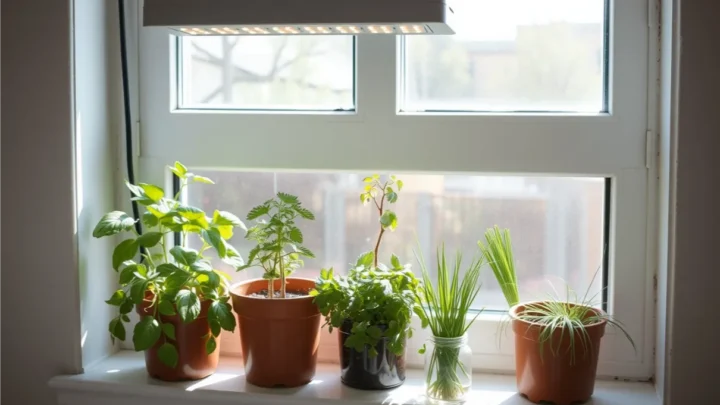
However, every indoor grower eventually faces the same frustrating roadblock: the winter window ledge test. You plant your seeds, they sprout eagerly, and then—within a week—they stretch upward into thin, pale, floppy stems leaning desperately toward the glass. Why? Because even a seemingly bright indoor windowsill rarely provides enough photosynthetic energy for leafy greens to thrive.
The secret to lush, compact, head-forming indoor lettuce isn’t magic; it is light. But navigating lumens, wattage, Kelvin temperatures, and Daily Light Integrals (DLI) can feel like learning a foreign language. That is why we created this guide and framework for an indoor lettuce grow light calculator. Whether you are setting up a single countertop herb garden, a vertical shelf, or a small indoor hydroponic system, this guide will help you decode your lighting requirements, avoid guesswork, and grow prolific greens right inside your home.
Understanding Lettuce Light Requirements
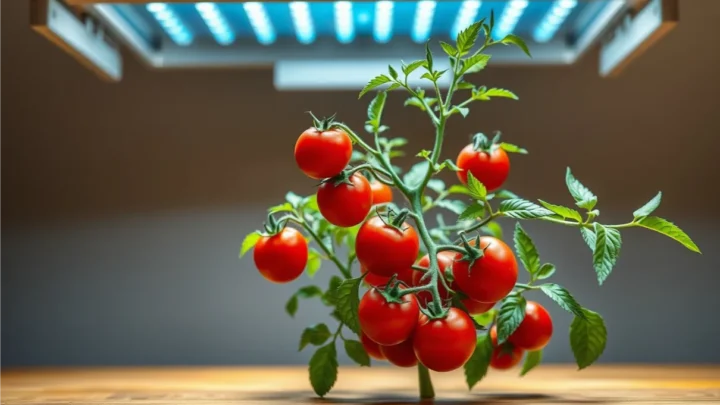
Before calculating your setup, it helps to understand what lettuce actually needs from its environment. Unlike fruiting plants like tomatoes or peppers, which require high-intensity light to flower and set fruit, lettuce is a cool-season leafy green. It doesn’t need blazing tropical sunlight, but it does need steady, consistent energy.
The Core Metrics: PAR, PPFD, and DLI
When looking at grow lights, you will often encounter technical terms. Here is what they actually mean for your indoor lettuce:
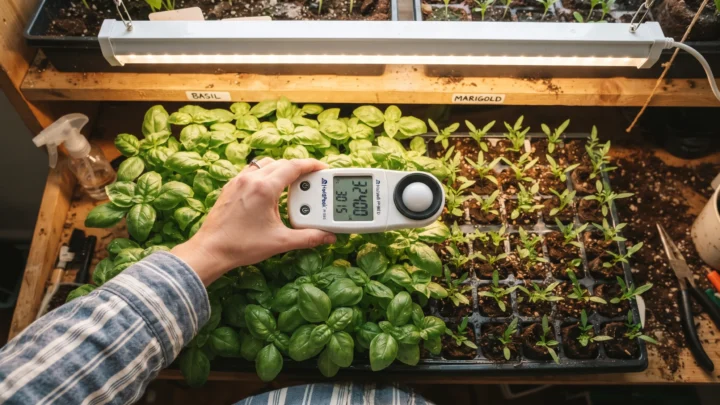
- PPFD (Photosynthetic Photon Flux Density): Measures the amount of PAR (Photosynthetic Active Radiation) light that actually lands on your plants per second. For lettuce, a sweet spot is generally 140 to 200 $\mu\text{mol/m}^2/\text{s}$.
- DLI (Daily Light Integral): Measures the total amount of light delivered to a square meter over the course of a full day. Lettuce thrives with a DLI between 12 and 17 moles per square meter per day ($\text{mol/m}^2/\text{day}$).
- Color Temperature (Kelvin): Lettuce prefers a cool-to-neutral white light spectrum (around 5,000K to 6,500K), which mimics bright spring daylight and encourages compact, bushy vegetative growth.
The Indoor Lettuce Grow Light Calculator Framework
To determine your setup, you can calculate your lighting needs based on your growing space size and light output. Use this step-by-step breakdown as your calculator framework.
Step 1: Measure Growing Area (Length × Width in feet)
       ↓
Step 2: Multiply by Target Wattage (20–30 watts per square foot for LEDs)
       ↓
Step 3: Set Timer (12 to 16 hours of daily light)
       ↓
Step 4: Adjust Hanging Height (8–18 inches above canopy)
Step 1: Calculate Your Growing Area
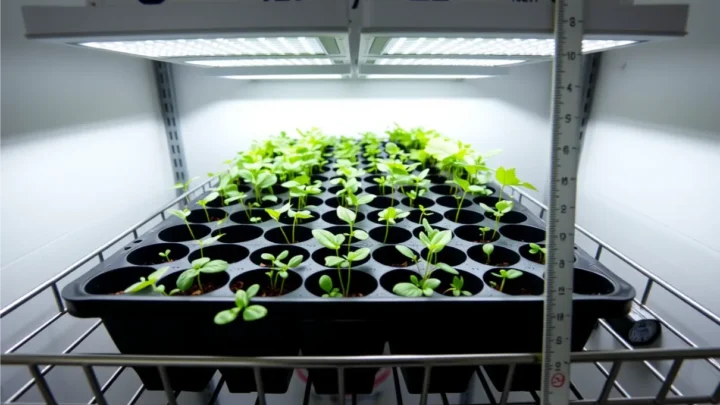
Measure the dimensions of the area where your lettuce will sit. For example, a standard shelf measuring 2 feet by 1 foot gives you a 2-square-foot growing area.
Step 2: Determine Total Wattage Needed
High-efficiency LED grow lights require approximately 20 to 30 watts of actual power draw per square foot for leafy greens.
- Calculation: 2 square feet $\times$ 25 watts = 50 watts of actual LED power required.
- Note: Always check the actual power draw (watts consumed from the wall), not the misleading “equivalent incandescent wattage” listed on some consumer bulbs.
Step 3: Determine Daily Photoperiod (Hours of Light)
Lettuce does not need 24 hours of light; in fact, it needs a dark period to rest. Most indoor growers set their timers for 12 to 16 hours of light per day, with 14 hours being a reliable standard.
Choosing the Right Type of Grow Light for Lettuce
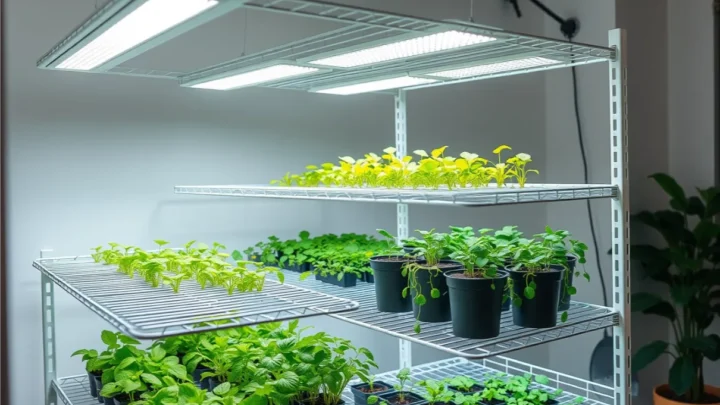
Not all grow lights are created equal. When selecting fixtures for indoor lettuce, look at the following options:
- Full-Spectrum LED Panels / Bars: The gold standard for modern indoor growing. They run cool, consume very little electricity, last for tens of thousands of hours, and provide an ideal balance of blue and red wavelengths without the harsh purple glare of older blurple lights.
- T5 Fluorescent Fixtures: Affordable and reliable, T5 tubes emit a wide, even spread of light that is fantastic for flat trays of microgreens or baby lettuce. However, they are less energy-efficient than LEDs and bulbs degrade faster over time.
- Standard LED Shop Lights: High-output LED shop lights rated at 5,000K can work wonderfully for starting seedlings and growing shallow-rooted leafy greens on a budget, provided they are placed close enough to the canopy.
Installation and Distance: Getting the Height Right
Even the best grow light will fail if it is positioned incorrectly.
- Too High: The light disperses, PPFD drops, and your lettuce becomes “leggy”—stretching thin with weak, pale leaves.
- Too Low: Intense heat or excessive light can stress the plants, causing tip-burn or bleaching the leaves.
General Guidelines for Hanging Heights:
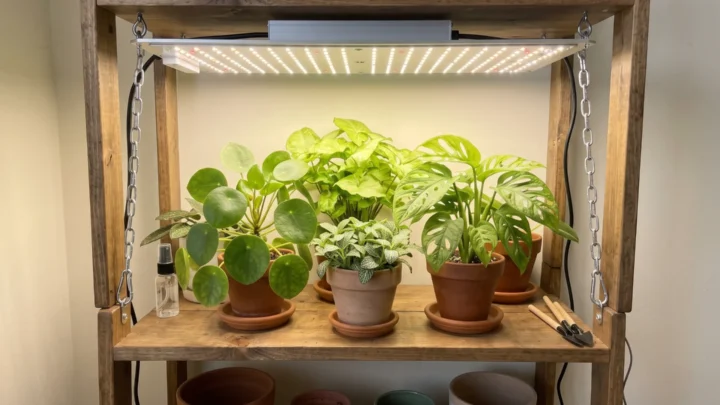
- LED Panels (30W–50W): Hang 12 to 18 inches above the top of the lettuce canopy.
- LED Panels (100W+): Hang 18 to 24 inches above the canopy, and monitor closely for signs of light stress.
- T5 Fluorescent Tubes: Keep very close—about 6 to 12 inches above the leaves, as fluorescents lose intensity rapidly over distance.
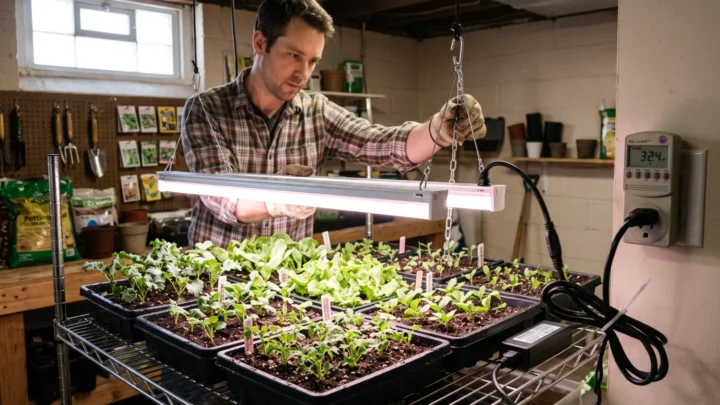
Pro Tip: Use adjustable rope ratchets or adjustable light hangers. As your lettuce grows, you can easily raise the lights to maintain a consistent distance above the expanding leaves.
Common Indoor Lettuce Lighting Mistakes to Avoid
- Ignoring the Timer: Lettuce relies on consistent day lengths. Relying on manual switching often leads to erratic schedules. Invest in a simple plug-in electrical timer ($10) to automate 14 hours of light daily.
- Using Incandescent or Warm Decorative Bulbs: Standard incandescent or warm white (2700K) bulbs emit too much heat and the wrong light spectrum, resulting in weak, elongated stems.
- Forgetting Air Circulation: Indoor grow spaces with lights can trap stagnant air, inviting fungal issues like powdery mildew. Place a small, low-wattage oscillating fan nearby to gently rustle the leaves, strengthening cell walls and improving transpiration.
Frequently Asked Questions
1. How many hours a day should my indoor lettuce grow lights be on?
Lettuce performs best with 12 to 16 hours of light per day. A 14-hour photoperiod strikes an ideal balance, giving the plant plenty of energy to photosynthesize and produce rapid leaf growth while allowing a period of darkness for metabolic processes.
2. Can I use regular household LED bulbs instead of a dedicated grow light?
Yes, for small setups or microgreens, high-lumen general LED bulbs (such as 5,000K daylight bulbs producing 1,500+ lumens) can work in desk lamps. However, dedicated full-spectrum grow lights provide optimized light distribution and correct spectral ratios for robust, healthy heads of lettuce.
3. Why is my indoor lettuce stretching and growing tall instead of forming a head?
This condition is called “leggy” growth and is almost always caused by insufficient light intensity or lights that are hung too high. Lower your light fixture closer to the canopy or upgrade to a higher-output LED light.
4. Does indoor lettuce need a dark period?
Yes. While plants require light to create energy through photosynthesis, they also utilize a dark period to carry out respiration and cellular repair. Providing 8 to 10 hours of darkness each day keeps your lettuce healthy and prevents physiological stress.
Conclusion
Growing crisp, delicious lettuce indoors is one of the most rewarding ways to enjoy gardening 365 days a year, regardless of winter weather or outdoor space constraints. By understanding your plants’ core light requirements, calculating the proper wattage per square foot, and maintaining the right hanging height, you can bypass the frustration of leggy seedlings and enjoy bountiful indoor harvests. Grab a timer, set up your lights, and enjoy fresh greens straight from your indoor garden!
Indoor Lettuce Grow Light Calculator
Find out whether your lettuce gets the right amount of light for healthy indoor growth.
Calculation: DLI = PPFD × lighting hours × 0.0036. Results assume consistent light intensity throughout the lighting period. These are general planning targets, not guarantees of plant performance. Measure PPFD at canopy level and account for natural light, temperature, cultivar, and light distribution.

Similar Posts