Indoor Herb Garden Light Planner
Botanical Horticulturist & Food Preservation Specialist at Brittle Bloom · Certified Master Gardener & Master Food Preserver · 12+ Years in Plant Propagation & Food Preservation
If you have ever brought home a pot of basil, set it on the kitchen counter, and watched it turn tall, pale, and sad within three weeks, you are in very good company. The usual suspect is not your watering or your soil. It is light.
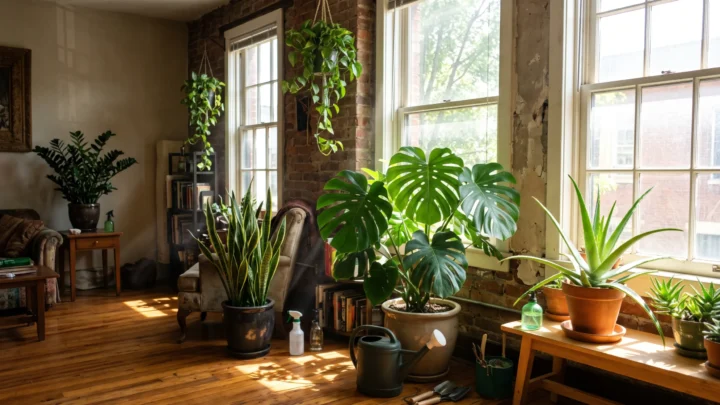
Herbs are sun lovers. Most of the ones we cook with, such as basil, rosemary, thyme, and oregano, come from sunny, open places. A typical windowsill indoors is a much dimmer home than it feels to us. Our eyes adjust, so a room that looks bright can still be far darker than what a herb wants.
This indoor herb garden light planner walks you through a simple process. First you find out how much light your space actually gets. Then you match herbs to that light. Finally, if you need it, you add a grow light and set a schedule you can stick to. No special equipment is required to start, and you do not need a perfect sunny window to grow something delicious.
Why Light Matters More Than Anything Else for Indoor Herbs
Plants turn light into food through photosynthesis. Less light means less food, and herbs respond in predictable ways. Growth slows. Stems stretch toward the window. Leaves come in smaller and paler, and flavor can be weaker.
Outdoors, a sunny spot can give a plant many hours of strong direct light. Indoors, even right behind a clear window, the light is usually much weaker. Glass blocks some of it, distance from the window cuts it quickly, and in winter the days get shorter on top of that.
Light has three parts worth knowing:
- Intensity: how strong the light is (a bright south-facing window vs. a corner of the room).
- Duration: how many hours per day the plant receives it.
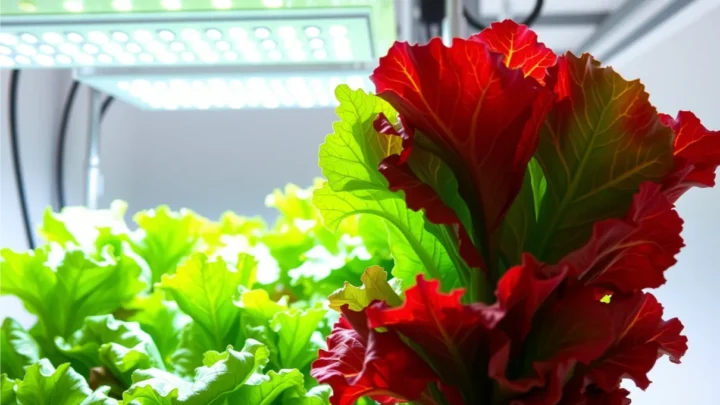
- Quality: the colors of light. Sunlight is full-spectrum, and so are most modern “full-spectrum” LED grow lights.
A good plan looks at all three. This is why the planner below starts with measuring, not buying.
Step 1: Map the Light in Your Home
Before choosing a single herb, spend a day or two watching your space. You only need a notebook or your phone.
Know your window direction
In the Northern Hemisphere, which covers the US, Canada, the UK, and most of Europe, windows generally work like this:
| Window facing | Typical light indoors | Herb suitability |
|---|---|---|
| South | Brightest and longest direct light | Best for sun-loving herbs |
| West | Strong afternoon sun, can run hot | Good for most herbs |
| East | Gentler morning sun | Good for moderate-light herbs |
| North | Weakest, mostly indirect | Usually needs a grow light |
If you garden in the Southern Hemisphere (Australia, New Zealand, South Africa, parts of South America), the sun’s path flips. North-facing windows are the bright ones and south-facing are the dim ones.
Do the shadow test
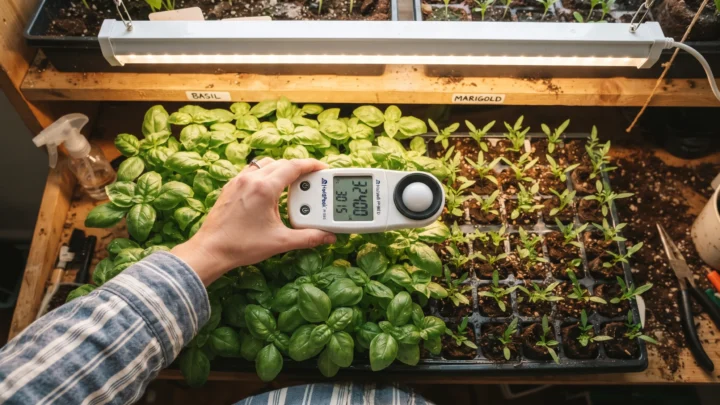
This is a free way to judge light intensity without any gadgets. At midday, hold your hand about a foot above the spot where a pot would sit and look at the shadow it casts.
- Sharp, dark shadow with clear edges: strong light. Suitable for sun-loving herbs.
- Soft shadow with fuzzy edges: medium light. Fine for moderate herbs, with a grow light for the hungriest ones.
- Barely visible shadow: low light. Plan on grow lights, or pick the most forgiving herbs only.
Check at a few times of day, such as morning, noon, and late afternoon. Note how many hours the spot gets light that actually lands on the plant, not just a bright room.
Count your direct-sun hours
Write down roughly how many hours of direct sun each window gets on a clear day. Many sun-loving herbs want about six to eight hours of direct light. If your best window gives you three or four, that is useful information, not a failure. It tells you what to grow and where a lamp will help.
Account for the seasons
Your light is not the same in July and December. Days are shorter in winter and the sun sits lower, and clouds are more common in many regions. A windowsill that worked beautifully in summer may fall short by midwinter. Reassess each season, and plan to add supplemental light in the darkest months if you want to keep harvesting.
Quick light-mapping worksheet (copy this into your notes):
| Spot in my home | Window direction | Hours of direct sun | Shadow test result | Light level (High/Medium/Low) |
|---|---|---|---|---|
| Kitchen windowsill | ||||
| Living room window | ||||
| Bedroom shelf |
Step 2: Match Herbs to Your Light Level
Now the fun part. Herbs fall roughly into three groups by how much light they want. Use this as a guide, and know that variety, temperature, and your home’s conditions all play a role.
High-light herbs (about 6–8+ hours of bright light)
These are the sun worshippers. Without strong light they get leggy and flavorless fast.
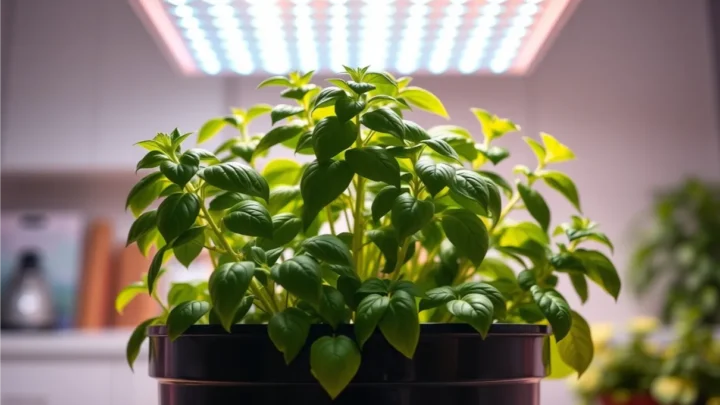
- Basil: the classic indoor frustration. Loves warmth and plenty of light.
- Rosemary: one of the hardest herbs indoors. Needs lots of light and good air movement.
- Thyme: compact and forgiving once it has enough sun.
- Oregano and marjoram: tough herbs that still want a bright window.
- Sage: happiest with strong light and not too much water.
- Lavender (if you grow it for culinary use): very light-hungry, and not an easy indoor plant.
Medium-light herbs (about 4–6 hours of good light)
These tolerate a less-than-perfect window better.
- Parsley: grows slowly but steadily, and does fine in an east window.
- Chives: reliable and forgiving, regrows after cutting.
- Cilantro (coriander): prefers cooler, bright conditions. It tends to bolt (flower) quickly when warm.
- Dill: wants a bright window but has a taproot, so give it a deep pot.
Lower-light-tolerant herbs (about 3–4 hours, ideally with some help)
No herb loves deep shade, but these cope better than most.
- Mint: one of the most forgiving herbs for lower-light spots. Keep it in its own pot because it spreads.
- Lemon balm: a close relative of mint with a similar easygoing attitude.
- Parsley and chives can also hold on in a modest east window, though growth will be slower.
Putting it together
| Your light | Good herb choices | Add a grow light for |
|---|---|---|
| Bright south or west window | Basil, thyme, oregano, sage, rosemary | Winter months, or to boost basil and rosemary |
| East window | Parsley, chives, cilantro, dill, mint | Basil and thyme if you want them |
| North window or interior room | Mint, lemon balm, chives | Almost everything |
A small, honest garden beats an ambitious struggling one. Three or four herbs matched to your light will outperform ten that all want the sunniest spot.
Step 3: Decide Whether You Need a Grow Light
Here is a simple way to decide.
You can probably skip a grow light if:
- You have an unobstructed south- or west-facing window (north-facing in the Southern Hemisphere).
- You are growing medium or low-light herbs.
- It is spring or summer in your region.
You should seriously consider a grow light if:
- Your windows face the weak direction or are shaded by trees, buildings, or a balcony.
- You want to grow basil or rosemary through winter.
- Your herbs keep stretching, even after you moved them closer to the glass.
- You want to grow herbs in a kitchen cupboard shelf, a bookcase, or another interior spot.
What kind of grow light?
You do not need anything fancy.
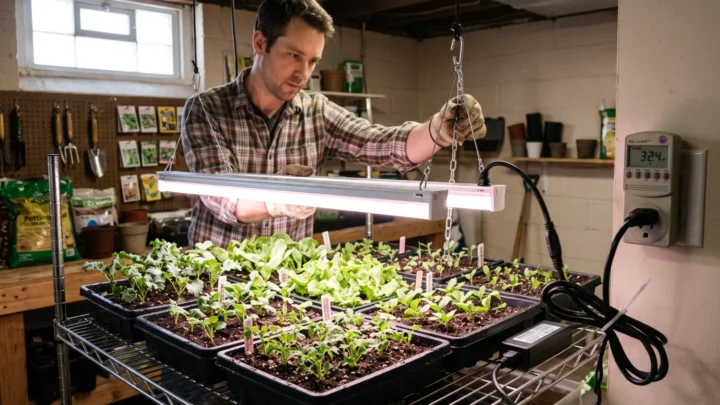
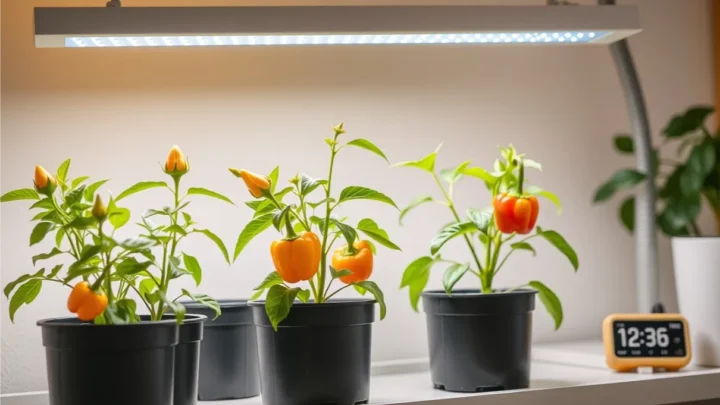
- LED full-spectrum lights are the most popular choice for home herb gardens. They use little electricity, run cool, and last a long time.
- Fluorescent tubes (T5) also work and have been used by home growers for years, though LEDs have largely taken over.
- Clip-on or gooseneck lamps suit one or two pots on a shelf.
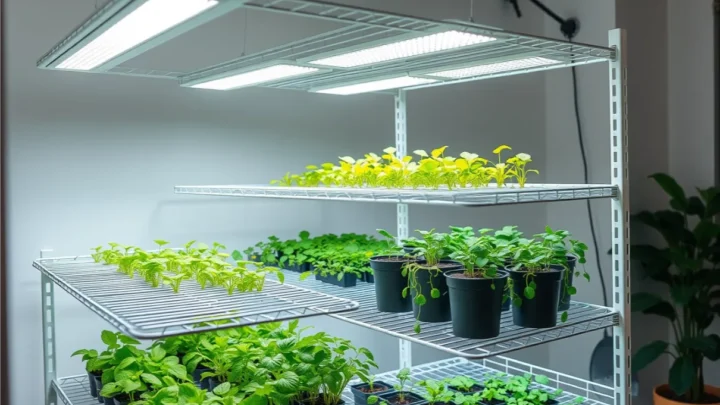
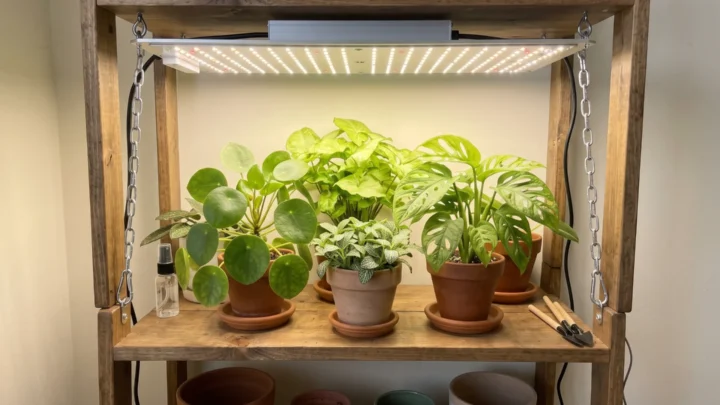
- Bar or panel lights suit a shelf with a row of pots, or a small stand.
- All-in-one countertop gardens (the kind with built-in lights) are the easiest option if you want something that works out of the box.
When you shop, look for lights described as “full-spectrum” and check the manufacturer’s instructions for recommended distance. Light output varies a lot between products, so the product guidance matters more than a single number from an article. Be a little cautious with claims about “equivalent to X watts,” because they are not always easy to compare.
How far away should the light be?
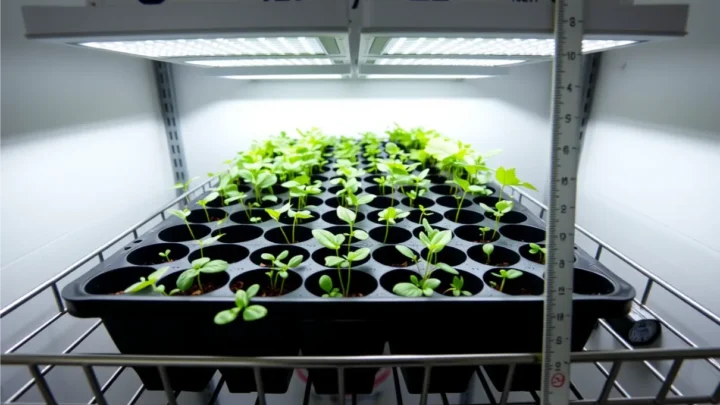
Distance changes intensity a lot. Light that is too far away is weak, and light that is too close can scorch leaves. Many home LED lights work well when placed somewhere around 6 to 12 inches above the plants, but this depends on the lamp’s power, so follow the maker’s guidance and watch your plants. Start a little further away and move closer gradually if growth looks weak. If the leaves look bleached, crispy, or have brown patches, raise the light.
Step 4: Set Your Light Schedule
Light duration is the part many beginners overlook, and it is easy to fix.
How many hours per day?
For most herbs under grow lights, a common starting point is around 12 to 16 hours of light per day, with a dark period at night. Plants need that dark time too, so avoid leaving lights on around the clock. If you also get some natural window light, you can count it toward the total and use the lamp to extend the day.
Use a timer
A basic plug-in outlet timer is one of the best cheap upgrades you can make. Set it once and forget it. This keeps the schedule consistent, which herbs prefer, and saves you from forgetting to switch lights on or off.
A simple schedule template
| Situation | Suggested approach |
|---|---|
| Bright window, spring/summer | Natural light only, or a lamp for 2–4 extra hours on cloudy days |
| Bright window, winter | Natural light plus lamp to reach roughly 12–14 total hours |
| Dim window or shelf | Lamp as main light source, about 12–16 hours |
| Interior spot with no window | Lamp only, about 14–16 hours, with a timer |
These are starting points. Adjust based on how your herbs look, which brings us to the next step.
Step 5: Read Your Herbs and Adjust
Your plants will tell you whether the plan is working. Check in once or twice a week.
Signs of too little light
- Long, thin, stretched stems with big gaps between leaves (“leggy” growth)
- Pale or yellowish-green new leaves
- Small leaves and very slow growth
- Plants leaning hard toward the window or lamp
- Weak flavor and scent
Fix: move the plant to a brighter spot, add or lower a grow light, or extend the daily light period.
Signs of too much light or heat
- Bleached, faded, or papery patches on leaves
- Crispy brown edges or spots
- Wilting even when the soil is moist
- Soil that dries out extremely fast
Fix: pull the plant back from the window or raise the lamp, and give it a little shade during the hottest part of the day. Remember that a window can heat up a lot in direct summer sun.
Rotate your pots
Turn your pots about a quarter turn every few days. This keeps plants growing evenly instead of leaning in one direction.
Step 6: Build Your Planner (Put It All Together)
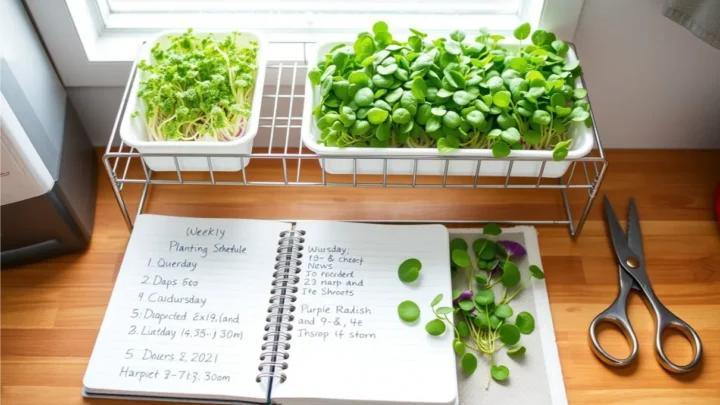
Here is a worksheet you can copy and fill in. It brings together everything above.
| Herb | Light group | Where I’ll grow it | Natural light hours | Grow light? | Lamp hours/day | Notes |
|---|---|---|---|---|---|---|
| Basil | High | South window | Yes in winter | 12–14 | Keep warm | |
| Mint | Low-tolerant | East window | Optional | 12 | Own pot | |
| Chives | Medium | East window | Optional | 12–14 | Cut often | |
| (Your herb) |
Work through it in this order:
- Fill in your light map from Step 1.
- Choose three or four herbs that fit each light level.
- Decide window only, window plus lamp, or lamp only.
- Set a timer and a starting distance.
- Check your plants weekly and adjust.
Practical Tips for Better Results Under Any Light
Light is the big one, but a few supporting habits help your plan work.
Water carefully. Indoor herbs usually grow more slowly than outdoor ones, so they need less water than you might think. Check the top inch of soil. Many herbs dislike constantly wet roots, especially Mediterranean ones like rosemary, thyme, oregano, and sage.
Use pots with drainage holes. Soggy soil leads to root rot, which can look like a light or watering problem and is often both.
Choose a good potting mix. A light, well-draining potting mix made for containers works better than garden soil indoors.
Give herbs air. Good airflow reduces fungal problems. Avoid cramming pots tightly together, and do not place plants right next to a hot radiator or a cold draft.
Harvest regularly. Pinching back the tips of basil, mint, and oregano encourages bushier growth instead of tall, leggy stems. Never remove more than about a third of the plant at once.
Mind the temperature. Most common herbs like normal room temperatures. Basil especially dislikes cold, so keep it away from chilly glass on winter nights.
Start with healthy plants. Whether you grow from seed or buy nursery plants, begin with strong, healthy ones. Seedlings in particular need strong light from the start or they stretch quickly.
Remember that growing conditions, climate, and seasons vary by region and by home. Treat the numbers in this guide as starting points, and check your local cooperative extension service or horticultural society for advice that suits where you live.
Common Mistakes to Avoid
- Judging light by how bright the room looks. Our eyes adapt, so use the shadow test and watch your plants.
- Starting with too many herbs. Begin with a few that suit your light.
- Putting a grow light too far away. Distance matters more than most people expect.
- Leaving lights on 24/7. Plants benefit from a dark period.
- Ignoring winter. The light you had in summer will not be there in December.
- Planting mint with other herbs. It spreads aggressively and will crowd its neighbors.
Frequently Asked Questions
How much light do indoor herbs need?
It depends on the herb. Sun-loving herbs like basil, rosemary, thyme, and oregano generally do best with about six to eight hours of bright light. Herbs such as parsley, chives, and mint can manage with less. If your window cannot provide that, a full-spectrum grow light run for roughly 12 to 16 hours a day can fill the gap.
Can I grow herbs indoors without a grow light?
Yes, if you have a bright, unobstructed window, especially a south- or west-facing one in the Northern Hemisphere. Mint, chives, parsley, and lemon balm are the most forgiving choices. In winter, or in a dim home, herbs often grow better with some supplemental light.
What are the best herbs for low light?
Mint, lemon balm, chives, and parsley handle lower light better than most culinary herbs. Growth will still be slower than in a bright spot, and no herb thrives in deep shade. For very dim rooms, a grow light is the reliable option.
How do I know if my herbs are not getting enough light?
Look for stretched, leggy stems, pale leaves, small new growth, and plants leaning strongly toward the light source. If you see these signs, move the plant to a brighter location or add a grow light.
How close should a grow light be to my herbs?
It depends on the type and strength of the light. Many home LED lights are used several inches to about a foot above the plants, but always follow the manufacturer’s recommendation. Watch for bleached or scorched leaves (too close) or stretching (too far) and adjust.
Conclusion
Growing herbs indoors does not require a perfect sunny window or expensive gear. It requires a little attention to light. Map your space, match herbs to the light you actually have, add a grow light where it helps, and set a simple timer. Then watch your plants and adjust.
Start small with three or four herbs, fill in the planner, and give yourself a season to learn what works in your home. Before long, you will be snipping fresh basil, mint, or chives for dinner, even on a grey winter evening.
Indoor Herb Garden
Light Planner
Find a better lighting schedule for your herbs and create a healthier indoor growing space.

Similar Posts