Can ZZ Plants Live Outside?
Botanical Horticulturist & Food Preservation Specialist at Brittle Bloom · Certified Master Gardener & Master Food Preserver · 12+ Years in Plant Propagation & Food Preservation
You’ve got a ZZ plant thriving in that dark corner of your living room, and now you’re wondering if it can hang out on the patio for the summer. Maybe you’re tired of looking at it indoors, or you just want to give it some fresh air. The short answer is yes, your ZZ can live outside, but only if you hit the right conditions, and it is nowhere near as forgiving as your low-light living room.
Keep reading, and I’ll tell you exactly when it’s safe to move it out, what will kill it fast, and the mistakes that turn a healthy plant into a mushy mess.
The Short Answer: Yes, But Stop Right There
Let’s get the basic answer out of the way so we’re on the same page. ZZ plants can absolutely survive outdoors in the right climate, specifically in USDA hardiness zones 9 through 11. If you live in Florida, Southern California, Hawaii, or parts of the Gulf Coast, you could technically plant one in the ground and it would live for years.
But here’s the catch: the plant you have inside your house is not ready to face the elements. It’s been living in a temperature-controlled, low-light, low-airflow bubble. If you just chuck it onto your balcony in July, you’ll come back to a crispy, sunburned disaster.
The trick is understanding what a ZZ plant actually needs to survive outdoors, and that’s very different from what it tolerates inside. This article walks you through light, temperature, water, and the exact steps to moving your plant outside without killing it. I’ll also share a few hard truths about why some people swear by outdoor ZZ plants and why others lose them within two weeks.
How Much Light Does a ZZ Plant Need Outside?
This is where most people screw up, so listen up.
Your indoor ZZ is fine with fluorescent office lighting and a north-facing window. It survives there because it stores water in those thick, potato-like rhizomes. But place that same plant in full, direct afternoon sun, and the leaves will literally burn.
We’re not talking a little yellowing, we’re talking white, crispy, bleached-out leaves that will never recover.
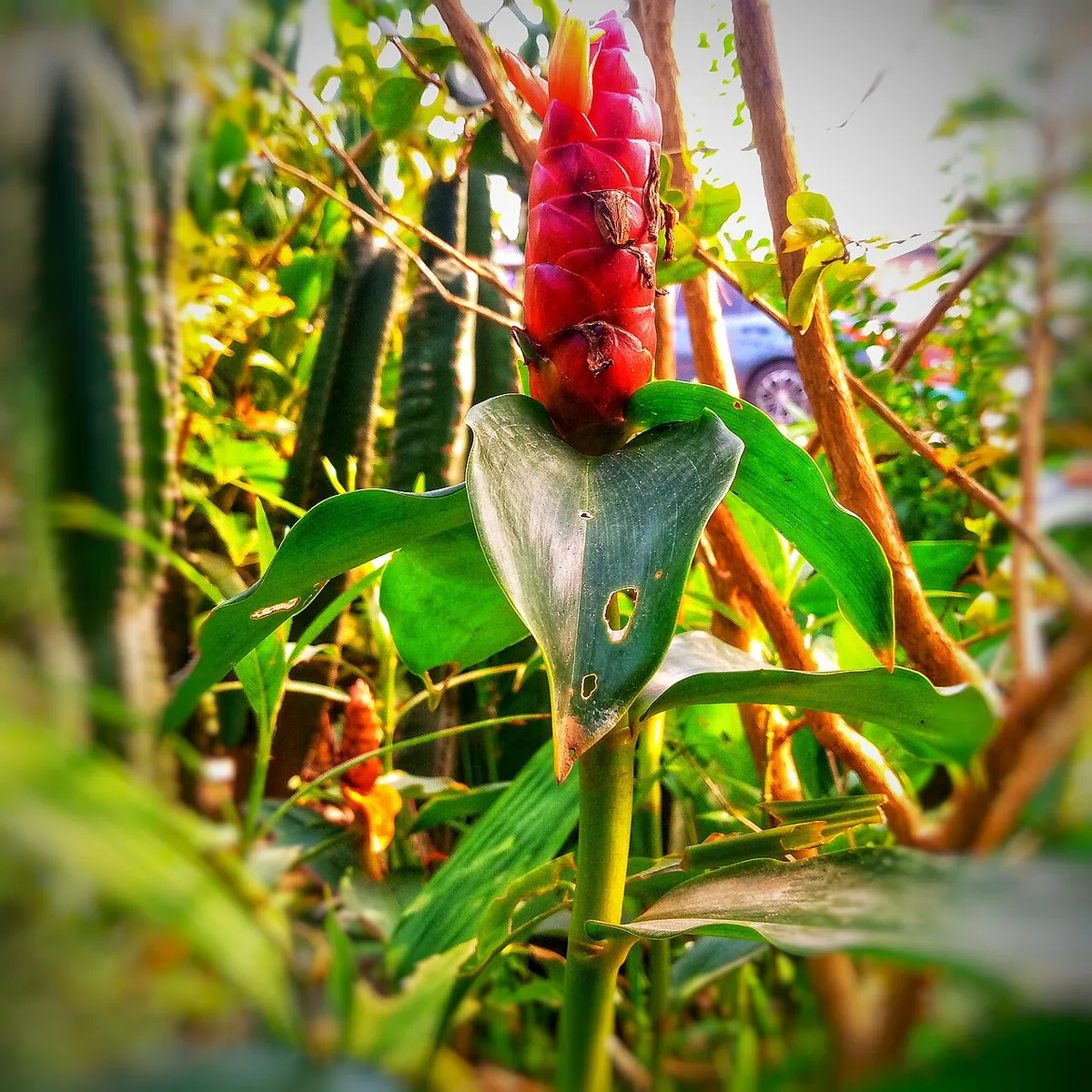
Image source: Wikimedia Commons / Jeremyida002 (CC BY-SA)
Outdoors, your ZZ needs what we call bright, indirect light. Think of the light you’d get on a covered porch facing east, or under the thin canopy of a tree. The sun hits the area, but it’s filtered or only hits during the morning hours.
Here’s what works:
- Morning sun only (up until about 11 a.m.)
- Dappled shade under a tree or pergola
- A covered patio with bright ambient light but no direct sun rays hitting the plant
- A spot that gets no more than 2 to 3 hours of gentle direct sun, then shade for the rest of the day
Here’s what absolutely kills them:
- Full, blazing afternoon sun (noon to 4 p.m.)
- Reflected heat bouncing off a white wall or concrete patio
- Long hours of direct sunlight without any break
If you’re curious about how much light your specific porch gets throughout the day, grab a cheap light meter or just watch the spot for a few days. I’ve seen way too many people assume "some sun" is fine, and then their plant looks like it went through a fire.
That said, if you want the deeper breakdown of indoor lighting and how much your ZZ needs before you even consider moving it out, I covered the lighting topic in detail here: figuring out how much sun is too much.
What's the Coldest Temperature a ZZ Plant Can Handle?
Temperature is the silent killer of outdoor ZZ plants. It's not that they hate cold; it's that they have zero tolerance for frost.
Your ZZ plant is a tropical species from Africa. It likes the same warm temps you do, roughly 65°F to 85°F. Anything below 50°F, and the plant starts to stress out.
The leaves won’t die right away, but the growth stalls, and the roots become more susceptible to rot.
Here’s the hard rule: Never let a ZZ plant sit in temperatures at or below 40°F. Frost is fatal. Below 45°F for multiple nights, you're playing with fire.

Image source: Wikimedia Commons / USDA-ARS and Oregon State University (OSU)
For reference, check your area on the USDA hardiness zone map to see if you're even in a viable zone. If you’re in zone 9 or warmer, you can get away with leaving a potted ZZ outside for most, if not all, of the year. If you live in zone 7 or colder, your ZZ needs to come inside long before the first autumn chill.
I remember one reader who bragged about leaving her ZZ out through a 38°F night because it "looked fine." Two weeks later, every single leaf had turned to mush at the base. The damage wasn't visible immediately, it showed up later. Don't learn this the hard way.
So the practical advice is simple:
- Bring your ZZ inside when nighttime temps start dipping below 55°F.
- If you can't bring it in, move it against the house near a south-facing wall, which radiates heat overnight.
- Never risk a frost warning, period. End of story.
Watering and Rain: The Biggest Outdoor Risks
Here's the thing about ZZ plants, they are drought-tolerant queens. The absolute fastest way to kill one outside is to let rain drench the pot and keep it sopping wet for days on end.
Inside your home, you control the water. You water it once every two to three weeks and let the soil dry out completely. Outdoors, nature is in charge.
If you live in a place that gets heavy summer thunderstorms, a potted ZZ will sit in soaked soil for days, and the rhizomes will rot.
Picture this: Your plant is in a terracotta pot on the patio. It rains for four straight days. The pot has no drainage hole because you never got around to drilling one.
The water pools at the bottom, the rhizomes sit in that bog, and within eight days the whole plant flops over. This is probably the most common way I see outdoor ZZ plants die.
Here’s how you avoid that disaster:
- Use a pot with at least one large drainage hole. Not a tiny one, a real hole.
- Pull the pot under cover if heavy rain is forecast for more than a day.
- If your ZZ is in the ground, plant it on a slope or in well-draining soil. Big mistake to throw it into clay-heavy dirt that holds water.
- Reduce watering frequency when it’s cooler or cloudy. A ZZ outside in summer may need a drink every 7 to 10 days depending on heat and airflow. But check the soil first. Stick your finger in to the second knuckle. Dry? Water. Damp? Leave it alone.
Outdoor airflow is another factor people forget. A breeze helps dry the soil faster, which is good. But a strong wind can knock over a top-heavy pot and snap the thick stems.
If you’ve had your ZZ indoors, the stems are not used to wind stress. Acclimate it slowly, starting in a sheltered corner before putting it in an open, breezy spot.
For the full watering and care routine that applies in both indoor and outdoor settings, check out my complete beginner's care guide for things like soil mix and pot size. Get the soil right, and the outdoor bit gets a lot easier.
How to Move a ZZ Plant Outside Without Shocking It
You can’t just drag your ZZ from the living room to the backyard and walk away. That’s called "transplant shock," and it’ll cause leaf drop within a week.
You have to harden the plant off. Think of it like you moving from a cave to a beach. Your skin would freak out if you went from zero sun to three hours of direct sunlight in one day.
The plant’s leaves feel the same way.
Here’s a step-by-step process that works:
- Start in full shade. Day 1 to 4, place the plant in the shadiest, most protected spot you have outside. A covered porch or under a bush works great.
- Introduce morning sun. Day 5 to 10, move it to a spot that gets 1 to 2 hours of morning sun, then shade.
- Increase exposure gradually. By week 2 or 3, give it the desired "bright, indirect" spot you plan to keep it in for the summer.
- Watch for signs. If leaves start looking pale, bleached, or crispy, back it off into more shade for a few days.
This whole process takes about two weeks. If you want to move it outdoors for the summer, start this in late spring when nighttime lows are already above 55°F and daytime temps are below 85°F. Maybe early April in the South, or mid-June in cooler northern zones.
Coming back inside is just as stressful. In the autumn, do the reverse, bring it in before the heat kicks on and the air gets dry. Check the underside of the leaves for any pests that hopped on while it was outside, like spider mites or mealybugs.
Potted Plants vs. Planting in the Ground
If you’re reading this because you want to plant a ZZ in your garden landscape, I have different advice for you than for the potted-plant crowd.
In the ground: A ZZ plant in the ground outdoors can grow huge. We’re talking 3 feet tall and several feet wide, with thick stems that stand up proudly without any support. If you live in zones 9 through 11 with well-draining soil and partial shade, it can completely transform a boring corner of your garden.
It’s low maintenance, looks tropical, and is practically indestructible against heat as long as it gets some afternoon shade.
But here are the cons nobody tells you:
- It will spread over time via rhizomes. You can’t easily relocate or remove it once it’s established. I’m serious, digging up a mature ZZ root system is a job for a pickaxe.
- It will look bad in winter if temps hover in the 40s to 50s. Leaves can develop cold damage spots.
- It doesn't like being in standing water. If your lawn floods, it’s dead.
In a pot: This gives you flexibility. You can move it around to chase the light or avoid the rain. You control the soil quality more easily.
The downside is that pots freeze faster than the ground in winter, and the soil dries out faster in summer heat. A potted ZZ outdoors in 90-degree heat may need water every 4 to 5 days.
Who should skip planting outdoors entirely? If you live in a zone colder than 8, don't even think about putting it in the ground. Stick with a pot you can drag inside when the weather turns.
Also, if your yard is low-lying and collects water after every rainstorm, just don't. A ground-planted ZZ in a flood zone is a dead ZZ.
A Quick Word on Pets Outside
Now, a lot of people move their ZZ outdoors because they have a curious cat or dog that won’t stop chewing on it inside. That’s a fair instinct.
The good news is that moving the plant outside gets it away from your pets. The bad news is that ZZ plants are toxic to cats and dogs. The calcium oxalate crystals in the leaves can cause drooling, vomiting, and mouth irritation if they bite into it.
Your dog will likely chew on the lowest leaves if it can reach them on the patio, and that's a problem.
Check out this guide on the toxicity risk for cats and dogs so you understand exactly what could happen. The key is placement, put the pot up on a tall stand or hang it somewhere out of reach of nosey pets. Just because it’s outside doesn’t mean Fido won’t take a bite.
Also, be real with yourself: Outdoor plants attract insects. Snails, slugs, and mealybugs love the cool, shaded spots ZZ plants prefer. Spraying the plant down with a hose every couple of weeks is a smart move to keep pests away, and inspecting the leaf joints on a Saturday morning is a good habit.
On the Flip Side: When It’s Not Worth It
Let me be brutally honest for a second. Just because you can put a ZZ plant outside doesn’t mean you should.
If your outdoor space is a full-sun balcony with no shade and no covered area, skip it. You will spend the whole summer moving the plant around your tiny balcony trying to keep it from frying. It’s just not worth the hassle.
Same thing if you live in an area with unpredictable frosts from April through October. You barely get a warm summer window. Why risk moving it out, acclimating it for two weeks, then dragging it back in a month later when a random cold front rolls in?
The ZZ plant is famous for being a houseplant for a reason. It's one of the few plants that genuinely thrives indoors with low light and neglect. If your indoor spot is working, don't fix what isn't broken.
The best outdoor scenario is the person with a covered eastern porch who lives in a warm southern state. In that case, the ZZ will shine outdoors, putting out big, bold leaves with that deep green gloss you want. It gets more airflow, more sun, and absolutely grows faster than any indoor plant ever could.
That is the beauty of giving it the outdoor treatment.
Burnt leaves and mushy stems are not repairable, they either cut back or start over.
So, want to give it a shot? Just take it slow, watch the weather forecast, and pull it inside when the nights get chilly. Your ZZ will reward you if you pay attention.

Similar Posts