ZZ Plant Under Grow Lights: Do You Need One?
Botanical Horticulturist & Food Preservation Specialist at Brittle Bloom · Certified Master Gardener & Master Food Preserver · 12+ Years in Plant Propagation & Food Preservation
Your ZZ sits in that dim corner, looking fine, but you can't shake the question: does it need a grow light to actually thrive? Short answer: no, a healthy ZZ doesn't require one, but a grow light earns its spot in a few specific situations. Here's the exact breakdown of when to buy, what to get, and how to use it without cooking your plant.
ZZ Plant Light Requirements: How Much Light Does a ZZ Plant Need?
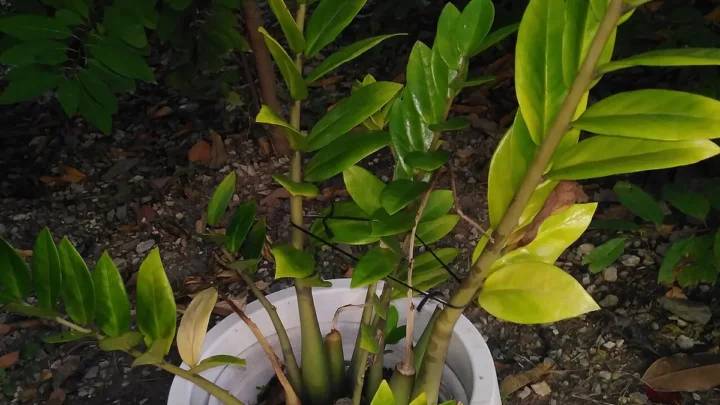
The ZZ (Zamioculcas zamiifolia, if you want the full mouthful) comes from East Africa, where it grows on shaded forest floors. It evolved to grab whatever light sneaks through the canopy above. That's why it shrugs off rooms that make other plants give up.
But here's the catch: surviving isn't the same as thriving. A ZZ in low light will simply stop growing. It won't turn yellow or drop leaves, it just pauses, sometimes for months, and waits.
Now, you might be wondering what "enough light" really means. In practical terms: a north-facing window or a bright room about 6, 10 feet from the window keeps a ZZ alive. For actual new growth, give it bright, indirect light for most of the day.
That brings us to the biggest mistake people make: treating "low light" like it means "no light." No plant runs on nothing. If the spot is dark enough that you can barely read a book, your ZZ is existing on fumes, not sunlight.
Here's a simple test I use. Hold a piece of white paper next to the plant around noon. If the paper casts a soft shadow, that's enough light for a ZZ to grow.
If there's barely a shadow at all, you're in survival mode.
For the number nerds: a ZZ does fine around 50, 100 foot-candles, and it grows noticeably faster at 200, 500 foot-candles of indirect light. Most phone light-meter apps get you in the ballpark. If you want to nerd out on exact numbers, university extension research lays out indoor lighting charts that are worth a read.
Signs the light level is too low: new stems come outextra leggy and thin, reaching toward the nearest window. The gaps between leaves stretch out awkwardly, and the stems flop over instead of standing upright. If your plant looks like it's trying to crawl somewhere brighter, that's your clue.
Growth slowing to a crawl is another tell. A happy ZZ pushes out new stalks every few weeks in the growing season. If you've gone four months without seeing a single new shoot, the plant isn't lazy, it's light-starved.
When You Actually Need a Grow Light
Here's the thing: most people don't need one. But plenty of you reading this live in spaces that make a ZZ sulk.
Picture this: you've got a shelf in the hallway, a desk in the guest room, or a corner in the basement. No windows within 15 feet. The room is "bright" because of overhead LED bulbs.
Your ZZ sits there looking fine, because ZZs always look fine, but no new growth ever shows up.
If that's your situation, a grow light moves from "nice gadget" to "actual solution."
Another spot where grow lights earn their keep: winter. Northern climates mean short days and weak sun angles. Even a south-facing window can leave your ZZ in a low-light slump from December through February.
People in the upper Midwest and Northeast deal with this every year.
And here's the reality check, you also need a grow light if you're a "collector" type. Maybe you're growing succulents or tropicals nearby, so the lights are already humming. Moving the ZZ onto the shelf costs you nothing extra.
That pairs well with routine ZZ upkeep I've written about before.
Bottom line: a ZZ is happy with a grow light around, but it doesn't need one dedicated to it. If you already have one shining in the room, pop the plant nearby. If you're buying one just for the ZZ, think twice.
Actually, let me walk you through when it's worth the money.
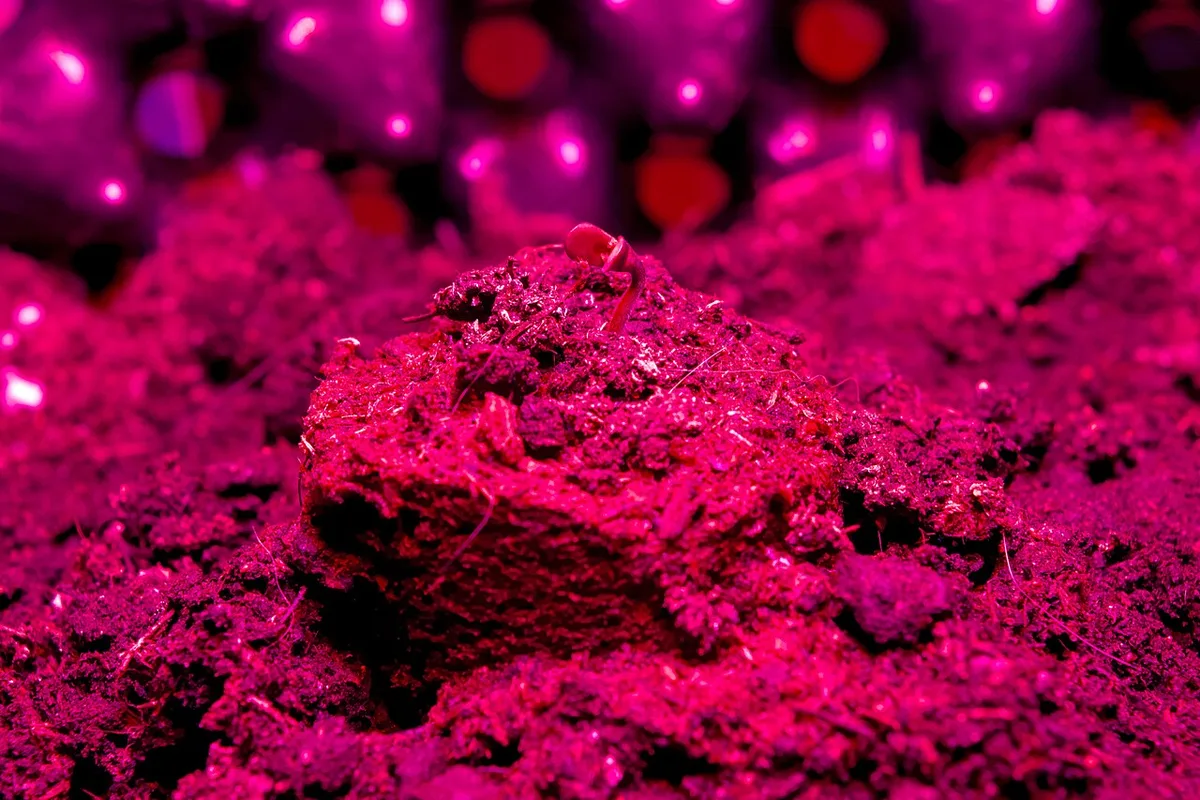
Image source: Wikimedia Commons / Trougnouf (Benoit Brummer) (CC BY)
Picking a Grow Light That Won't Waste Your Money
Let me save you some cash right off the bat: you don't need a $200 LED panel for a ZZ. Not even close.
ZZs are low-light champs, so they need far less juice than a monstera or a fiddle-leaf fig. A cheap, low-wattage LED bulb in a normal desk lamp will get the job done.
Here's what to look for:
- LED bulbs, not fluorescent tubes. Modern LEDs run cool, use less power, and last longer. Fluorescent bulbs work, but the heat and ballast noise make them annoying indoors.
- Full-spectrum or "daylight" (5000, 6500K). This gives the plant the wavelengths it needs for photosynthesis while also looking natural to your eyes. Avoid those goofy purple-blurple blurple lights, they're for flowering plants, not ZZ.
- 20, 40 actual watts. Not "equivalent wattage" made-up number. A 20-watt LED bar is plenty. You can light a whole shelf with a single 30-watt panel.
- Cord length matters more than you'd think. Most budget grow lights come with a 5-foot cord. If your outlet is 8 feet away, you're hunting for an extension. Measure your setup before ordering.
The best part is that you don't have to overthink the brand. Any of the major names, Sansi, Barrina, Spider Farmer, make decent units. Even a generic "600W equivalent" panel from Amazon works fine, as long as you check reviews for buzzing noise or overheating.
One metric that trips people up: actual power draw vs. claimed wattage. A light labeled "1000W" might pull 80 watts from the wall. Read the fine print on the listing.
The real number is what matters.

Image source: Wikimedia Commons / Shixart1985 (CC BY)
Where to Place the Light and How Far Away
Most "ZZ plant under grow lights" fails come down to distance. Set it too far, and you're wasting electricity. Set it too close, and the leaves scorch.
The sweet spot:
- LED panel lights: 18, 24 inches above the plant canopy
- LED strip lights: 12, 18 inches above
- Bulbs in desk lamps: 10, 15 inches away from the leaves, angled to avoid direct spotlighting
Start at the far end of that range and move the light closer over a few days. Watch the leaves. If they start to pucker, curl, or turn pale, back off the distance.
Here's a trick: put your hand between the light and the plant. If the light is hot after 30 seconds, it's too close for a ZZ. You want warmth, not heat.
Duration matters too. A ZZ under grow lights needs 8, 12 hours of light per day, not 16. It's a forest-floor plant, it wants a rest period. A timer plug costs $10 and makes the whole thing hands-off.
Set it for 10 hours and forget it.
One thing nobody warns you about: the light gradient. A single light bar only covers maybe 2 square feet with usable intensity. The edges of that coverage drop off fast.
So rotate the pot every few weeks or place the ZZ directly under the center.
Do Grow Lights Cause Problems?
Sometimes. And it's not the light itself, it's the heat.
Budget panels generate heat, even LED ones. If you've got a grow tent or enclosed shelf, that heat builds up. The leaves brown at the edges, and the soil dries out faster.
Check your shelf's clearance, leaves touching the lamp face is never okay.
Also, watch for algae on the soil surface. Bright light plus damp potting mix equals green sludge. If that starts showing up, you're either watering too much or the light is on too long.
Repotting your ZZ into fresh soil with better drainage helps, too.
On the flip side, some folks overcorrect and kill their ZZ with "kindness." They see a droopy leaf and water more, when the actual issue is heat stress from the lamp. Always check the light distance before reaching for the watering can.
Low Light vs. No Light Game Plan
Let me give you a quick no-nonsense decision tree.
| Your situation | What to do |
|---|---|
| Bright window room, any direction | No grow light needed. Just put it near the window. |
| Dim corner, north-facing room | No grow light needed. Plant'll grow slow but stay alive. |
| No window at all | Get a grow light. Start with a cheap LED bulb. |
| Winter slump (short days) | Optional. Only worth it if growth matters to you. |
| Basement / interior rooms | Yes, get one. No plant grows in the dark. |
Most homeowners fall into rows one and two. That's why most people don't need to spend money on lights.
But if you're growing ZZ under grow lights specifically because you've got zero natural light, that's the right call. Just keep expectations realistic. It won't grow like a weed, it'll still be a ZZ, which means slow, steady progress.
The one warning here: don't run the grow light all day and all night. ZZs need a dark period to respire properly. That's non-negotiable, no matter how much you love the look of a glowing shelf.
Grow Light Alternatives You Haven't Considered
Before you spend money on a light setup, check the cheap options first.
A mirror trick. Sounds old-school, but angling a large mirror near a window can bounce light a few extra feet across the room. It won't turn a dark closet into a sunroom, but it can bump a dim corner from 50 foot-candles to 150. That's actually enough for a ZZ to push new growth.
Move the plant seasonally. During summer, place your ZZ near a south or west window, just not directly in the sun, since the leaves will scorch. During winter, move it a few inches closer. This seasonal shuffle keeps natural growth going without buying anything.
White paint or white shelving. It's subtle and real: a matte white surface behind the plant reflects light back at it. A dark brown shelf absorbs light, while a white one bounces maybe 20% more back to the leaves. Every little bit helps in a dim apartment.
Decluttering around the window. I've been in houses where the ZZ is 4 feet from a window, but the blinds are half-shut, a bookshelf blocks part of the glass, and a plantscaping setup on the sill steals the light first. Clean that up and you might be shocked at how much more light reaches the plant.
If you've tried these and the plant still sits in low-light survival mode, then you know where that money's going.
Light Cycle, Watering, and Growth Expectations
You can't just slap a grow light up and call it a day. The plant's other care matters, too.
A ZZ under a grow light will use more water than one in a dark corner. The light speeds up transpiration, which pulls moisture out of the soil faster. Check the top inch of soil every 4, 5 days, not every week.
This is one of those cases where getting the basic care routine dialed in makes the light actually worthwhile.
Keep an eye on dust too. Sounds silly, but a layer of dust on leaves blocks the light you're paying for. Wipe the leaves with a damp cloth once a month.
Two minutes of work, and the plant absorbs noticeably more.
Another thing about grow light placement: your ZZ will grow toward the light. If the source is directly above, the plant stays compact and upright. If the light comes from one side, the stems lean toward it.
Rotate the pot a quarter turn every couple of weeks to keep it symmetrical.
And temper your expectations. A ZZ under lights won't triple in size in a month. You might get 2, 4 new stems in a season.
That's normal for this plant. The grow light's real job is to keep it gently growing through the dark months, not to turn it into a jungle.
One More Thing: Compatibility With Pets and Placement
If you've got cats or dogs, you already know this: ZZ plants are mildly toxic when chewed. The calcium oxalate crystals in the leaves cause mouth irritation, drooling, and vomiting. No one wants their dog puking on the carpet while they figure out what happened.
I've broken down the full picture in my pet toxicity guide, but here's the short version: keep the plant up high or behind a gate.
Now here's the cool part: a grow light that sits on a high shelf actually helps you solve this problem. The plant grows toward the light, which means it stacks its leaves upward and away from the edge where a cat could snag it. Combined with rotating, that habit keeps the ZZ reachable only to you.
Another placement trick: if the light source is overhead, the ZZ tends to stay more compact and bushy. If it's on a side table, the plant sprawls sideways. That sprawl puts the tips at critter height.
Choose overhead lighting if you've got curious pets.
And no matter what, give the plant enough room. A mature ZZ can hit 3 feet tall with leaves over a foot long. If you've got a 6-inch shelf, the plant will outgrow it eventually.
That's when learning to repot and divide the rhizomes becomes the natural next step.
The Bottom Line on Grow Lights
Alright, so here's where I land.
You don't need a grow light just because you have a ZZ. Most homes provide enough ambient light to keep the plant alive and slowly growing. The plant's capacity to tolerate dimness is genuinely legendary.
But there are real cases where a grow light helps: windowless rooms, winter doldrums, and serious plant collectors who've already got lights running.
If you buy one, keep it simple. A 20, 40 watt full-spectrum LED panel, positioned 18, 24 inches away, running 8, 10 hours a day, on a cheap timer. That's the whole recipe.
You don't need a $400 setup, and you don't need to fuss over fancy spectra.
The biggest benefits of a grow light aren't about turning your ZZ into a monster. It's about steady growth through dark winters, the satisfaction of a new stem pushing up every few weeks, and the peace of mind of knowing the plant's needs are covered in any room of the house.
I'd rather see someone spend $30 on a workable LED light and get the lighting fixture into the right spot, than blow $150 on a fancy panel they'll never adjust and then watch the plant slowly grow leggy in the corner anyway.
Now go look at your ZZ. Does it sit in a dim corner that hasn't put out a new stem since you brought it home? Maybe that's your sign to give it a little help.
Or maybe, just maybe, the window it's in already does the job. You know the difference now, and your plant will show it.

Similar Posts