Fall Lawn Care: A Practical Plan for Your Grass Type
Botanical Horticulturist & Food Preservation Specialist at Brittle Bloom · Certified Master Gardener & Master Food Preserver · 12+ Years in Plant Propagation & Food Preservation
Fall lawn care is a practical plan for your grass type, not a one-size-fits-all checklist. If you aerate, overseed, and fertilize the same way your neighbor does, but your grass is a different species, you can actually set the lawn back. The fix starts with one simple question: what are you growing?
As of 2026, the number that matters is 55°F. Warm-season grasses begin shutting down when soil temperatures stay below that mark, while cool-season grasses are just entering their prime. That single difference drives every fall decision, and it’s why one task can help a lawn in Ohio and hurt one in Texas.
Why Your Fall Lawn Plan Depends on Grass Type
Cool-season and warm-season grasses run on opposite calendars. Cool-season varieties like tall fescue, Kentucky bluegrass, and perennial ryegrass do their heavy lifting in spring and fall. Warm-season types like Bermudagrass and zoysiagrass pack their growth into summer, then head into dormancy as nights turn cold.
That timing decides everything. In fall, a cool-season lawn is building roots and storing carbohydrates, so it responds strongly to aeration, overseeding, and nitrogen. A warm-season lawn is winding down, and the same treatments push tender growth that winter can kill.
Most people assume lawn care is the same everywhere. It isn’t. The transition zone, a band across the middle of the U.S., can support either type, but neither thrives year-round.
That’s why one neighbor’s routine can fail completely for you.
The practical takeaway: match your plan to the grass type, then to soil temperature. If you skip that step, you’re guessing.
Identify Your Grass: Cool-Season, Warm-Season, or Transition Zone
Start with how the grass spreads. Cool-season grasses mostly form clumps or dense bunches, though Kentucky bluegrass uses underground rhizomes. Warm-season turf like Bermudagrass creeps with above-ground stolons and underground rhizomes, so it invades flower beds and sidewalk cracks.
Leaf texture helps too. Tall fescue has wide, coarse blades and a deep green color. Kentucky bluegrass has a boat-shaped tip and finer texture.
Fine fescue is thin and wiry. Among warm-season types, Bermudagrass has fine, sharp-pointed blades, while zoysiagrass feels stiff and bristly.
Color through the cold also clues you in. Warm-season lawns in the South turn straw-brown after the first hard frost. Cool-season lawns hold green longer and may stay green all winter in milder climates.
Homeowners in the transition zone get a harder read. You may have a tall fescue lawn, a Bermudagrass lawn, or a mix of both. When in doubt, check the USDA Plant Hardiness Zone Map and your state’s university extension service, such as University of Minnesota Extension, for region-specific grass ID photos.
The Decision Tree: Which Fall Plan Fits Your Lawn?
Grab a soil thermometer and use conditions, not the calendar. Soil temperature tells you whether the grass is actively growing or already shutting down.
If you have a cool-season lawn and soil temps sit between 50°F and 65°F, you’re in the sweet spot. That’s the window for core aeration, overseeding, and a fall fertilizer pass. If soil is still above 70°F, wait a couple of weeks.
If you have a warm-season lawn, flip the script. While soil is above 60°F, you can apply a pre-emergent for winter weeds and give a light feeding only if the lawn is thin. Once soil drops below 55°F, stop nitrogen and let the grass harden off.
| Condition | Cool-season lawn | Warm-season lawn |
|---|---|---|
| Soil 50-65°F | Aerate, overseed, fertilize | Don’t overseed. Apply pre-emergent |
| Soil above 70°F | Wait on seeding | Light nitrogen if thin. Pre-emergent |
| Soil below 55°F | Final mow, clear leaves | Stop nitrogen. Spot-treat weeds |
In the transition zone, identify the dominant grass and follow that branch. If your lawn is a patchwork, renovate the cool-season areas and keep the warm-season patches on the low-nitrogen path.
Cool-Season Fall Plan: Aeration, Overseeding, and Fall Fertilizer
Cool-season grass wants three things before winter: air in the soil, seed to fill bare spots, and a measured nitrogen boost.

Image source: Wikimedia Commons / Votpuske (CC BY-SA)
Start with aeration. Core aeration pulls plugs, not just pokes holes, so rent a machine that removes 1 to 3 inch cores. Run it over the wettest lawns, then across the whole yard in a crisscross pattern.
Overseed immediately while the holes give seed perfect soil contact.
Rate matters. Tall fescue needs 5 to 10 pounds per 1,000 square feet for a new lawn, or 3 to 5 pounds for repair. Kentucky bluegrass is much lighter at 1 to 2 pounds per 1,000 square feet.
Keep the surface consistently moist, not soaked, until seedlings reach about 2 inches.
Fertilizer comes next. A mid-to-late fall application of 0.5 to 1 pound of actual nitrogen per 1,000 square feet supports root growth without pushing lush top growth. Keep it off sidewalks, driveways, and storm drains.
Finally, stop bagging every leaf. Chop them with a mulching mower and let the pieces feed the soil.
Warm-Season Fall Plan: Less Nitrogen, More Weed Control
Warm-season lawns need a completely different script. Instead of pushing growth, your fall job is to protect the grass as it slows and stop winter weeds from taking over.
The biggest mistake is fertilizing too late. Bermudagrass, zoysiagrass, and centipedegrass should get their final real feeding in late summer, not October. Late nitrogen forces new growth that can’t harden off before frost, and that opens the door to winterkill.
The weed to plan for is annual bluegrass, also called Poa annua. It germinates in fall, lives through winter, then seeds out in early spring and dies. An early-fall pre-emergent, applied before soil temperatures drop below 70°F, is the most reliable way to stop it.
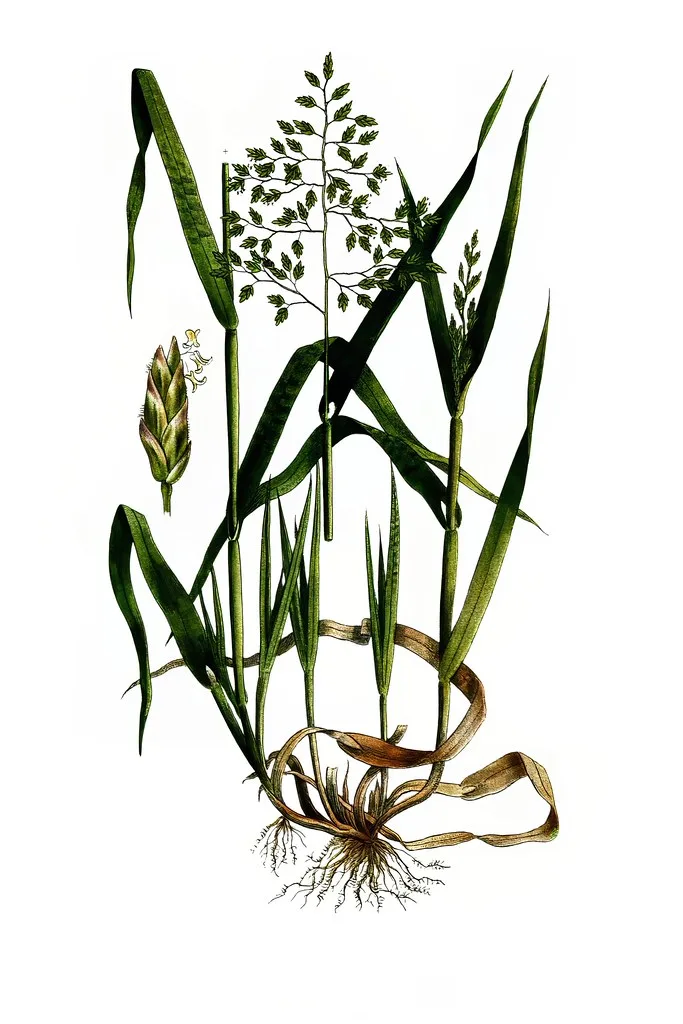
Image source: Openverse / mikkeldybdal.md (PDM 1.0)
Keep mowing until the grass stops growing, then lower the deck a little, but don’t scalp it. That last layer of growth insulates the crown. And like cool-season lawns, warm-season turf hates being buried under a mat of wet leaves, so mulch them or move them off the turf.
Transition-Zone Fall Plan: A Balanced Approach
The transition zone doesn't give you a clean answer. It's that band from Virginia across to northern Texas and up through Kansas and Missouri, where neither cool-season nor warm-season grass is completely happy. Your plan follows whichever species owns your yard.
If tall fescue dominates, run the cool-season playbook. Aerate, overseed, and apply fall nitrogen once soil temps hit 50°F to 65°F. If Bermudagrass or zoysiagrass dominates, skip the seeding and put your effort into pre-emergent for annual bluegrass.
Mixed lawns get fescue overseeded into the bare patches so winter color covers the dormant warm-season areas.
Skip overseeding mixed lawns with perennial ryegrass unless you're ready to mow all winter. Ryegrass greens up quickly, but it shades Bermudagrass and needs a spring herbicide to remove. That's an extra cost just to fake December color.
Transition-zone soil temperatures bounce around more than in the deep South or the North. Seeding windows often run from early September into late October, then close fast. Check the actual soil temp every few days instead of trusting a single forecast.
In places like Kentucky and Virginia, a practical compromise is to keep tall fescue as the fall focus and treat Bermudagrass as a summer bonus. That one plan keeps the yard green across both seasons without doubling your workload.
Fall Lawn Care Mistakes That Cost You Next Spring
Most fall lawn damage doesn't show up in autumn. It waits until spring green-up, when the damage looks like a brutal winter. Nearly all of it traces back to ignoring the grass type or the soil thermometer.
- Loading up late nitrogen. Feed a warm-season lawn in October and you push tender shoots that frost kills. The crown weakens, and spring green-up comes late and patchy.
- Scalping cool-season grass going into winter. A slightly taller cut protects the crown through freeze-thaw cycles. Cut off everything and you invite crown rot and disease.
- Burying the lawn under leaves. A dense mat blocks light and traps moisture against the crown. Mulch dry leaves with a mower, and keep the grass blades visible above the chop.
- Seeding too late. Drop seed after soil temps fall below 50°F and it rots or feeds birds. The window closes in late October across the North and in late November across the transition zone.
- Skipping the soil test. Fertilizer can't fix a pH of 5.5 or a phosphorus shortage. One $15 test saves a season of wasted input and guesswork.
If you remember one thing, match every input to the grass type and the thermometer. That single habit prevents most of the damage people blame on winter.
Fall Lawn Care FAQ
Quick answers to the questions that come up every September.
Should I fertilize my lawn in the fall?
Yes for cool-season grasses. Apply 0.5 to 1 pound of actual nitrogen per 1,000 square feet while soil temps sit between 50°F and 65°F. For warm-season grasses, the answer is usually no.
Late nitrogen encourages tender growth that winter will kill.
Can I overseed in November?
Only if soil temperatures stay above 50°F. In colder ground, seed won't germinate until spring, and much of it rots first. The practical window closes around late October in the North and around Thanksgiving in the transition zone.
Should I rake leaves or mulch them?
Mulch them, as long as you don't bury the grass. Run a mulching mower over dry leaves and let the fragments feed the soil. Thick, wet mats need bagging, but a weekly pass over average leaf loads breaks down fine.
Can I aerate a warm-season lawn in fall?
Only if the grass is still actively growing. Once soil temps drop below 55°F, aeration pulls plugs that won't heal, and the holes invite weeds. Save that task for late summer instead.
What does winterizer fertilizer do?
It's a late-season feed with higher potassium and moderate nitrogen. The goal is root development and carbohydrate storage, not leafy growth. Use it only on cool-season lawns, and skip it for warm-season grasses that are heading dormant.

Similar Posts