Can You Freeze Dry Kale
Botanical Horticulturist & Food Preservation Specialist at Brittle Bloom · Certified Master Gardener & Master Food Preserver · 12+ Years in Plant Propagation & Food Preservation
Can you freeze dry kale? Absolutely. In fact, it's one of the easiest leafy greens to run through a home freeze dryer.
The process takes time, but the payoff is a crisp, nutrient-dense, shelf-stable ingredient. We'll walk you through the entire workflow, from prep to long-term storage.
Kale sits at roughly 84 to 89 percent water before processing. That matters because freeze dryers work by turning that water into ice, then vapor. As of 2026, home freeze dryers handle kale beautifully when you follow a few setup rules.
Here's how to get it right.
Quick Answer: Yes, You Can Freeze Dry Kale. Here's What It Really Takes
Yes, you can freeze dry kale. It keeps its green color, nutrients, and snap. Treat it like any other low-fat leafy green.
Prep the leaves, load trays, run the cycle, and seal well. Stored properly, it can last 25 years.
The Two Decisions That Shape Your Whole Workflow
Before powering up the freeze dryer, you need to make two calls. They change your cycle time, your storage life, and how you'll use the finished kale.
Raw vs. blanched: which should you choose?
Blanching is a 2-minute bath in boiling water or steam. It stops the enzymes that slowly degrade color, flavor, and nutrients over time. For long-term pantry storage, blanch first.
If you're freeze-drying kale for a few months of snacks or smoothie powder, raw works fine. The freeze dryer halts most decay, but blanching gives you a true safety margin. If you're weighing your options, look at how that differs from dehydrating before you commit.
Whole leaves, chopped, or powder?
Freeze-dried whole leaves rehydrate beautifully. They look great in soups and make crispy kale chips. Chopped kale is easier to pack, dries a touch faster, and integrates into meals without fuss.
Powder is simply finished kale ground in a blender, and it's a game-changer for picky eaters. Our research suggests most home users prefer chopped, with a portion ground into powder afterward.
| Form | Best For | Drying Notes | | Whole leaves | Soups, storage, visible appeal | Arrange in a single layer; leave gaps. | | Chopped | Baking, compact storage, easy rehydration | Slightly faster cycle than whole. | | Powder | Smoothies, sauces, hidden nutrition | Grind only after fully dry. |
If you're aiming for 25-year emergency storage, choose blanched chopped leaves. If you want a quick pantry boost, raw whole leaves are fine. That decision drives everything else.
Step-by-Step: How to Freeze Dry Kale in a Home Freeze Dryer
Start clean. Wash the leaves well and dry them completely. A salad spinner works better than paper towels here.
Any excess water just adds time to your cycle.
Strip the leaves from the stems. The stems hold more moisture and take longer to sublimate. Tear the leaves into uniform pieces, about the size of a large coin.
Uniformity is the key to even drying.
If you decided to blanch, do it now. Drop the leaves into boiling water for 2 minutes, then plunge them into ice water. Pat them dry again.
Yes, that feels like extra work, but it pays off in shelf life.
Kale leaves are deceptively light. Most machines have a pre-freeze phase, but the vacuum can still toss them around the chamber. A quick hour in your regular freezer beforehand stops that.
You're applying the same home freeze-drying basics you'd use for high-water produce, just with lighter material.
Load the trays in a single layer. Overlapping leaves trap moisture and cause patchy drying. Leave small gaps between pieces for air flow.
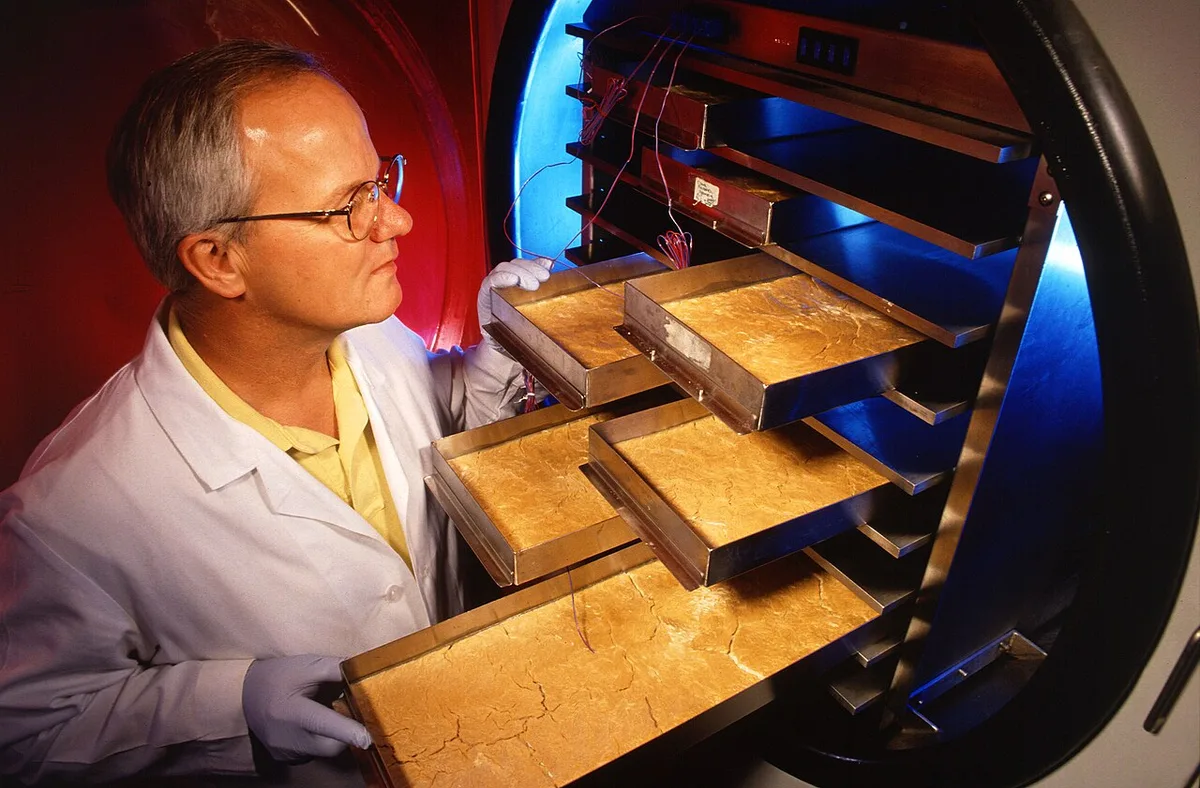
Set the cycle. Standard home freeze dryer runs last 20 to 36 hours, depending on load, moisture, and machine. Whole leaves run longer; chopped pieces run faster.
How to Test, Seal, and Store Freeze-Dried Kale So It Lasts for Years
How do you know the cycle is done? Perform the crack test. A fully freeze-dried kale leaf snaps like a thin cracker.
If it bends or feels leathery, it still holds moisture. Throw it back in the machine for another couple of hours. The same test applies to stems, so check those separately.
Once dry, work fast. Freeze-dried kale reabsorbs moisture from the air within minutes. Portion it into bags or jars right away.
Mylar bags with oxygen absorbers are the gold standard for long-term storage. Remove as much air as possible before sealing. If you want to use the freeze dryer itself to create a vacuum seal, you can seal jars directly inside the unit.
For powder, follow a more sensitive storage path. Powder has a huge surface area, so it clumps quickly in humid air. Store it in airtight jars with a desiccant pack, not oxygen absorbers.
Oxygen absorbers don't fix moisture.
Keep everything in a cool, dark pantry. Light, heat, and humidity are the enemies of shelf stability. Properly sealed, freeze-dried kale can keep for 10 to 25 years.
The National Center for Home Food Preservation backs that range for low-moisture foods, and that standard hasn't changed.
When Things Go Wrong: A Troubleshooting Flow for Common Kale Problems
Kale is forgiving, but it can still frustrate you. If your cycle ends with a mess, walk through this flow.
Leaves scattered around the chamber?
That's a draft issue. The vacuum pulls air through the tray, and lightweight leaves ride the current. Fix it by pre-freezing the leaves before loading.
Some machines also let you pause the cycle briefly once the vacuum stabilizes. If you need help with a sluggish timer, check that first, because slow timers mask the real stage your load is in.
Chewy spots or bendy stems?
Your batch didn't fully sublimate. Thick stems and overlapping leaves are the usual culprits. Chop the leaves smaller, leave gaps, and run a longer cycle.
When in doubt, add two hours. Under-drying is the most common mistake.
Mold appears weeks later?
That means moisture snuck into storage. Either the leaves weren't fully dry, or the container wasn't airtight. You can't save moldy kale.
Toss it and re-check your sealing process.
| Symptom | Likely Cause | Fix | | Leaves fly around | No pre-freeze, too light | Pre-freeze and load trays quickly | | Chewy spots | Thick stems, overlap | Chop smaller, single layer, longer cycle | | Mold in storage | Residual moisture | Crack test, use mylar plus oxygen absorber | | Off smell or color | No blanch, long storage | Blanch next time, use sooner |
The Real Trade-Off: Freeze Drying vs. Dehydrating vs. Just Freezing Kale
Freeze drying isn't the only way to preserve kale. Dehydrating and freezing both work, but they serve different timelines. Your choice comes down to how long you need storage and what texture you want.
Freeze drying wins for long-term storage. Properly sealed, it lasts decades. It also keeps kale's bright green color and crisp texture. Rehydration takes about two minutes in warm water.
The downside is the equipment cost and the 20 to 36 hour cycle.
Dehydrating is faster and cheaper. A standard dehydrator runs 6 to 10 hours at 125°F. The kale comes out brittle and darker, with a more concentrated flavor. It's fine for snacks or powder, but it won't last as long.
Expect 1 to 2 years of shelf life when vacuum-sealed.
Freezing fresh kale is the quickest option. Just wash, chop, and bag it. It keeps for 8 to 12 months, but it takes up freezer space and turns limp when thawed. Use it in cooked dishes, not salads.
| Method | Time | Shelf Life | Best For | | Freeze drying | 20–36 hours | 10–25 years | Emergency storage, crispy snacks | | Dehydrating | 6–10 hours | 1–2 years | Quick powder, short-term pantry | | Freezing | 10 minutes | 8–12 months | Smoothies, soups, cooked meals |
If you want a crunchy snack or a true long-term reserve, freeze drying is worth the wait. If you just need kale powder for smoothies, a dehydrator handles that job fine. And if you're using it within the year, your freezer is the zero-effort answer.
Frequently Asked Questions
Do I have to blanch kale before freeze drying?
No, but it helps. Blanching stops enzyme activity that causes color loss and off-flavors over time. For storage beyond a year, blanch for 2 minutes first.
For immediate use or short-term snacking, raw kale works perfectly.
How long does freeze-dried kale last?
Sealed in mylar bags with oxygen absorbers, it stays safe for 10 to 25 years. The exact window depends on storage conditions. Keep it cool, dark, and dry, and it will outlast most pantry staples.
Can I freeze dry kale in a regular freezer?
No. A regular freezer doesn't create the vacuum needed for sublimation. Water stays frozen instead of turning directly to vapor.
You need a home freeze dryer for true freeze-dried results.
What's the yield from one fresh pound of kale?
About 1.4 ounces of freeze-dried kale. That's roughly a 90 percent weight loss from water removal. One pound of fresh leaves fills about one quart-sized mylar bag.

Similar Posts