Winter Plants for People Who Forget to Garden
Botanical Horticulturist & Food Preservation Specialist at Brittle Bloom · Certified Master Gardener & Master Food Preserver · 12+ Years in Plant Propagation & Food Preservation
Let's be honest: if you're busy, the last thing you need is a winter garden that demands daily attention. The good news is that low maintenance winter garden plants for those with busy schedules aren't a fantasy. They're real, and they're easier than you think.
Our research points to one core rule: match the plant to the site, not the site to the plant. A plant that belongs in your USDA hardiness zone, with the right sun and soil, basically runs itself. As of 2026, the USDA plant hardiness zone map is still the standard reference for cold tolerance, so knowing your zone settles half your decisions.
Quick Answer
Low maintenance winter garden plants include hardy evergreen shrubs, sedum, hellebores, grasses, and snowdrops. Choose perennials that match your hardiness zone. Pick slow-growing, drought-tolerant, deer-resistant species.
Plant in fall, water deeply, and mulch with 2 to 3 inches. Then leave them alone.
Why Busy People Kill Winter Gardens (and Why It's Not Their Fault)
The real reason winter gardens die isn't cold: it's a mismatch between the plant and the spot you put it in. We see this over and over in extension reports and grower guides. Someone buys a sun-loving "easy" perennial, plants it in shade, and watches it rot by January.
Hardy perennials are plants that survive winter and return each spring. But a plant labeled "low maintenance" assumes perfect conditions. If your clay soil holds water, or your yard gets four hours of sun instead of six, that same plant becomes high maintenance fast.
Timing matters too. Our research shows the most common cause of winter kill is planting too late. The ground freezes before roots anchor.
A shrub planted in November in zone 5 barely stands a chance. The same shrub planted in September sails through.
Busy people don't need to try harder. They need plants that laugh at their schedule.
What "Low Maintenance" Actually Means in Winter
A low-maintenance winter plant needs four things: no deadheading, no staking, almost no water after establishment, and zero extra winter protection. If a plant needs wrapping, lifting, or covering every November, it's not low maintenance for you.
Deadheading means removing spent flowers, and staking means tying up weak stems. Skip plants like tall delphiniums or flopping hydrangeas. Instead, choose sturdy plants with strong architecture, like ornamental grasses and sedums that hold their shape through snow.
Watering is the hidden time-suck. Most winter plants need extra water only in their first year. After that, established roots handle dry spells, and university extension guides agree they rarely need supplemental water in winter.
Sedum is the perfect example. It asks for full sun, good drainage, and nothing else. Let it be.
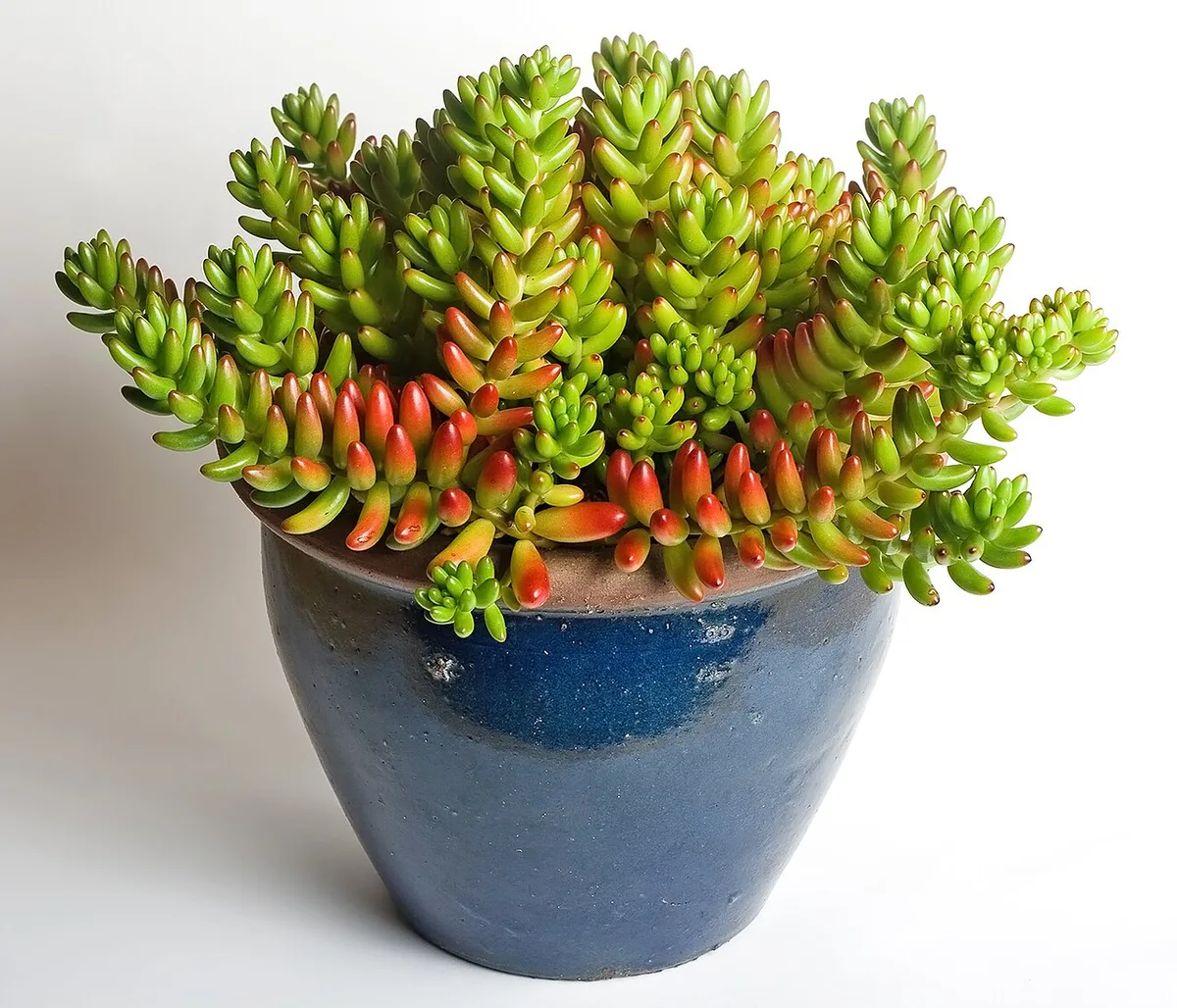
Image source: Wikimedia Commons / JJ Harrison (https://www.jjharrison.com.au/) (CC BY-SA)
Answer These 5 Questions Before You Buy Anything
Before you buy anything, answer five questions. They form the decision tree that every good winter garden starts with.
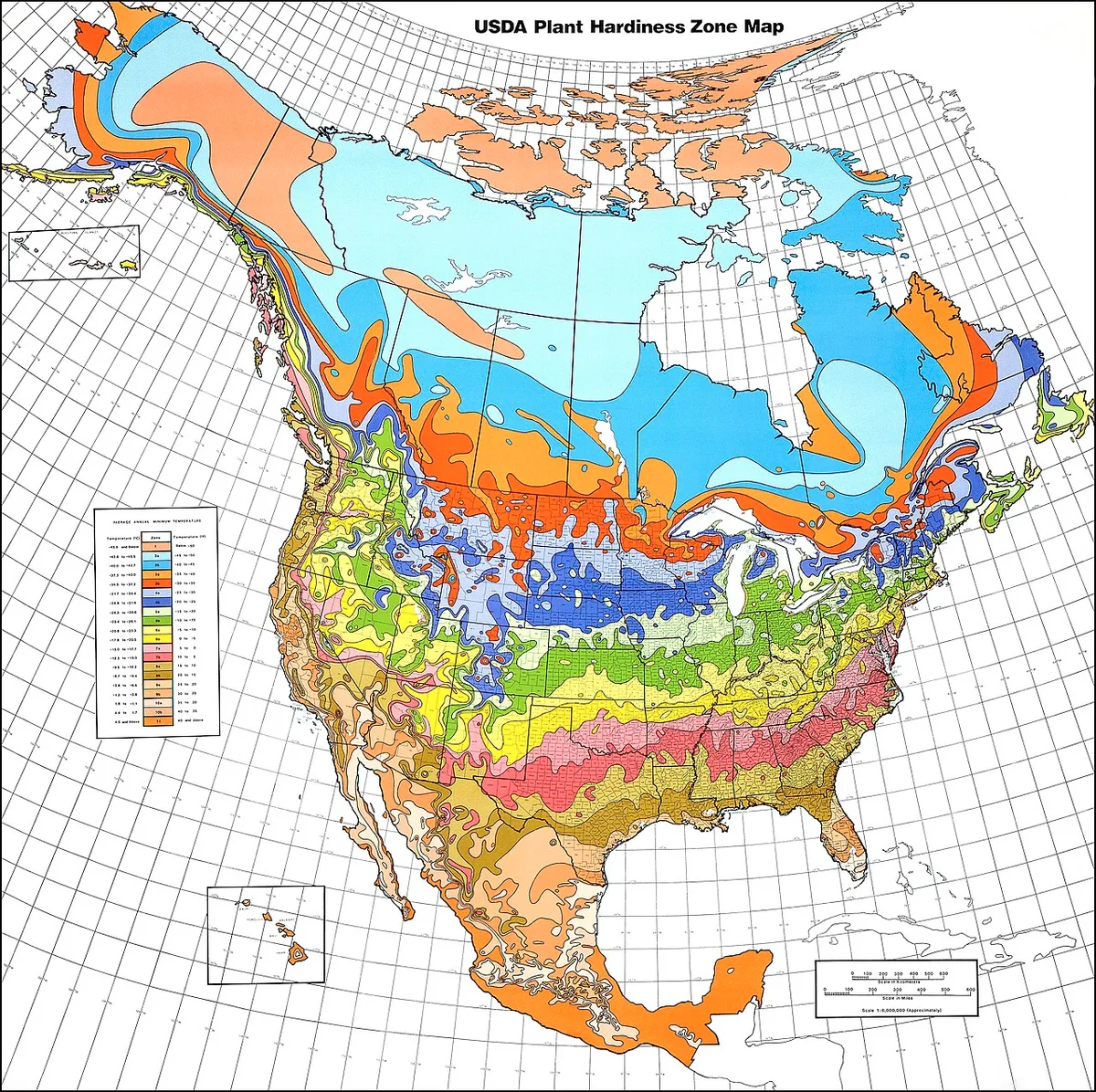
Image source: Wikimedia Commons / Henry M. Cathey while Director, U.S. National Arboretum, Agricultural Research Service, U.S. Department of Agriculture, Washington, DC 20002 Edited, formatted and prepared for the US National Arboretum web site by Ramon Jordan, March 1998 & Revised March 2001 Special thanks to Jody Shuart and Scott Bauer, ARS Information Staff
First, what's your USDA hardiness zone? Find it on the USDA plant hardiness zone map. Zone 4 plants won't survive a zone 3 winter, no matter how easy the tag promises.
Second, how much sun does the spot get? Full sun means 6 or more hours, part shade means 3 to 6, and full shade means less than 3. Match the plant to reality.
Third, does water drain fast? Dig a small hole, fill it with water, and time it: if it drains within a few hours, you're fine. If it sits overnight, choose moisture-tolerant winterberry holly instead of drought-loving succulents.
Fourth, can you irrigate during a dry fall? New plants need water until the ground freezes. If you travel in October, install drip irrigation or plant only drought-tolerant, established species.
Fifth, are deer or rabbits around? If yes, skip tender new growth. Choose boxwood, hellebore, or ornamental grasses, since they're rarely touched.
The Best Low-Maintenance Winter Plants for Every Garden Situation
These groupings follow the conditions you just checked.
| Garden situation | Best low-maintenance plants | Why they work | | Sunny and dry | Sedum, hens-and-chicks, winterberry holly | Drought-tolerant, sturdy stems, winter berries | | Shade and damp | Hellebores, heucheras, evergreen ground covers | Tolerate low light, stay green in winter | | Borders and structure | Dwarf conifers, boxwood, ornamental grasses | Slow growth, no deadheading, minimal pruning | | Containers | Cold-hardy succulents, ornamental kale, ornamental cabbage | Frost-tolerant, handle irregular watering |
For Sunny, Dry Spots: Sedum, Hens-and-Chicks, and Winterberry Sedum is the undisputed champion here. It stores water in its thick leaves, so it shrugs off drought and neglect. Varieties like Autumn Joy or Matrona stand tall through frost, then hold dried flower heads all winter. Hens-and-chicks hugs the ground and spreads slowly, which means it never needs dividing. Winterberry holly doesn't bloom in winter, but its bright red berries light up bare branches. It needs a male pollinator nearby, so buy both genders to guarantee the display.
For Shady, Damp Corners: Hellebores, Heucheras, and Evergreen Ground Covers
Shade does not doom your winter garden. It just changes the lineup. Hellebores, sometimes called Lenten roses, actually bloom in late winter.
They prefer rich, well-drained soil but tolerate clay once established. Heucheras, or coral bells, offer year-round colorful foliage in purple, amber, or silver. They're slow growers, so a 10-minute planting session will last you years.
For ground cover, creeping juniper or vinca minor fills empty spaces and suppresses weeds naturally. That means you spend zero time weeding come spring. If the area stays damp, try spreading wintergreen, a native evergreen ground cover that shines in woodland settings.
For Borders and Structure: Dwarf Conifers, Boxwood, and Ornamental Grasses
Borders need bones, not flowers. Dwarf conifers are the easiest bones in gardening. They grow slowly, keep their needles all winter, and never need deadheading.
Boxwood is the classic evergreen shrub for structure. It accepts pruning once a year, but it also looks perfectly fine if you skip a season entirely.
Ornamental grasses like switchgrass or feather reed grass add movement and sound. Their dried blades catch the low winter light beautifully. In early spring, you might give them a haircut once, but that's the only maintenance they ever ask for.
For Containers and Entryways: Cold-Hardy Succulents and Annuals That Survive Frost
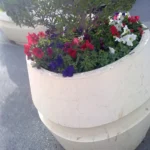
Containers bring the same rules to your porch. Cold-hardy succulents, including hens-and-chicks and certain sedums, survive frost in a pot if it drains well. They don't mind irregular watering either, which your busy schedule will absolutely deliver.
Ornamental kale and cabbage put on rich purple and cream colors that deepen during cold nights. They're technically annuals, but they live all winter without fuss. In spring, you pull them out and compost them.
That's the whole process.
How to Plant Them in Fall and Walk Away Until Spring
Planting in fall gives roots time to establish before the ground freezes. This is the single most important step, and it only takes one afternoon.
First, prepare the site. Remove weeds, loosen the soil to about twice the depth of the root ball, and mix in compost only if the soil is very poor. Most winter-hardy perennials prefer lean soil anyway.
Second, plant at the right depth. The top of the root ball stays level with the soil surface. Planting too deep causes stem rot, which is the sneakiest killer of winter plants.
Third, water deeply at planting time, then once a week until freeze-up. Fall rains often do this work for you, so check the forecast first.
Image source: Wikimedia Commons / Tdorante10 (CC BY-SA)
Fourth, apply 2 to 3 inches of mulch around the base. This insulates the roots and prevents frost heave, which happens when freeze-thaw cycles push plants out of the ground. Keep mulch away from the stem itself, then stop thinking about it until spring.
Pruning? Don't touch anything. Most winter-interest plants keep their structure and look best left alone until March.
The Biggest Mistakes Busy People Make with Winter Gardens
The most common mistake is overwatering. New plants die more often from drowning than from cold. Once the ground freezes, roots don't need much water at all.
Pruning at the wrong time is a close second. Cut back ornamental grasses in fall, and you expose their crown to frost damage. Wait until early spring instead.
The dried blades actually protect the plant.
Ignoring road salt is another trap. Plants near driveways and walkways get splashed with de-icing salt all winter. That burns evergreen foliage and kills roots.
Choose salt-tolerant options like rugosa rose or certain junipers for those spots.
Then there's the "easy" label trap. Many plants sold as low-maintenance still need deadheading, staking, or winter wrapping. Read the tag carefully.
Avoid anything that mentions lifting or storing bulbs indoors.
Finally, don't plant too late. If the ground is frozen solid, you're too late. Wait and plant in early spring instead.
Quick Decision Guide: Match Your Schedule to the Right Plant
Use this 30-second reference to find your match. Find your situation, then your plant.
| If you… | Then plant… | | Have full sun and dry soil | Sedum, hens-and-chicks, winterberry holly | | Have shade and damp ground | Hellebores, heucheras, evergreen ground covers | | Need structure but no pruning | Dwarf conifers, boxwood, ornamental grasses | | Travel often in fall | Drought-tolerant grasses, cold-hardy succulents | | Deal with deer pressure | Boxwood, hellebore, switchgrass, daffodils | | Live in zone 3 or colder | Snowdrops, winter aconite, creeping juniper | | Garden in zone 7 or warmer | Heather, winter jasmine, ornamental kale |
One rule applies across every row: give new plants water for their first season. After that, they're on their own.
Frequently Asked Questions
How often do I water winter perennials?
Established winter perennials need almost no extra water. If the ground is frozen, skip watering entirely. During a dry fall, water new plantings once a week.
Stop when the ground freezes solid.
Can I skip mulch?
You can, but you'll regret it. Mulch keeps soil temperature steady and prevents frost heave. Frost heave pushes roots out of the ground during freeze-thaw cycles.
A 2 to 3 inch layer of bark or wood chips is cheap insurance.
Is it too late to plant in December?
In most regions, yes. Roots won't grow in frozen soil. If the ground hasn't frozen yet, you can still plant in early December.
But your plant will have far less time to establish, so water it well and accept some risk.
Do I need to cut everything back before winter?
No. Many winter-interest plants, like sedum and switchgrass, look great standing through snow. Cutting them back in fall removes that beauty and exposes crowns to frost.
Save the cleanup for early spring.
What's the best evergreen shrub for busy people?
Boxwood is the classic choice. It grows slowly, handles occasional pruning, and shrugs off deer and winter cold. Just give it well-drained soil and partial to full sun.
That's all it wants.

Similar Posts