8 Surprising ZZ Plant Benefits Every Plant Lover Needs
Botanical Horticulturist & Food Preservation Specialist at Brittle Bloom · Certified Master Gardener & Master Food Preserver · 12+ Years in Plant Propagation & Food Preservation
Searching for the zz plant benefits usually means one thing: you've seen a lush green Zamioculcas zamiifolia in a windowless office and wondered why it's everywhere. That's because the benefits change completely based on your environment. Dark corner?
Forgetful watering? Pets at home? The answer shifts.
Research backs a lot of it up. The 1989 NASA Clean Air Study showed the plant can scrub certain volatile compounds like benzene and xylene from the air. But the real payoff is less scientific and more practical: it survives neglect that would kill most houseplants, tolerating low-light levels down to about 40 foot-candles.
Let's find out which benefit actually matters for your space.
The "Unkillable" Hype vs. the Real ZZ Payoff
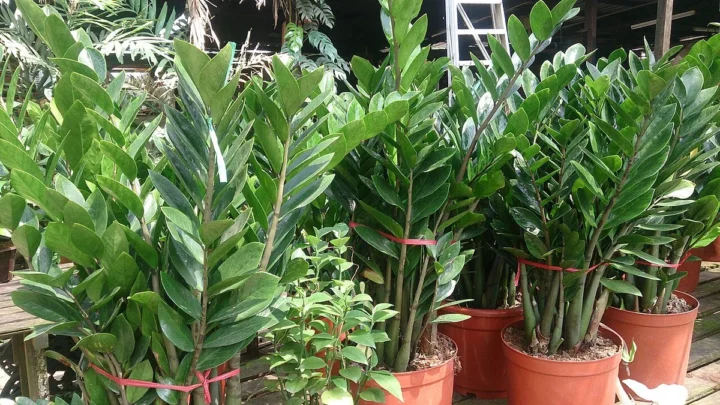
The nickname "eternity plant" sounds like marketing fluff, but the dirty secret of ZZ plants is their underground rhizomes. These thick, potato-like roots store water and nutrients. That's why a ZZ can go a month without a drink where a fern would be a crispy husk by then.
- Hype says: survives anywhere. Reality: survives low light, but needs some indirect light to truly thrive.
- Hype says: never water it. Reality: water when the top two inches of soil feel dry.
- Hype says: "unkillable." Reality: it's "overwatering-proof" only if you keep your hands to yourself.
The hype gets the basics right, but it also creates a trap. Because people hear "unkillable," they treat the plant like a statue. They shove it in a pitch-black closet and water it weekly out of habit.
In our research, that combination is the #1 cause of death for ZZ plants. Root rot from overwatering kills far more than neglect ever does.
So let's adjust the record. The ZZ isn't immortal. It's forgiving.
It tolerates low light, but it prefers bright indirect light. It tolerates drought, but it despises soggy soil. And as of 2026, aggregate grower reports and the NASA Clean Air Study still point to the ZZ as an excellent, low-maintenance air-purifying option for indoor spaces.
The research is solid, but the practical payoff depends entirely on your watering habits.
Start Here: 4 Quick Questions That Decide Your Ideal ZZ Benefit
Stop reading generic advice and answer these four things first. The right benefit of your ZZ plant depends entirely on your house, your habits, and your household. Your answers to these questions map directly to the branches below.
Question 1: How much light does that corner actually get?
If it's a bright room with a sheer curtain, you've hit the jackpot. The ZZ thrives in medium light, which is why it's the default office plant. If you're planning to put it in a bathroom with zero natural light, you need to recalibrate expectations.
A ZZ will survive there, but it will grow at a glacial pace. That's fine if you're patient.
Question 2: Do you water your plants every two weeks or every two months?
If you're a chronic underwaterer, the ZZ is perfect. It will coast through a month of neglect while you travel. If you're a "just top it off" watering person, you'll kill it with kindness.
Root rot is the biggest killer here, so you need to retrain your brain.
Question 3: Do you have four-legged friends?
If yes, the ZZ's calcium oxalate crystals are a real problem. An ASPCA toxicity check is a required step before you bring one home. We'll dive into the safer alternatives in a minute.
Question 4: Are you hoping for new leaves every month?
If so, the ZZ will disappoint you. It usually pushes out a few new stems per year, not per month. If propagation is your hobby, you can still do it through leaf cuttings, but it takes months to see results.
| If you answered… | Your branch is… |
|---|---|
| Low light | Branch 1 |
| Forget to water | Branch 2 |
| Have pets | Branch 3 |
| Impatient / Love propagating | Branch 4 |
Once you know your branch, the actual zz plant benefits you'll get are obvious. Let's walk through each of those branches one by one.
Branch 1: You've Got a Dark Corner: Why Low-Light Toughness Is Your Win
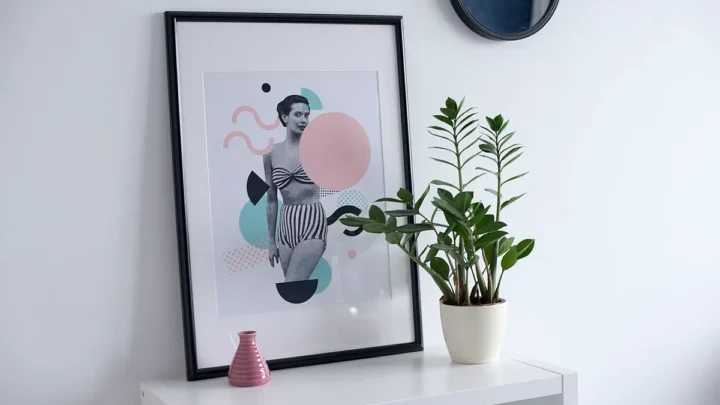
If you picked a spot that barely gets any direct sun, welcome to your reward. The ZZ is one of the few houseplants that can actually function in a windowless office, as long as there's some overhead fluorescent light.
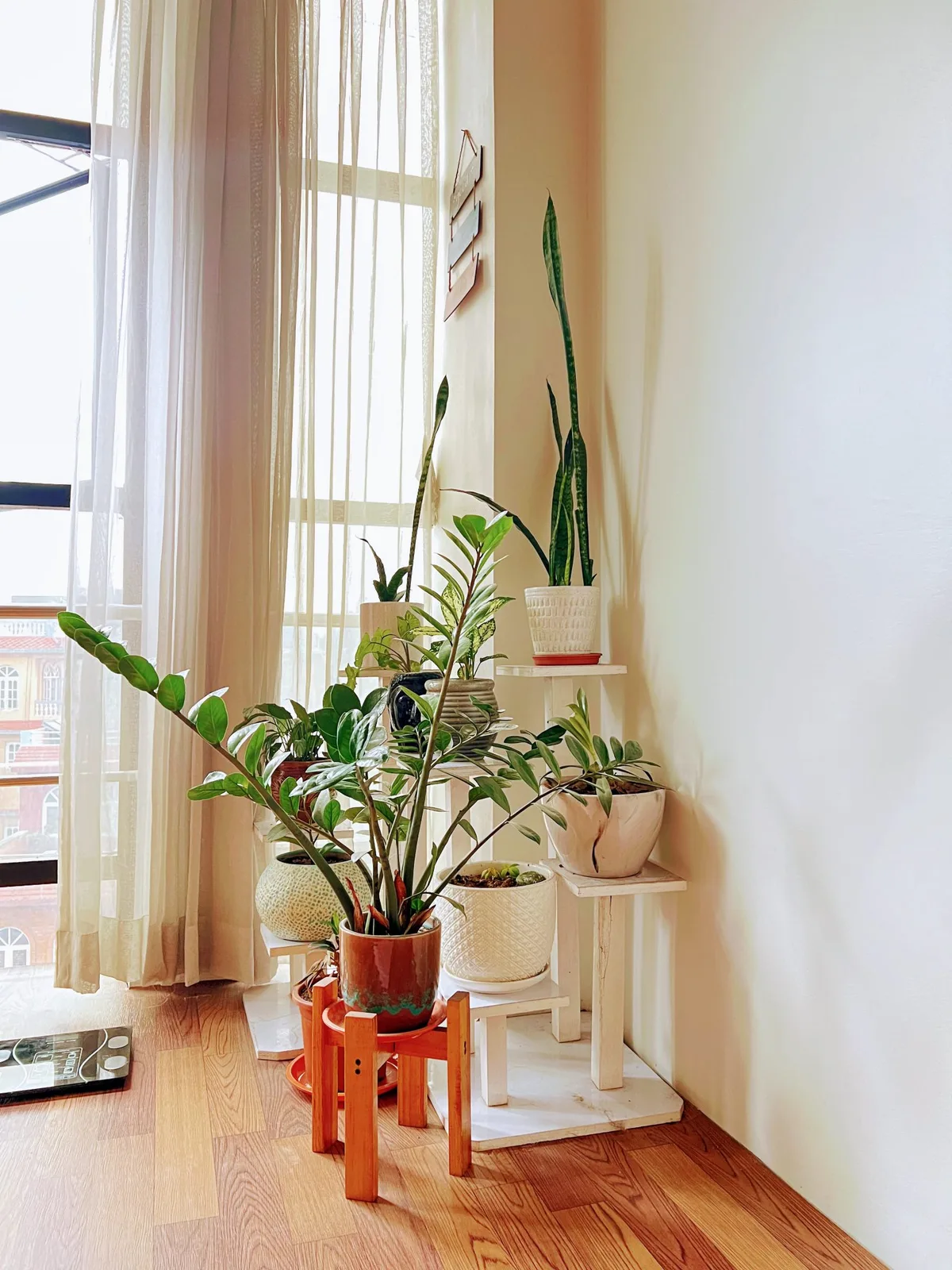
Image source: Openverse / Alina Kakshapati
What does this mean for you? You get to fill a dark corner, a basement shelf, or a windowless bathroom with lush green growth that a philodendron or a succulent would simply refuse to do. That's the specific, practical zz plant benefit for your situation.
Just remember the trade-off: low light means slower growth. The plant won't need water as often because it's not photosynthesizing aggressively. In our research, ZZs in deep shade can safely stretch 5 to 6 weeks between waterings during the cold months.
One fun fact: the ZZ uses a special type of photosynthesis called CAM (crassulacean acid metabolism). This allows it to open its stomata at night, reducing water loss during the day. That's a big reason it thrives in dry indoor air and tough lighting conditions.
Here are the spots where a ZZ will outwork almost everything else:
- North-facing windowsills within 5 feet
- Interior rooms with fluorescent overheads
- Bedroom corners away from any window
- Home offices where the screen glow is the main light source
If your spot gets less than 10 foot-candles of light, you might want to rotate the plant every few weeks to keep it upright. You can measure this with a simple light meter app on your phone. Low light is a feature, not a bug, and the ZZ knows how to use it.
Branch 2: You Forget to Water: How the Rhizomes Almost Save You
For the dedicated underwaterer, this branch is your goldmine. The ZZ has evolved to survive seasonal droughts, and its rhizomes are the secret. Those chunky, swollen roots act like a water battery.
They let the plant coast through weeks of neglect without drooping.
But let's be honest about the "almost" part. The rhizomes save you from thirst, not from drowning. Aggregate reviews and grower reports show overwatering is the #1 cause of ZZ death.
If you water every single Monday out of habit, the rhizomes will rot, and the plant will turn to yellow mush.
So what's the healthy cadence? A good rule of thumb: check the soil with your finger before you ever pick up the watering can. If the top 2 inches are dry, give it a deep soak.
If it's damp, walk away. In a typical home, that works out to once every 2 to 3 weeks in the summer and once a month in the winter.
This is the perfect plant for people who leave for work trips. A ZZ will happily sit in a corner for two weeks while you drive across the country. Just water it when you get back.
Signs you've waited too long:
- Stems start to wrinkle and lean
- Lower leaves turn yellow and fall off
- The soil is completely pulled away from the pot walls
In our research, a ZZ that's been underwatered rebounds quickly. Give it a good soak, and within 24 hours it will look perky again. Just don't do it every week.
The rhizomes store water, but they are not designed to be constantly submerged. If you see one of those signs, skip the cool-down and water immediately.
Branch 3: You Share Space with Pets: The Toxicity Trade-Off (and Safer Picks)
This is the branch where we have to pump the brakes. The ZZ is genuinely wonderful, but it's not safe to taste without a vet visit. All parts of the plant contain calcium oxalate crystals.
When a dog or cat bites into a leaf, those tiny needle-like crystals embed in the mouth and throat.
Does that mean you can't own one? Not necessarily. According to the ASPCA's toxic plant list, ZZs are listed as toxic to both cats and dogs.
The symptoms are rarely fatal, though. Dogs usually chew, drool excessively, and may vomit once. Cats can show similar signs.
It's not a pleasant experience for them, but it typically doesn't end in a tragedy.
Your safest bet is to put the ZZ on a high shelf, in a room your pets can't access, or in a hanging planter well out of reach. If you have a serial plant-chewer, don't risk it. Pick a safer alternative with a similar vibe.
- Cast Iron Plant (Aspidistra elatior). About as tough, and completely non-toxic.
- Parlor Palm (Chamaedorea elegans). A classic, safe, low-light palm.
- Ponytail Palm (Beaucarnea recurvata). Safe, quirky, and forgiving.
Pet warning: if your pet chews on a ZZ, rinse their mouth with water and call your vet. You don't need to panic, but you should keep an eye on them. Cats are often more at risk because they can jump to higher shelves.
If you want a ZZ's look without the worry, a Cast Iron Plant is your closest match. Both tolerate low light and forgetful watering. That trade-off is worth it for a safe home.
Branch 4: You’re Impatient or Love Propagating (Managing Slow Growth & Getting More)
If you picked this branch, you're the rarest ZZ owner. You actually want to do stuff with the plant. Good news: the ZZ is one of the easiest houseplants to propagate.
A single leaf cutting can become a whole new plant in a few months.
The fastest method is division. Unpot the plant, separate the rhizome clumps, and repot each piece. You'll have two or three full plants in minutes.
The slowest method is leaf propagation. Snip a leaf with a bit of stem, stick it in water or moist soil, and wait. Roots appear in 4 to 6 weeks, but new growth takes another 3 to 4 months.
If you're itching for faster growth, give it more indirect light. A ZZ in a bright spot grows noticeably faster than one in a dark corner. Fertilize once in spring and once in summer with a balanced houseplant food.
That's all it needs. Don't repot constantly. ZZs actually prefer being snug in their pots.
This branch rewards patience. Slow growth is a feature, not a bug. It means you're not repotting every year, and your plant stays compact and manageable.
Mistakes to Avoid: Overwatering, Dust, and Pests (The Real Killers)
Overwatering is the #1 killer of ZZ plants, period. The rhizomes store water, so the plant can handle weeks without a drink. But wet soil suffocates the roots, and rot sets in fast.
Signs include yellow leaves, mushy stems, and a sour smell from the soil. If you see those, let the soil dry out completely before watering again.
Dust is the sneaky second killer. ZZ leaves are glossy and broad, which means they catch dust easily. A thick layer blocks photosynthesis and makes the plant look dull.
Wipe the leaves monthly with a damp cloth. It takes two minutes and makes a huge difference.
Pests love ZZs when conditions are off. Spider mites, mealybugs, and scale are the usual suspects. Check the undersides of the leaves weekly.
If you spot webbing or cottony masses, treat with neem oil or insecticidal soap.
| Pest | Signs | Fix |
|---|---|---|
| Spider mites | Fine webbing, stippled leaves | Rinse leaves, neem oil |
| Mealybugs | White cottony clumps | Rubbing alcohol on swab |
| Scale | Brown bumps on stems | Scrape off, apply neem oil |
A healthy ZZ rarely gets pests. Keep it clean, don't overwater, and you'll avoid most of these problems.
Final Decision Guide & FAQs: Which Benefit Wins for You?
If you have a dark corner, the low-light tolerance wins. If you forget to water, the rhizome storage wins. If you have pets, safety wins, so consider the alternatives.
If you love growing things, propagation wins. For most people, the real payoff is a plant that looks good, lives long, and forgives neglect.
Here are the questions people search most.
Are ZZ plants actually good for air quality?
Yes, but with a caveat. The NASA Clean Air Study showed ZZs remove benzene, xylene, and formaldehyde in sealed chambers. Real rooms have much more air exchange, so you'd need many plants to see a measurable difference.
Still, every bit helps.
Why is my ZZ plant turning yellow?
The most common cause is overwatering. The roots are rotting, so the leaves yellow from the bottom up. Let the soil dry out, and check that your pot has drainage holes.
If the stems are mushy, you may need to repot and remove damaged roots.
How often should I water my ZZ plant?
Water when the top 2 inches of soil feel dry. That usually lands at every 2 to 3 weeks in summer and once a month in winter. In low light, stretch it further.
When in doubt, wait another week. The ZZ tolerates drought far better than soggy soil.
Is a ZZ plant toxic to pets?
Yes, it's listed as toxic by the ASPCA. It contains calcium oxalate crystals, which can irritate a pet's mouth if chewed. Symptoms include drooling and vomiting.
It's rarely fatal but unpleasant. Keep it out of reach or choose a safer plant.
Can ZZ plants grow in low light?
Yes, they can survive in fairly dark spots. They won't grow as fast, but they'll stay alive. A ZZ in a windowless bathroom or an office with fluorescent lights will do fine.
Just give it some indirect light when you can.
How fast do ZZ plants grow?
Slowly. Expect a few new stems per year, not per month. Growth speeds up in brighter light and slows way down in dark corners.
If you want a dramatic, fast-filling plant, the ZZ isn't it. If you want an easy, long-lived companion, it's perfect.

Similar Posts