ZZ Plant vs Pothos
Botanical Horticulturist & Food Preservation Specialist at Brittle Bloom · Certified Master Gardener & Master Food Preserver · 12+ Years in Plant Propagation & Food Preservation
Picking between a ZZ Plant and a Pothos feels impossible when every plant blog just says "both are easy." The truth is, the right choice comes down to how you actually live, not which one looks better in a photo. Stick with me and you'll get a straight head-to-head on light, water, growth, and pet safety so you can pick your winner in under five minutes.
The 30-Second Verdict: ZZ Plant vs Pothos
Here's the cheat sheet before we get deep into the dirt. These two get lumped together because they're both low-light champs, but they act completely differently in your home.
| Category | ZZ Plant | Pothos |
|---|---|---|
| Growth style | Upright, clumping | Trailing vines |
| Light needs | Low to bright indirect | Low to bright indirect, but pickier |
| Watering | Every 2–3 weeks | Every 1–2 weeks |
| Pet safe? | No — toxic | No — toxic |
| Growth speed | Slow | Fast |
| Best for | Dark rooms, forgetful waterers | Hanging baskets, shelves, quick results |
Here's the catch: neither one is pet-friendly, and that fact alone sends a lot of people running to the comments section. We'll get to that in a minute.
Now, you might be wondering if "easy" actually means the same thing for both. It doesn't. Let's look at what each plant physically brings to the table.
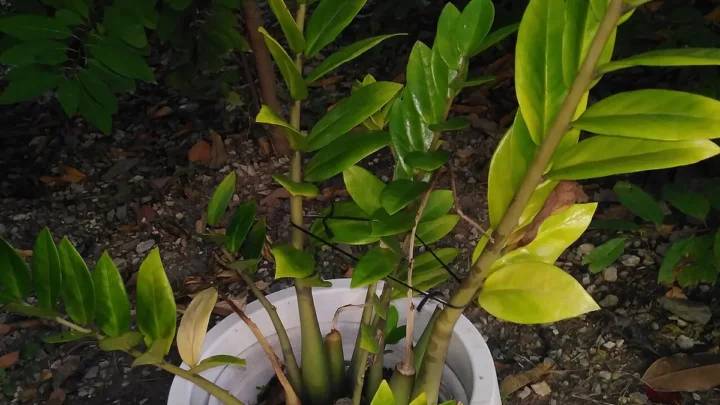
ZZ Plant: Appearance and Growth
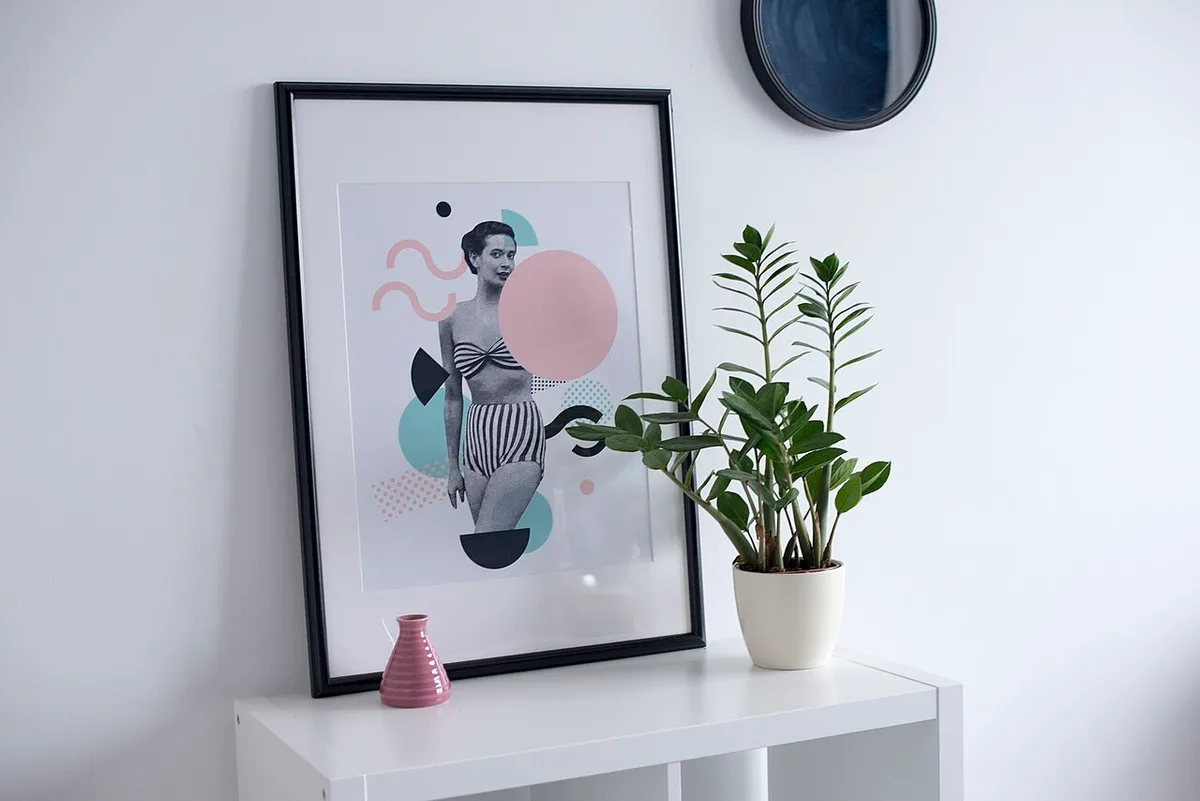
Image source: Wikimedia Commons / Sylwia Pietruszka pietruszka
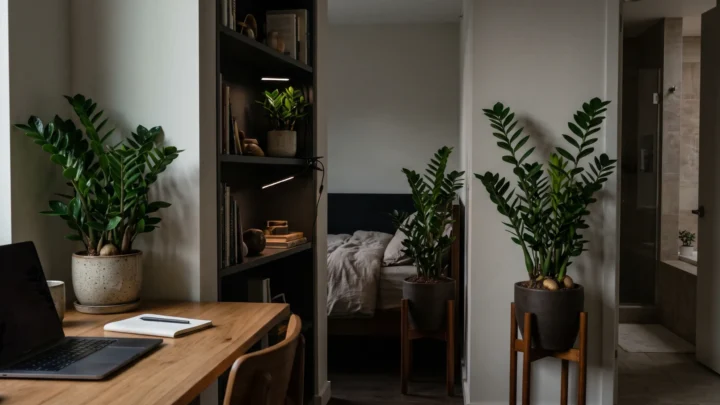
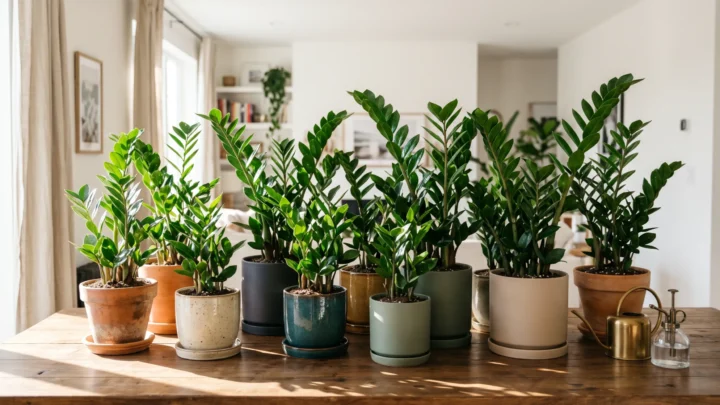
The ZZ Plant looks like it came from the set of a sci-fi movie. Those dark green leaflets are so glossy and thick they look fake, like someone dipped them in wax. Run your finger across one and you'll feel stiff, plastic-like texture.
Not soft. Not fuzzy. Just tough.
Each stem shoots straight up from the soil, arching slightly as it gets taller. A mature ZZ hits about 2 to 3 feet tall and stays put. It doesn't flop over or spill out of its pot.
It just stands there, looking clean and symmetrical, which is why interior designers love shoving it into office lobbies and hotel corners.
The real magic, though, is underground. The ZZ stores water in thick, knobby rhizomes that look like fat little potatoes. Those rhizomes are the plant's survival insurance.
They're also the reason this thing shrugs off neglect that would kill most other houseplants.
The trade-off: all that toughness comes with slow growth. You might see one new stem every few months. If you want a plant that visibly grows week to week, the ZZ will bore you.
Pothos: Appearance and Growth

Image source: Wikimedia Commons / Filo gèn' (CC BY-SA)
Now flip the script. A Pothos is all about motion and mess, in the best way. The leaves are heart-shaped, waxy, and usually variegated with streaks of gold, white, or lime green.
Each one feels a bit thinner and softer than a ZZ leaf, and the vines can trail 10 feet or more if you let them run.
You'll see Pothos sold as hanging plants, trellised up moss poles, or spilling off bookshelves. It's the plant equivalent of a fast-talking friend who fills every corner of the room. And it grows quickly, under the right light, you'll notice fresh leaves unfurling every couple of weeks.
The bonus: because it vines, you can shape it. Want it to climb your wall? Give it a moss pole.
Want it to waterfall off a shelf? Let it hang. The ZZ can't do that.
It just goes up.
On the flip side, that fast growth means more upkeep. You'll be pruning, propagating, and wiping dusty leaves off your shelf more often. Some people find that fun.
Some people just want a plant they can ignore.
Light Requirements: The Real Difference
This is where the two plants finally split apart. Both tolerate low light better than most houseplants. But if you're shopping for a genuinely dark corner, the ZZ wins, and it's not even close.
The ZZ can survive in a room with a single north-facing window, and it can even handle fluorescent office lighting all day. It grows slower in low light, but it won't sulk or drop leaves. That forgiving nature is exactly why how much sun it actually needs differs so much from what people assume.
Pothos will also survive low light, but there's a price. The variegation fades, those beautiful white and gold patches turn mostly green so the plant can make more chlorophyll. Growth also slows to a crawl.
Leave a Pothos in a dark hallway for six months and it'll look like a different, sadder plant.
The truth is: both hate direct afternoon sun. That harsh light scorches the leaves, leaving brown, crispy patches that never heal. Bright, indirect light, think a few feet away from an east or west window, is the sweet spot for both.
So if you've got one of those "is this even a window?" spots in your house, that's a ZZ spot. If you've got a shelf that catches morning light, the Pothos will reward you.
Watering and Soil: Where Most People Screw Up
Here's the number one killer of both plants: water. Too much of it. Root rot is the silent assassin, and once it sets in, the leaves turn yellow and mushy and the whole plant collapses.
The biggest mistake people make: watering on a schedule. "I water every Friday" sounds responsible, but plants don't read calendars. You should check the soil first, always.
With the ZZ, the rhizomes hold so much water that you can let the soil go bone dry for weeks. In winter, some ZZ owners water once a month and their plants thrive. When in doubt, wait another week.
Really. That's the whole trick.
Pothos needs more regular drinks. Its thinner leaves and faster growth burn through water quicker. Let the top inch or two of soil dry out, then give it a thorough soak until water runs out the drainage holes.
Pothos also gives you a warning sign that the ZZ never will: dramatic drooping. The leaves flop over like a sad theater curtain when it's thirsty. Water it, and within hours it's back to perky, it's one of the fastest recoveries in the plant world.
University extension guides hammer home the same rule I'm telling you: check the soil moisture before watering, not the date on the calendar.
The best part? Both plants are genuinely hard to kill if you follow that one rule. The difference is that the ZZ forgives a two-week vacation in July. The Pothos might not.
Travelers and chronically busy people should take notes.
If you want the full routine for either one, the basic care routine for the ZZ is laid out step by step, it's short, because the plant doesn't need much.
Growth Habits: Upright vs Trailing
Picture this: you're standing in your living room at 8 a.m. with a coffee in your hand, deciding where the plant goes. That decision is basically already made for you.
The ZZ is a vertical plant. It belongs on the floor, on a low plant stand, or on a side table where it can rise up without bumping into anything. Because it's so tidy, it works in narrow entryways, offices, and anywhere a tall, sculptural silhouette looks intentional.
The Pothos is a spiller and a climber. It belongs up high, on a shelf, in a hanging basket, or on top of a cabinet where those vines can cascade down. Give it something to grip and it'll happily climb a moss pole or even a piece of trellis.
In the wild, Pothos climbs tree trunks in the jungle; in your home, it'll climb anything that doesn't move.
You can absolutely keep a Pothos as a compact desk plant, but it requires frequent pinching to stay bushy. Miss a few months, and you'll have a 6-foot vine snaking toward your keyboard.
Bottom line on style: want clean, architectural, zero-drama? ZZ. Want lush, flowing, jungle-vibe energy?
Pothos. Your living room's layout probably already knows the answer.
Pet Safety: The Side Nobody Talks About
This section comes with a real warning, so listen up. Both the ZZ Plant and the Pothos contain calcium oxalate crystals, microscopic, needle-shaped crystals inside the leaves and stems. When a cat or dog chews into them, those crystals puncture soft tissue in the mouth and throat, which causes intense burning, drooling, vomiting, and swelling.
The ASPCA lists both plants as toxic to cats and dogs on their official toxic plant database. This isn't a scare tactic from a plant blog with nothing better to write about. It's documented, well-known toxicity.
Who should skip this: anyone with a young, curious puppy or a cat that treats every plant like a salad bar. Full stop. The irritation is painful for them, and an emergency vet visit will cost way more than the plant did.
You can find the full pet-safety breakdown if you want the vet's perspective on how bad it really gets.
Here's the twist: in practice, most adult cats ignore plants entirely, and both ZZ and Pothos are so common in homes that vets rarely see severe cases. But "rarely" isn't "never." If your pet is a chewer, neither plant is worth the risk.
What about small children? Same story. Kids usually need to eat a significant amount of leaves to feel anything, and the burning sensation stops most of them after one bite.
Still, keep both plants on high shelves if toddlers roam the house.
Which One Is Honestly Easier?
Let me settle this with zero fluff: the ZZ Plant is the easier plant of the two. Not by a mile, but it wins.
Here's why. The ZZ's worst enemy is overwatering, and overwatering only happens if you actively pour water into it. If you forget about it for three weeks, it's fine.
If you put it in low light, it's fine. If you never fertilize it, it's fine. It's the closest thing to a "set it and forget it" houseplant that actually looks expensive.
The Pothos is still a beginner-level plant, don't get me wrong. But it demands a bit more attention. More water, more light, more pruning, more wiping down leaves.
The upside is that it repays you with fast growth and shows you clear signals when it's unhappy. The downside is that those signals mean you have to do something about them.
The flip side: the ZZ's slow growth can frustrate people who want to see progress. You'll wait months for a new stem. The Pothos gives you new leaves every few weeks, which feels like a reward.
For kids, beginners, or anyone who wants instant gratification, the Pothos is more satisfying.
One more thing to consider: propagation. Pothos cuttings root in a glass of water in about two weeks, that's how everyone ends up with ten Pothos plants. The ZZ propagates too, but it takes months and a lot more patience.
If sharing plant babies with friends is part of the fun for you, the Pothos delivers.
So, Which Should You Buy?
You've made it this far, so let's just be direct. Here's your decision tree:
- Buy the ZZ Plant if: your room is dark, you travel often, you forget to water, or you want a clean, sculptural plant that looks like a designer put it there.
- Buy the Pothos if: you want fast growth, trailing vines, hanging baskets, or a plant that tells you loudly and clearly when it's thirsty.
- Avoid both if: you have a cat or dog that chews on plants. Pick a true pet-safe houseplant instead.
And if you're leaning ZZ, there are a few practical things to know before you bring one home. It eventually needs a bigger pot, and when it outgrows its pot you'll want to handle the roots carefully, they're brittle and easy to snap. And if you need reasons to justify the purchase, the perks of owning one go way beyond the looks.
The honest final answer: for most people, the ZZ Plant is the safer bet. It survives the mistakes you'll make in the first year of plant parenting. But if you already know you're someone who checks your plants every day and enjoys the interaction, the Pothos will give you more back, faster.
Either way, you're picking from two of the most forgiving houseplants on the planet. That's a good problem to have. Pick the one that matches your light, your schedule, and your pets, and then just let it grow.

Similar Posts