Why Are My ZZ Plant Stems Growing Weak?
Botanical Horticulturist & Food Preservation Specialist at Brittle Bloom · Certified Master Gardener & Master Food Preserver · 12+ Years in Plant Propagation & Food Preservation
Your ZZ's stems are stretching sideways, bending at the base, or flopping over like tired spaghetti, and honestly, it's frustrating. Weak stems are almost always a light problem, usually stacked on top of watering or pot issues. Stick with me, and I'll show you how to spot the real cause, fix the flop, and keep new growth standing tall.
First, Let's Talk About What "Weak" Really Looks Like
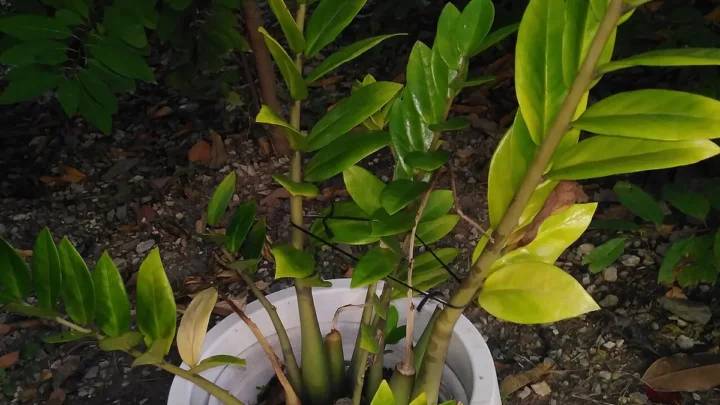
Not every lean is a problem. A healthy ZZ has tall, thick stems that arch out gently from the center. Picture this: you're standing over your plant, and one stem has a sharp bend right at the soil line, almost like it's melting.
That's weak.
Here's what weak stems have in common:
- The base of the stem bends or tilts instead of standing straight.
- New leaves come in small, pale, or spaced far apart along the stem.
- The stem feels soft when you gently squeeze it.
- The whole plant seems to reach toward the same window.
The truth is, ZZ plants are sold as unkillable. They survive dark offices, skipped waterings, and forgetful owners, and part of their appeal is that forgiveness. But survival mode comes at a price: slow, stretched, floppy growth.
If your plant was fine for a year and then started flopping, something changed. The season, the spot, the watering, or the pot. A stem doesn't go weak for no reason.
Something is pushing it downhill.
The Real #1 Cause: Not Enough Light
Weak ZZ stems almost always start with light. ZZs need bright, indirect light to build thick, sturdy stems. In low light, the plant stretches toward any tiny bit of brightness it can find.
New growth comes out longer and thinner, with bigger gaps between leaves. That stretching is called etiolation, the plant's way of begging for a better seat.
| Where the Plant Lives | What the Stems Do |
|---|---|
| Dark corner or hallway | Stretch, thin out, flop |
| Medium indirect light | Grow slowly, medium strength |
| Bright indirect light | Thick, upright, sturdy |
Here's the catch: the nursery that called this a "low-light plant" wasn't lying, exactly. A ZZ can survive in a dim room. It just won't grow strong there.
The fix is finding the exact brightness it needs, most ZZs are happiest a few feet from an east or north window, or behind a sheer curtain on a bright sill.
University extension research backs this up: plants that get too little light grow taller, thinner stems as they reach for photons. The good news? Fix the light, and the next stems come in thicker.
Move your plant gradually, an hour more of bright light each day, so the leaves don't scorch.
How can you tell if your spot is really too dark? Pay attention to shadows. Hold your hand a foot above the plant around noon.
If you see a sharp, clear shadow, the light is plenty. If the shadow is blurry or invisible, the spot is darker than you think. Put simply: if you need a lamp to read there, your ZZ probably wants more light too.
Now, you might be wondering if light is the only thing that matters. It's not. Even a perfectly placed ZZ will flop if its roots are in trouble.
Overwatering — The Sneaky Stem Killer
The second biggest cause of weak stems is overwatering. Water too often, and the soil stays soggy. The roots run out of oxygen and start to rot.
Rotten roots can't hold the plant up or feed the stems, so the stems turn soft, mush at the soil line, and eventually collapse.
The warning signs:
- The stem base feels mushy or looks dark.
- Lower leaves turn yellow before the stem goes.
- The soil stays wet for two weeks or more.
- You catch a musty, rotten smell from the pot.
Here's a quick way to tell light stress from water stress: a light-starved plant has thin but firm stems. An overwatered plant has soft stems and a wet pot. If you see yellowing leaves plus mush, you're dealing with rot, not shade.
If rot is the problem, act fast. Pull the plant out, cut away black, mushy roots, and give the healthy parts fresh, fast-draining soil. That usually means a proper soil refresh, because the old dirt is holding way too much water.
University extension watering guides all say the same thing: let the top of the soil dry out before you water again.
The finger test works well with ZZs. Stick your index finger into the soil up to the second knuckle. If it comes out damp, wait.
If it comes out dry, water. Do that for a few weeks and you'll learn the plant's real rhythm instead of guessing on a schedule.
That brings us to the biggest mistake people make with pots.
The Pot, the Soil, and Being Root-Bound
Most people either over-pot or under-pot a ZZ. Both can cause weak stems. In a pot that's way too big, water pools around the roots and the soil never dries out.
In a pot that's way too small, the roots circle until the plant is a cramped mess that can't drink properly.
A root-bound ZZ also does something weird: it shoves chunky, potato-like rhizomes up out of the soil. Those rhizomes push stems out at odd angles, the stem attachments lose their grip, and suddenly every stem leans.
Here's the fix:
- Move to a pot only one or two inches bigger than the root ball.
- Make sure it has drainage holes.
- Use a gritty, well-draining mix, plain potting soil holds too much water.
- Plant the rhizomes just below the surface, not buried deep.
Another thing people skip: weight. Lift the pot when it's freshly watered, then lift it again after a couple weeks. A dry pot feels noticeably lighter.
That little trick tells you exactly when it's time to water, and it keeps your stems from living in soggy soil.
If your ZZ has been growing in a pot without drainage, that alone could explain the weak stems. When it outgrows its pot, a proper repot fixes most of this within a season.
Nutrition, Temperature, and the Natural Flop
On the flip side, some leaning is just life. A mature ZZ stem can reach three feet long. The sheer weight of the leaves eventually pulls it into a gentle arch.
That's not a failure, that's a plant being a plant. If only the oldest stems lean and the new ones are fine, you can relax.
Fertilizer plays a smaller role, but it's real:
- Too little nitrogen → thin, slow, weak growth.
- Too much nitrogen → fast, soft growth that can't hold itself up.
- Feeding in winter → weak, floppy new leaves.
Use a balanced houseplant fertilizer at half strength, two or three times during spring and summer. Skip it entirely in winter. Cold drafts and low winter light also slow a ZZ down, so any stem it pushes in January will probably be weaker than one it makes in June.
ZZs also hate cold feet. They're native to warm parts of Africa, so they want room temperature and nothing below about 50°F. A drafty window in winter can chill the roots and slow the whole plant down, which shows up as limp, tired-looking growth.
Want stronger stems next spring? Give it the no-fuss care basics, consistent light, water, and warmth, and the plant will do the rest.
How to Fix Weak Stems, Step by Step
OK, let's get to work. Whether your stems are barely bending or already touching the table, here's the order of operations:
- Move it to bright, indirect light. Do it gradually, an hour more each day for a week, so the leaves don't burn.
- Let the soil dry out. Water only when the top inch or two of soil is dry. When you do water, soak it completely and let it drain.
- Check the roots. If they smell or feel mushy, cut out the rot and repot into dry, fresh mix.
- Support the heavy stems. Use bamboo stakes, plant ties, or a moss pole.
- Cut the hopeless stems. If a stem is wrinkled, mushy, or totally limp, snip it at the base. Firm, healthy stems can root in water and become new plants.
Now the honest truth about staking. Stakes work, but they have flaws. A bamboo stake pushed straight down can stab right through the chunky rhizomes and do real damage.
And cheap green ties look terrible if you don't hide them. Use natural twine, check the ties monthly, and loosen them as the stem thickens.
Who should skip staking: anyone whose plant is weak from rot or overwatering. Sticking a stake next to a rotting stem is like putting a bandage on a broken leg. Fix the roots first, or you're just hiding the problem until the whole plant gives out.
Moss poles are another option, but they're not magic. They need to stay damp to do anything useful, and if you wrap them too tight, the stem rots against the pole. For a ZZ that just needs a little lift, plain stakes are simpler, cheaper, and easier to live with.
Water propagation is dead simple. Take a firm, healthy stem (even a weak one can work), cut it cleanly at the base, and stand it in a glass of water. Change the water weekly and keep it in bright, indirect light.
Roots usually appear within three to four weeks. Once they're a couple inches long, pot it up in a well-draining mix.
How to Keep New Stems Strong for Good
The fastest way to fix a weak ZZ is to make sure the next stems are stronger than the last ones. Here's the checklist I give every friend who writes me about floppy ZZs:
- Give it 4 to 6 hours of bright, indirect light every day.
- Water only when the top two inches of soil are dry.
- Feed at half strength a few times in spring and summer.
- Rotate the pot a quarter turn each week so it grows straight.
- Repot every two to three years so the roots never get crammed.
Also, remember the plant grows in bursts. ZZs push a flush of new stems, then pause for months. During that pause, nothing seems to happen.
That's normal. Don't crank up the fertilizer or water during the pause, it just makes the next flush weaker.
The best part? Once you fix the environment, new stems come in noticeably thicker. You'll see it within a month or two.
The old weak stems won't straighten back up, they don't heal, but you can cut them off once the new growth is established.
One safety note, because people always ask: if you're moving your ZZ to a new spot, remember every part is pet-toxic. Cats and dogs both. Keep it out of paw's reach and call your vet if a pet takes a bite.
Quick Answers to Common ZZ Stem Questions
How long until new stems look strong?
About About 4 to 6 weeks, give or take. That's how long a healthy ZZ takes to push up a new stem once conditions improve. You'll see it emerge from the soil like a little green spear, then it'll slowly fatten up.
The older weak stems won't ever straighten out, they're stuck that way. But once you cut them off and the new batch comes in thick, the whole plant looks like a different specimen.
Why is my ZZ stem bending right at the soil line?
That's almost always a rot signal. When the base of the stem gets soft and dark, water has been sitting too long. The tissue rots, loses its structural strength, and the whole stem just folds over.
Check the roots. If they're brown and mushy instead of cream and firm, you've got root rot. Cut away everything soft, treat with a fungicide if you have it, and repot into dry mix.
Then give it a small drink after three days, not before.
Can I just stake the bent stem and leave it?
Sure, you can physically prop it up. It'll look like a lazy kid leaning on a wall, held up, but not fixed. The stem won't regrow inside to get thicker.
It's already done growing. So staking only works long-term if the next stems come in stronger. If the environment stays wrong, you'll just be staking one stem after another until you've got a miniature forest of crutches.
Fix the cause first.
Why do all my ZZ stems lean toward the window?
That's the plant chasing light. It's not a defect, it's growth. Stems on the dark side stretch and bend toward the bright side, so the whole plant points like a sunflower at noon.
The fix is either rotating the pot regularly (a quarter turn every week) or moving the plant into more even, brighter light. If you rotate, give it time, the bend won't reverse, but new stems will grow straighter.
Is it okay to cut off the weak stems?
Absolutely. Dead or floppy stems don't contribute anything, and they waste the plant's energy. Use clean, sharp scissors and cut at the soil line.
You can even water-propagate the firm, healthy ones. The plant will redirect its energy into the remaining roots and sprout new growth where you removed the old stems. It's one of the easiest ways to encourage more upright stems next season.
My ZZ grows fine in summer but flops every winter. What gives?
Winter brings two problems: less light and cooler drafts. The days are short, the sun angle is low, and windows get cold. The plant slows down, but if you keep watering like it's July, the soil gets soggy and roots start drowning.
Cut your watering way back in winter, sometimes once a month is plenty. And move it a few feet back from a drafty window, or pull the curtain a bit for extra warmth.
Are weak stems a symptom of pests?
Rarely. ZZ plants don't usually deal with serious pests. If you see small brown bumps on the stems, that might be scale, and they can weaken a plant by sucking sap.
Spider mites show up as fine webbing and stippled leaves. Both are easy to treat with neem oil and a good wipe-down. But honestly, if you're seeing soft, thin, floppy stems, it's almost always the light-water-pots triangle.
Now, let's wrap this up with the bottom line.
Bottom line: weak ZZ stems are a warning light, not a death sentence. Nine times out of ten, it's too little light, too much water, or a pot that's the wrong size. Fix those three things, and your plant will reward you with thick, upright spears you can be proud of.
Don't stress about the old floppy stems, snip them, give the plant four to six weeks, and watch the new growth come in like it's on a mission.
If you want to walk through the whole routine properly, our no-fuss care basics page spells it out from watering to feeding. And when it's time to move your plant into a better pot, take a look at how to do it without damaging those chunky roots, a proper repot makes a world of difference. For the exact lighting sweet spot, check our breakdown of bright indirect light so you never guess again.
One last thing, if you've got pets, remember this plant is toxic to cats and dogs. The stems, leaves, rhizomes, all of it. So keep it out of their reach, especially if you're moving it to a sunnier spot they can climb to.
And if you're curious why so many people love this plant despite its little quirks, some folks find the benefits worth the effort, air-purifying, super tolerant, all that. But fixing those stems? That's the real win.
Stick with the basics, and your ZZ will stand tall. You've got this.

Similar Posts