Is Christmas Cactus Toxic to Cats? What to Know
Botanical Horticulturist & Food Preservation Specialist at Brittle Bloom · Certified Master Gardener & Master Food Preserver · 12+ Years in Plant Propagation & Food Preservation
If you've been asking "is christmas cactus toxic to cats," you can breathe easy. The short answer is no. The Christmas cactus (Schlumbergera x buckleyi) is non-toxic to cats, according to the ASPCA Animal Poison Control database.
But that doesn't mean your cat should treat it like a salad bar.
The ASPCA's official toxicity database lists true Christmas cactus as safe for both cats and dogs. As of 2026, there are zero recorded cases of serious poisoning from this plant. That's rare in the houseplant world, where favorites like lilies and sago palms carry real risk.
Still, a nibble isn't the same as a vet bill, and knowing exactly what to watch for makes all the difference.
The Quick Answer: Yes, It's Safe, But Not a Snack
Is Christmas cactus toxic to cats? No. The ASPCA lists the entire Schlumbergera genus as non-toxic to felines.
No recorded cases of poisoning exist. That makes it one of the safest flowering houseplants you can keep around a curious cat.
But "non-toxic" only means it won't poison your cat. It doesn't mean your cat should snack on it. The fibrous leaves can upset a sensitive stomach.
If your cat eats a chunk of plant, vomiting can happen even with perfectly safe greenery. That's true of most houseplants, not just this one.
Think of it like you eating a fistful of grass. Not poisonous. Also not great for digestion.
The tricky part is species confusion. Plenty of plants get sold as Christmas cactus when they're actually a different holiday cactus. We'll help you tell them apart in a moment.
But for the species that actually qualifies as a Christmas cactus? You're completely in the clear.
Why the Christmas Cactus Passes the Toxicity Test
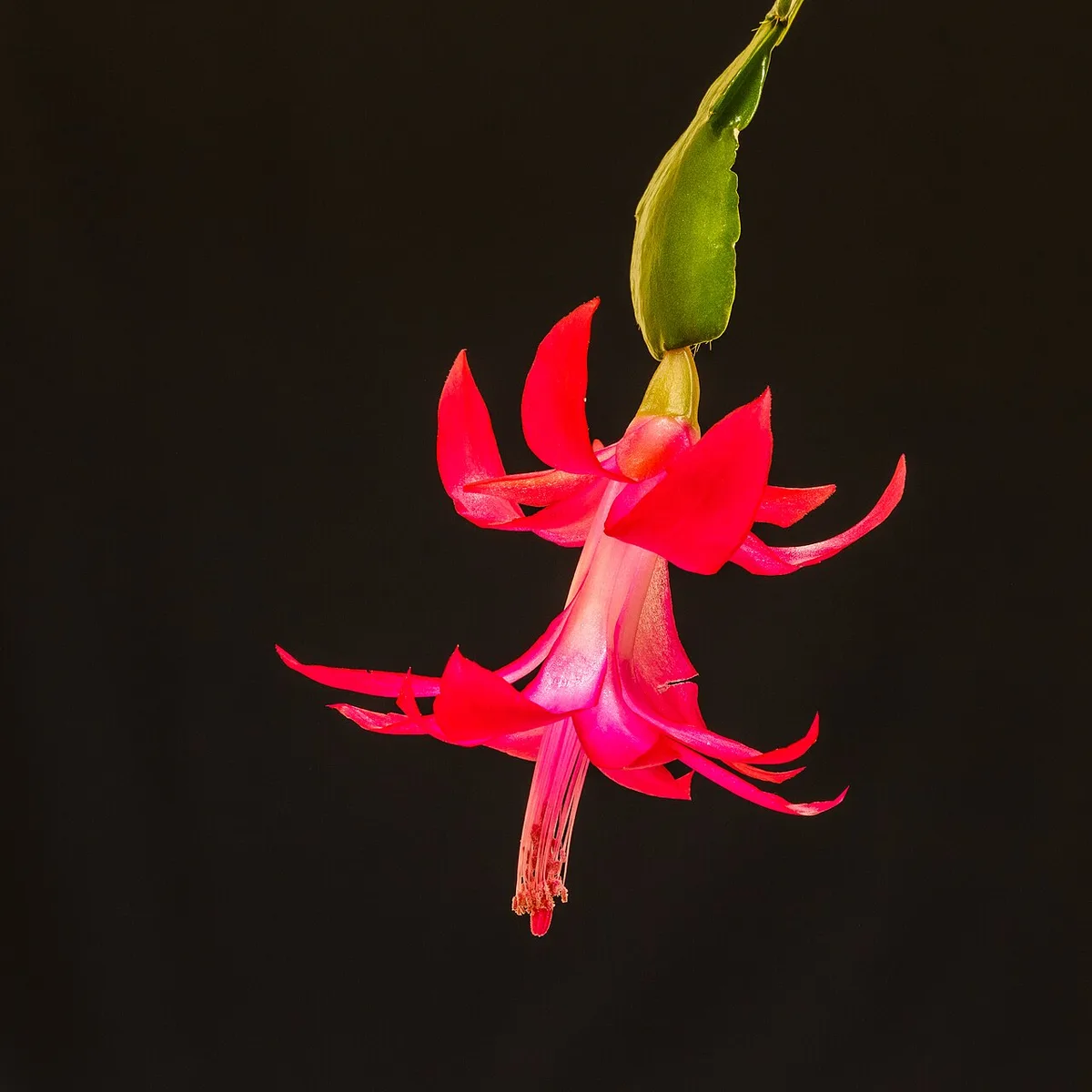
Image source: Wikimedia Commons / Agnes Monkelbaan (CC BY-SA)
When veterinarians talk about toxic houseplants, they mean specific chemical compounds. Saponins. Insoluble calcium oxalates.
Alkaloids. Those molecules cause drooling, vomiting, and organ damage in cats.
The Christmas cactus has none of them.
Per the ASPCA Animal Poison Control database, Schlumbergera species rank as non-toxic to cats and dogs. The plant tissue contains no harmful compounds. A nibble won't harm your cat.
Here's why that matters. The Christmas cactus is a tropical epiphyte. It grows on tree branches in Brazilian rainforests, not in soil.
It evolved without chemical defenses against herbivores. So its leaves are essentially harmless biological material.
The Schlumbergera genus covers roughly six species. All of them share the same non-toxic profile. That includes the Thanksgiving cactus (Schlumbergera truncata), which often gets sold under the Christmas cactus label.
Now, "non-toxic" is a safety rating, not a menu recommendation. Cats can still vomit after eating too much of any plant. The fibrous leaves irritate the stomach purely mechanically.
That's true of grass, spider plants, and yes, Christmas cactus.
The bottom line: the plant won't poison your cat. But it might still make a mess on your rug.
The Lookalike Trap: Don't Confuse It With the Easter Cactus
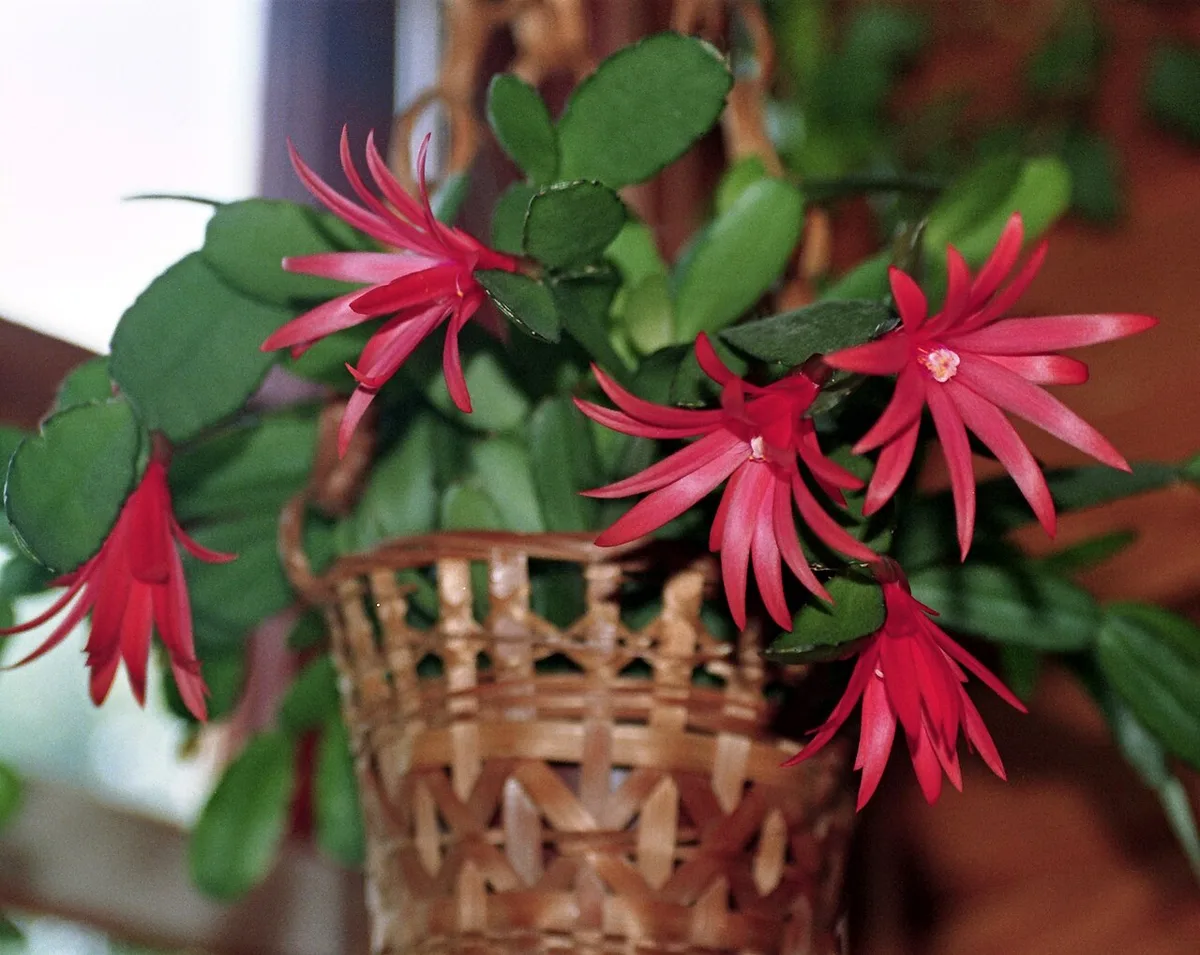
Image source: Wikimedia Commons / Kor!An (Корзун Андрей) (CC BY-SA)
Here's where things get muddy. Plenty of plants get sold as Christmas cactus when they're something else entirely. The biggest troublemaker is the Easter cactus, also known as Hatiora gaertneri.
Easter cactus looks similar at a glance. Same segmented leaves. Same tropical origins.
But it's a different genus with a different chemical profile.
Some pet poison databases flag Easter cactus as mildly toxic. Others list it as safe. The research isn't settled like it is for Schlumbergera.
That mismatch means you can't guess. You have to know which plant you own.
Here's how to tell them apart.
- Leaf segments. Christmas cactus has smooth, scalloped edges with rounded notches. Easter cactus has small bristles on the tips of its segments.
- Flower shape. Christmas cactus flowers are tubular and hang downward. Easter cactus flowers are star-shaped and point outward.
- Bloom timing. The names tell the story. Christmas cactus blooms in December. Easter cactus blooms in spring, usually April.
The Thanksgiving cactus (Schlumbergera truncata) also causes confusion. Its leaf segments have sharp, pointed claws. It blooms in November.
But it's still a Schlumbergera, so it carries the same non-toxic rating.
That leaves Easter cactus as the only real concern. If you're not sure which one you own, look at the leaf margins and bloom season. When in doubt, treat the plant as potentially problematic until you've verified the species.
What to Do If Your Cat Takes a Bite
So your cat nibbled a Christmas cactus. First, don't panic. The odds are heavily in your favor.
Here's a simple step-by-step process.
Step 1: Assess what actually happened. How much did your cat eat? Did they just bite a leaf, or did they swallow a whole chunk? Most cats taste a leaf and walk away.
That's a non-event.
Step 2: Remove any plant material. Check your cat's mouth for lodged leaf pieces. Wipe the fur if the plant left sticky residue. In most cases, there's nothing to clean at all.
Step 3: Monitor for symptoms. Watch for vomiting, drooling, or diarrhea over the next 4 hours. Mild vomiting from one or two leaves is not alarming. It usually passes within 24 hours.
Step 4: Call the vet if anything changes. A single throw-up episode after nibbling leaves is low risk. Repeated vomiting, lethargy, or refusing food is a different story. That's when you pick up the phone.
Here are the numbers you want saved in your contacts:
- ASPCA Animal Poison Control: (888) 426-4435
- Pet Poison Helpline: (855) 764-7661
Both hotlines charge a consultation fee. That fee is worth it if you're genuinely uncertain. But for a Christmas cactus nibble, a quick call to your regular vet usually answers everything.
One more thing. Don't induce vomiting unless your vet tells you to. That advice applies to all plant ingestion cases.
It's outdated guidance for many situations and can cause more damage than the plant itself.
The Hidden Risks No One Talks About
Here's the part most articles skip. The plant itself is safe. But the plant you bought at a big-box store isn't necessarily what the label shows.
Greenhouse plants get treated with pesticides and fungicides during cultivation. Those chemicals can linger on the foliage.
The ASPCA lists Christmas cactus as non-toxic for the plant itself. That rating doesn't cover chemical residue. If your cat nibbles a fresh store-bought plant sprayed with systemic insecticide, they could develop mild symptoms.
Not from the cactus. From the chemicals.
The fix is simple. Rinse the foliage under running water when you bring the plant home. Let it dry before placing it near your cat.
Then there's mechanical irritation. Christmas cactus has no spines, but the leaf segments are fibrous and tough. When a cat chews them, the fiber can cause a gag reflex.
That often leads to vomiting, not because of toxins, but because the cat's stomach says "this isn't food."
You'll also see the hairball factor. Cats groom constantly. They swallow fur, and sometimes a plant leaf gets tangled in the mix.
Your cat throws up a hairball with cactus bits in it. It looks like a poisoning, but it's really grooming gone sideways.
The biggest hidden risk is misidentification. Many owners think they have a Christmas cactus and actually own an Easter cactus. That's why verifying your plant species matters more than any other step in this article.
Pet-Safe Alternatives and Smarter Placement
If your cat treats every plant like a chew toy, you don't have to give up greenery. You just need smarter choices. Spider plants (Chlorophytum comosum) and Boston ferns (Nephrolepis exaltata) both carry non-toxic ratings.
Cat grass is even better, since cats actually crave it.
| Plant | Why it's safe | Bonus |
|---|---|---|
| Spider plant | No toxic compounds | Cats love the arching leaves |
| Boston fern | Non-toxic, feathery texture | High humidity benefits the fern |
| Cat grass | Edible cereal grass | Satisfies chewing instinct |
Placement matters too. A Christmas cactus on a high shelf is still within reach of a determined climber. Hanging planters work better for problem chewers.
Bright windowsills with a deterrent mat also help.
One last tip: always rinse store-bought plants before bringing them indoors. Greenhouse pesticides linger on leaves. A quick rinse removes most residue.
Then let the plant dry before placing it anywhere near your cat.
Frequently Asked Questions
Is Thanksgiving cactus toxic to cats too?
No. The Thanksgiving cactus (Schlumbergera truncata) belongs to the same non-toxic Schlumbergera genus. It's safe for cats.
Just confirm your plant is a true Schlumbergera and not an Easter cactus, which some sources flag differently.
What if my cat eats a large amount of Christmas cactus?
A large amount of fibrous plant material can cause vomiting or diarrhea. These symptoms are mechanical, not toxic. Monitor your cat for 24 hours.
If vomiting continues past two episodes or your cat stops eating, call your vet.
Should I panic if my cat throws up after nibbling it?
No. Mild vomiting lasting under 24 hours is common after cats eat any plant fiber. Check for plant pieces in the vomit.
If your cat seems bright, eats normally, and drinks water, there's no reason to panic.
How do I know for sure my plant is a Christmas cactus?
Check the leaf segments. Christmas cactus has smooth, rounded scallops. Thanksgiving cactus has pointed claws.
Easter cactus has tiny bristles. Bloom time helps too. Christmas blooms in December.
If you're still unsure, consult a nursery or plant identification app.
The Bottom Line: Trust the Plant, Watch the Cat
You can keep a Christmas cactus with confidence. The ASPCA lists Schlumbergera as non-toxic to cats. That's a verified, research-backed fact.
No recorded cases of poisoning exist as of 2026.
Here's your checklist. Identify the species correctly. Rinse new plants before bringing them home.
Watch your cat after a nibble. Call the vet for persistent vomiting, lethargy, or refusal to eat.
The plant is safe. The cat is safe. The holiday decor stays.
That's a win for everyone in the house.

Similar Posts