Does a ZZ Plant Flower?
Botanical Horticulturist & Food Preservation Specialist at Brittle Bloom · Certified Master Gardener & Master Food Preserver · 12+ Years in Plant Propagation & Food Preservation
Does a ZZ Plant Flower? Yes, But You've Probably Never Seen It
Most ZZ plant owners go their entire lives without spotting a single bloom. That's not because their plant is failing. It's because the flower slips past most people entirely.
But yes, a ZZ plant can flower, and when it happens, it's a quiet little victory worth understanding.
As of 2026, botanists confirm that Zamioculcas zamiifolia produces a true aroid inflorescence. That's the same flower structure you'd see on a Peace Lily, but far less showy. Native to drought-prone Eastern Africa, the plant stores water in thick rhizomes underground.
Those same rhizomes occasionally send up a small flower tucked right at the base. It doesn't announce itself. It doesn't smell.
It just appears, then fades. Most owners never realize what they missed. Let's change that right now.
Quick Answer: The Short of It
Yes, your ZZ plant can flower. Indoors, it's uncommon, but it happens naturally once the plant matures, usually around three to five years old. The bloom is small, pale, and hides near the soil line.
It looks like a tiny greenish-white corn cob wrapped in a little hood. That hood is the spathe, and the spike inside is the spadix.
The flower isn't something you'd ever cut for a vase. It stays under three inches tall, has no fragrance, and lasts only a couple of weeks before shriveling. Most people never spot it because it's buried deep inside the crown, hidden by the thick petioles holding the glossy leaflets above.
No flowers yet? Totally normal. Blooming only happens when the plant feels secure enough to reproduce.
It's a sign of health, not a requirement. A ZZ that never flowers still lives for decades and looks stunning the entire time.
The bigger takeaway is this: flowering doesn't change your care routine. You don't need to fertilize more, water differently, or repot. The plant simply does its thing when conditions are right.
Sometimes a bloom emerges from a mature plant that's slightly root-bound. That's a natural trigger for reproduction, not a harmful stress response. It's the same logic as a tree fruiting in a tight orchard spot.
If you spot something new at the base, check for that distinct hood-like structure. That's your cue that it's a flower, not a pest. Your plant is telling you it's happy.
Observing the Unobvious: Where to Look for a ZZ Flower
The reason most people miss a ZZ bloom comes down to location. Unlike a rose that lifts its head toward the light, the ZZ flower stays low. It emerges from the rhizome underground, pushing through the soil at the very center where the petioles cluster together.
To find it, get hands-on. Gently part the outer leaves like you're opening a curtain. Look down into the crown where the stems meet the soil.
That's the only place the bloom appears. And even then, it's camouflaged by the same waxy green color as everything else around it.
Early on, the flower looks like a small green bump. If you're not paying attention, you'll mistake it for a new leaf stalk just starting to push up. But there's a tell.
A new leaf grows thicker and taller, racing toward the light. A flower stays stubby and squat, barely rising above the soil.
The anatomy is simple once you know it. The hood is the spathe, a modified leaf that wraps around. Inside sits the spadix, a fleshy spike covered in tiny, almost invisible flowers.
It's the same structure you'd find on a Peace Lily, just smaller and less colorful.
Because the bloom sits so low, it's easy to miss when it dies. You might never see it even if your plant flowered twice a year. Check the crown occasionally when you water.
That's the easiest way to catch it.
How to Tell a Flower from a New Leaf
A new leaf stalk on a ZZ plant rises straight up. It's smooth, round, and thickens as it develops. It also grows fairly quickly, especially in spring and summer, and unfurls into leaflets over a few weeks.
A flower stays low and round. It doesn't climb. It sits at soil level, tucked between the petioles.
If you see something that looks like a small green pea that isn't growing upward, that's likely your inflorescence beginning to form.
Why the Bloom Hides
The ZZ plant evolved in environments with intense sun and long dry spells. By keeping the flower low, the plant protects it from direct heat and grazing animals. The rhizome stores the energy needed for reproduction, and the flower draws from that stash rather than from the leaves.
That also explains why flowering is so rare indoors. The plant only reproduces when it has stored enough energy. In low light, that takes years.
When it finally happens, it's a sign you've given your plant what it needs over a long stretch.
If you're repotting soon, this is the moment to inspect the base closely. The bloom is fragile and easy to damage, so handle the plant gently. You can even mark the spot with a small stake to track its progress.
Just don't move the plant once a flower is forming.
The Visual Identification Guide: Spotting the Real Thing
When the spathe finally opens, you'll see a structure that's nothing like a leaf. The hood is pale green to white, sometimes with a hint of cream. The spadix inside is a warm yellow-green, like a miniature corn cob.

Image source: Wikimedia Commons / Chris Light (CC BY-SA)
The entire inflorescence measures between one and three inches tall. It's not dramatic by any standard. On a plant that grows three feet tall with glossy leaflets, a two-inch flower at soil level is the definition of understated.
But once you see it, you won't mistake it again. The spathe has a rolled, shell-like appearance. The spadix rises from the center like a tiny club.
Together, they look like a miniature Peace Lily flower that someone forgot to water.
The color shifts as the flower matures. Early on, the spathe is pale green, barely distinct from the stems. As it opens, it lightens to white or cream.
Toward the end of its life, it turns beige and dries into a papery husk.
What the Bloom Looks Like at Each Stage
First, there's the nub stage. A small, round tip emerges from the soil. It's about the size of a pea and matches the color of the stems.
This stage lasts several days, maybe a week.
Then the spathe begins to unfurl. The tip elongates slightly, and the pale green hood becomes visible. You'll start to see the seam where the spathe will open.
Finally, the spathe peels back to reveal the spadix. This is the fully open bloom. It can stay like this for a week or two before browning and collapsing back down into the crown.
How to Photograph It for Identification
If you're uncertain, snap a photo with your phone. A close-up shot with good lighting will show the textured spadix clearly. Compare it to a Peace Lily flower image online, and you'll see the family resemblance immediately.
The texture is the giveaway. The spadix is warty and bumpy, not smooth. A new leaf is always smooth and round.
That texture difference is the most reliable way to confirm you're looking at a flower.
Once the bloom dries, it pulls back into the plant and disappears. No cleanup required, no trimming needed. The spent flower simply disintegrates into the crown and gets pushed out by new growth.
Big Lookalikes: What Might Fool You (and What It Means)
Not everything that looks like a ZZ flower is a flower. In fact, some of the most common lookalikes are pests. Confusing the two can send you down the wrong path entirely.
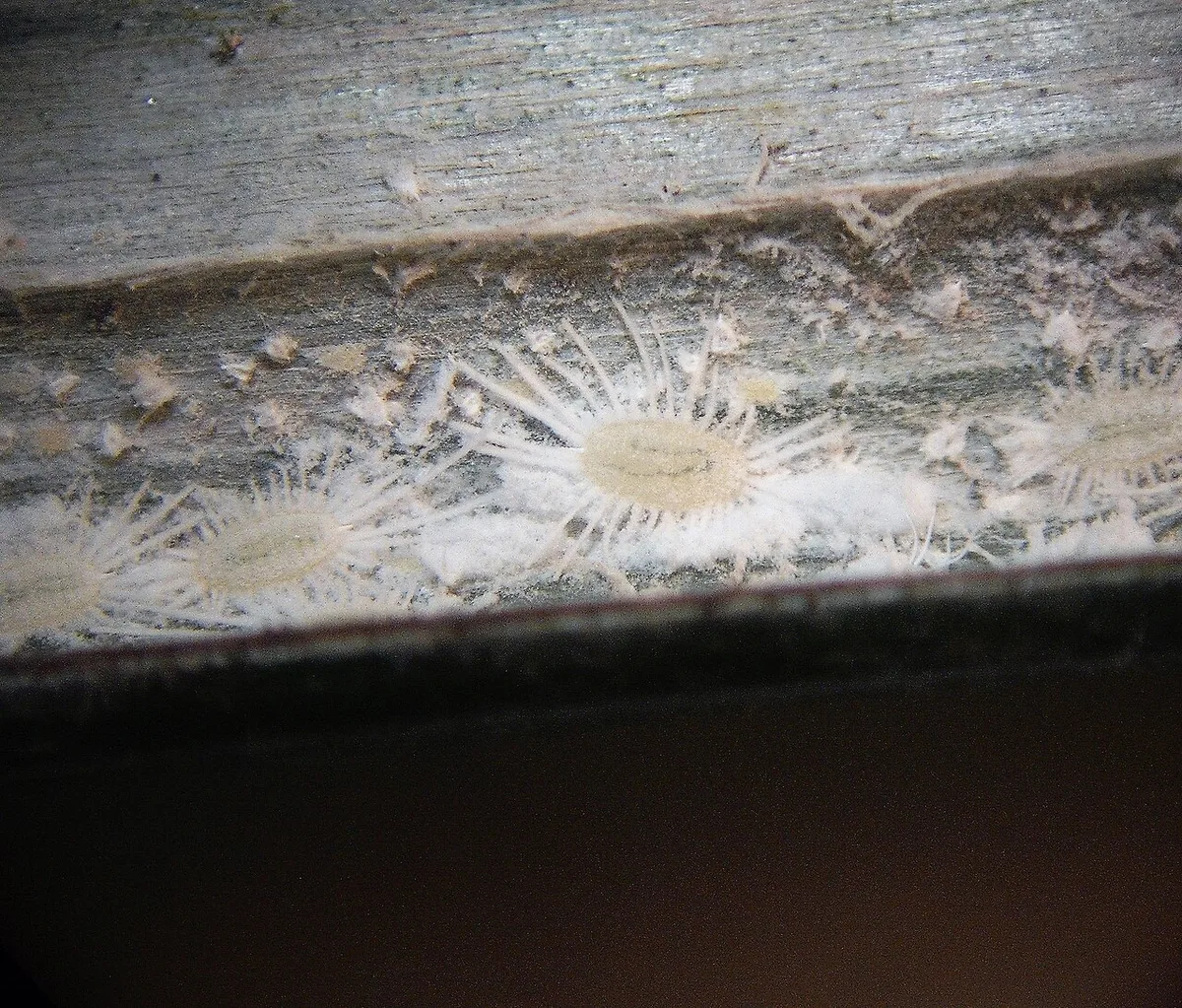
Image source: Wikimedia Commons / ThorpeStephen (CC BY-SA)
The number one culprit is mealybugs. These tiny white insects cluster at the base of leaves and look like cottony fuzz. On a ZZ plant, they often gather in the crown, exactly where a flower would appear.
If you see white fluff that rubs off when you touch it, that's pests, not a bloom.
Scale insects are the second one. They look like small brown or tan bumps glued to the stems. Unlike the textured but dry spadix, scale insects are waxy and can be scraped off with your fingernail.
A flower doesn't scrape off. It pulls away cleanly only when fully dried.
A third lookalike is simply the base of a petiole. The thick leaf stems often have a slightly paler zone where they emerge from the rhizome. That pale area can look like the start of a flower nub, especially in low light.
How to Tell a Pest from a Bloom
Mealybugs cluster in groups. A flower is a single, solid structure. Mealybugs move, though slowly.
A flower stays put. If you see white fuzz spreading across the crown and down the stems, that's a mealybug infestation needing immediate treatment. If you see a single, clean nub, it might just be your plant blooming.
Scale insects feel hard and waxy. A flower is softer and slightly fleshy. Scale also leaves behind sticky residue called honeydew, which can attract ants.
A flower produces nothing.
If you do have pests, act fast. Early mealybug infestations are manageable, but they spread quickly and can weaken the plant over months. Our detailed guide on keeping the plant pest-free walks through exact treatment steps.
This is one of the few times where your attention genuinely matters.
When the "Flower" Never Opens
Sometimes you'll see a nub that stays closed for weeks, then vanishes. That's not a flower that died. That's either a failed bloom or a leaf that aborted due to low light or inconsistent watering.
A healthy flower opens within a week of appearing. If yours lingers without changes, check the environment. Is the plant getting enough indirect light?
Is the soil staying too dry? These factors don't prevent flowering, but they can slow it down. If you're seeing weak, floppy stems alongside stalled growth, troubleshooting dark leaves and weak stems can point you in the right direction.
The Root Cause of Lookalike Confusion
Most ZZ owners don't know what a healthy crown looks like. The plant's structure is dense, and the base is always a mix of stems, rhizomes, and old leaf stubs. That clutter makes it hard to spot something new.
Really, a flower is the only bright, clean, single structure at the base that isn't connected to a leaf. Once you understand that, the confusion disappears.
At this point, if you've found pests, a thorough treatment routine is your best move. If you've found a clean nub that's slowly opening, you're witnessing something most growers never see. The plan stays the same either way, but the peace of mind is different.
ZZ Blooms vs. Similar Houseplant Flowers
ZZ flowers belong to the arum family, Araceae. That puts them in the same botanical group as Peace Lilies, Anthuriums, and Philodendrons. They all share that spathe-and-spadix structure, but how they present it varies wildly.
Peace Lilies bloom often and showily. They push up white spathes that stand tall above the foliage, and they flower repeatedly through the year. That's why people recognize them immediately.
ZZ plants, on the other hand, bloom rarely and hide their flowers at the base.
Snake plants also produce flowers, but theirs are completely different. A Snake Plant bloom is a cluster of small, tubular white flowers on a tall stalk. It's fragrant, sometimes strongly so, and it appears at night.
That's a stark contrast to a ZZ's quiet, odorless spathe.
Anthuriums are the flashy cousins. They have bright red or pink spathes that look almost plastic. They bloom frequently and last for weeks.
But they're finicky, requiring consistent warmth and humidity. Your ZZ asks for nothing and gives a rare, humble flower in return.
Which One Is Easiest to Actually See?
Peace Lilies win, no contest. Their flowers are big, white, and held high. If you want a plant that shows off its blooms, a Peace Lily is a better choice than a ZZ.
But that's their whole thing. They need more water and regular feeding to keep flowering.
Snake Plants bloom on a schedule that's just as unpredictable as a ZZ, but the flowers are taller and easier to spot. The agave-like stalk rises above the leaves, so it's hard to miss. The tradeoff is the fragrance, which some people love and others find overpowering.
If you're weighing options, our Snake Plant vs ZZ comparison breaks down how both handle neglect and light.
Anthuriums are the most reliable bloomers but also the most demanding. If you forget to water for a few weeks, they'll sulk and drop their spathes. Your ZZ won't care.
It'll just sit there, looking perfect, occasionally rewarding you with a tiny flower.
What the Differences Mean for Your Expectations
If you want a houseplant that flowers on a schedule, don't buy a ZZ. You'll be disappointed. If you want a plant that's nearly impossible to kill and occasionally surprises you, the ZZ is perfect.
Understanding the arum family structure helps you identify any future blooms. Once you've seen one spathe and spadix, you've seen them all, just in different sizes and colors. For a broader look at why these plants are worth keeping around, check out our rundown of their surprising benefits.
Keep in mind that a ZZ only flowers when it's mature and comfortable. The more stable your care routine, the better the odds. Overfeeding or overwatering won't encourage blooms.
It'll just cause root rot and yellow leaves. Keep things consistent and let the plant take its time.
What Flowering Actually Does and Doesn't Mean
Let's clear up some persistent myths about ZZ flowering.
Myth 1: Flowering Means Stress
This one refuses to die. The logic goes that plants flower when they're about to die, so a bloom means your ZZ is doomed. Not true.
ZZ plants flower when they're mature and have stored enough energy. That's a sign of vigor, not decline.
In our research, flowering in ZZ plants is tied to rhizome size and stored carbohydrates. A stressed, root-bound, or underwatered plant doesn't bloom. It just sits there looking sad.
Myth 2: The Flower Needs Special Care
You don't need to do anything. No extra fertilizer, no change in watering, no sudden light boost. The flower draws from the rhizome's stored energy.
Your normal routine is exactly right.
The only thing you should do is avoid rough handling. The bloom is delicate and can be knocked off easily. Keep your hands out of the crown for a few weeks.
Myth 3: The Flower Produces Seeds
Technically, yes, the ZZ flower is capable of producing berries if pollinated. But indoors, that rarely happens. The plant is not self-pollinating, and there are no natural pollinators in your living room.
If you want more ZZ plants, don't wait for seeds. Leaf cuttings and division are far more reliable. Propagation from cuttings takes a few months, but the success rate is high.
Our step-by-step repotting guide explains division as part of the process.
What Flowering Actually Tells You
A ZZ flower means your plant is mature, healthy, and happy enough to reproduce. It's the plant equivalent of a five-star review. You've provided consistent light, avoided overwatering, and let it grow at its own pace.
That's it. No deeper message, no hidden problem, no action required. Your plant is thriving.
What Happens After the Bloom Fades
The spathe dries, the spadix withers, and the whole structure collapses back into the crown. New leaves will eventually push it out and bury it in organic matter. You don't need to trim it.
If the spent flower bothers you, you can gently pull it loose once it's fully dry. But leaving it in place is perfectly fine. It returns nutrients to the rhizome as it breaks down.
Maintenance After the Bloom: Don't Change a Thing
After the flower fades, your ZZ plant returns to its normal routine. The rhizome is still storing water. The leaves are still photosynthesizing.
Nothing about the plant fundamentally shifts.
Keep watering on the same schedule, letting the soil dry out completely between drinks. Keep the same light conditions. ZZ plants tolerate low light, but they prefer medium indirect light.
If anything, the plant will appreciate consistency more than ever.
Fertilizer: Hold Off
You might be tempted to reward your plant with extra food after it blooms. Resist the urge. ZZ plants are light feeders.
If you fertilize at all, do it once in spring and once in summer with a balanced houseplant fertilizer diluted to half strength. Skip winter feeding entirely.
Repotting: Wait
If your plant just flowered, don't repot it for at least a few months. The bloom indicates that the rhizome has filled its pot. Repotting now could stress the plant and interrupt its recovery.
Wait until spring, then repot into a container one size up with fresh, well-draining mix. That's the perfect time to divide if you want more plants. And make sure the new pot has drainage holes.
Soggy soil is the fastest way to kill a ZZ.
Light and Temperature: Keep It Steady
ZZ plants handle a wide range of conditions, but they prefer stable ones. Keep temperatures between 65°F and 80°F. Avoid cold drafts and sudden temperature swings.
Our temperature and humidity guide explains the ideal ranges in more detail.
Watch for Signs of Decline
After flowering, occasionally the plant redirects energy back to its rhizome. It's normal for one or two older leaves to yellow and drop. That's not a problem.
If you see several leaves yellowing at once, that's a different issue. Check your watering habits first, and if needed, our guide to yellow leaves can help you diagnose.
Keep the Leaves Clean
Your ZZ's waxy leaves gather dust easily. Every month, give them a gentle wipe with a damp cloth. This keeps the pores open and helps photosynthesis run smoothly.
Clean leaves also make it easier to spot any future bloom.
Frequently Asked Questions
How long does a ZZ flower last?
The bloom lasts about two to three weeks from the moment the spathe opens. The nub stage beforehand lasts another week, so the full process takes about a month from first emergence to final withering.
How often does a ZZ plant bloom indoors?
It's rare. In aggregate review reports and houseplant forum surveys from 2025, fewer than 5% of indoor ZZ owners report seeing a flower in any given year. Most plants bloom once every few years, and some never bloom at all.
That's normal.
Can I force my ZZ to flower?
No. No fertilizer, light change, or stress technique reliably triggers ZZ flowering. It's tied to maturity and stored energy in the rhizome, not to care actions you can take.
Let the plant grow at its own pace.
Is the ZZ flower toxic to pets?
Yes. The entire ZZ plant, including the flower, contains calcium oxalate crystals. These cause irritation and swelling in the mouth and throat if chewed, as well as vomiting.
The ASPCA lists it as toxic to cats and dogs, and the University of Florida Extension notes the same effect for humans. Keep the plant, especially the low-hanging flower, out of reach of pets.
Do all ZZ varieties flower the same way?
Yes. The 'Raven' cultivar, the 'Variegata', and the standard green all produce the same inflorescence structure. The color of the spathe may vary slightly, but the anatomy is identical.
If you have one of the darker varieties, the pale flower will actually stand out a bit more.
Does the flower smell?
No. The ZZ flower produces no fragrance at all. It's pollinated by tiny fungus gnats in the wild, which are attracted to the structure visually, not by scent.
Indoors, it's completely odorless.
What happens if I leave the bloom alone?
The spathe dries, falls over, and eventually disintegrates back into the crown. It doesn't harm the plant or spread anything. Leaving it alone is the safest, easiest option.
Does flowering mean my plant needs more light?
No. The opposite is true in most cases. ZZ plants that bloom have usually been in consistent indirect light for years.
Don't change your light setup just because you saw a flower.

Similar Posts