Pothos Plant Varieties: 15 Stunning Types to Grow
Botanical Horticulturist & Food Preservation Specialist at Brittle Bloom · Certified Master Gardener & Master Food Preserver · 12+ Years in Plant Propagation & Food Preservation
Got it. Writing the article now.
If you’ve just bought your first pothos or you’re staring at a shelf of similar-looking trailing vines, you’ve probably realized something: pothos plant varieties are confusing. Leaf shapes, variegation patterns, and even the plants’ scientific names blur together fast. Is that a Marble Queen or a Snow Queen?
Is this a Pearls and Jade or a N’Joy? The good news is that once you learn a few visual cues, telling them apart gets much easier.
The botanical name for the true pothos is Epipremnum aureum, and as of 2026, enthusiasts recognize dozens of named cultivars, from the common Golden to the rare Harlequin. Each variety has its own light tolerance, growth habit, and water needs. But here’s the catch: most pothos care instructions are the same across varieties, so the real difference is what you see in the leaves.
Once you know what to look for, you’ll never mistake one for another again.
The Pothos Identification Problem
Here’s the thing about pothos identification. Most people think “a pothos is a pothos.” And honestly, they’re not wrong about the care. All Epipremnum aureum varieties want the same thing: bright indirect light, well-draining soil, and water when the top inch feels dry.
The real problem is that you might be paying “rare plant” prices for a common variety that’s just been mislabeled.
This happens constantly. You’ll see a cutting labeled “Snow Queen” that’s really just a Marble Queen grown in high light. Or a “Pearls and Jade” that’s actually an N’Joy with different variegation.
Retailers, especially online sellers, often don’t bother with accurate IDs. And when you’re buying a single unrooted cutting from a photo, it’s nearly impossible to tell unless you know the exact visual markers.
That’s why visual identification matters. It doesn’t just satisfy curiosity. It protects you from overpaying, helps you give the right care, and lets you know what to expect as the plant grows.
A low-light Golden will revert to near-solid green. A Manjula with too much direct sun might burn. These are all practical outcomes of knowing which variety you actually have.
Quick Answer
There are around 20 named pothos varieties available to collectors. The most common are Golden, Marble Queen, and Neon. Rare varieties include Harlequin, Jessenia, and Glacier.
All share the same basic care needs. They differ mainly in leaf color, variegation, and growth rate. Most varieties tolerate low light but grow better with bright indirect light.
A Quick Visual Guide to the Main Pothos Varieties
Let’s start with the ones you’re most likely to find at your local nursery or big-box store. These are the staples, and mastering their looks makes everything else easier.
Golden Pothos
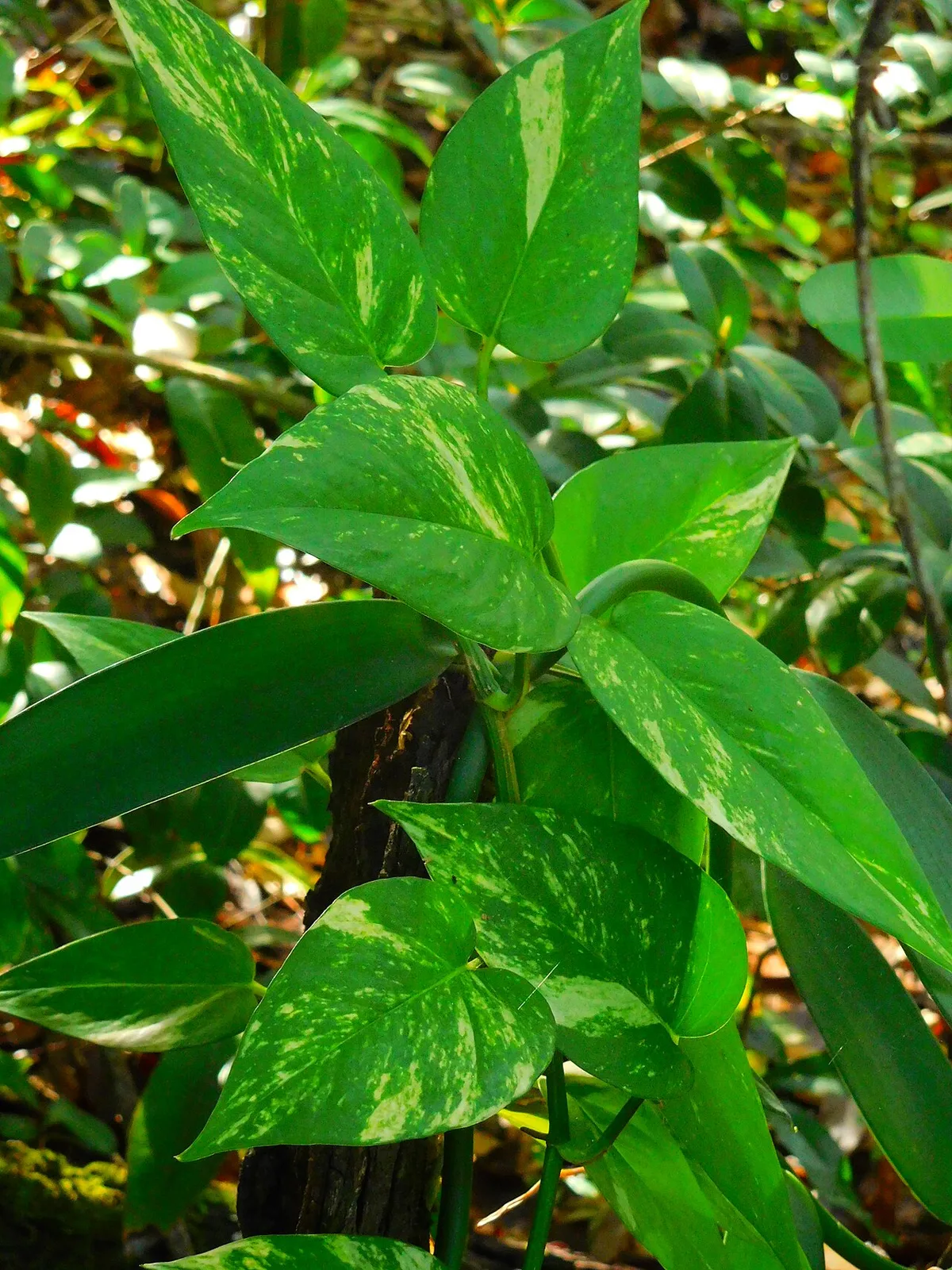
Image source: Wikimedia Commons / Filo gèn’ (CC BY-SA)
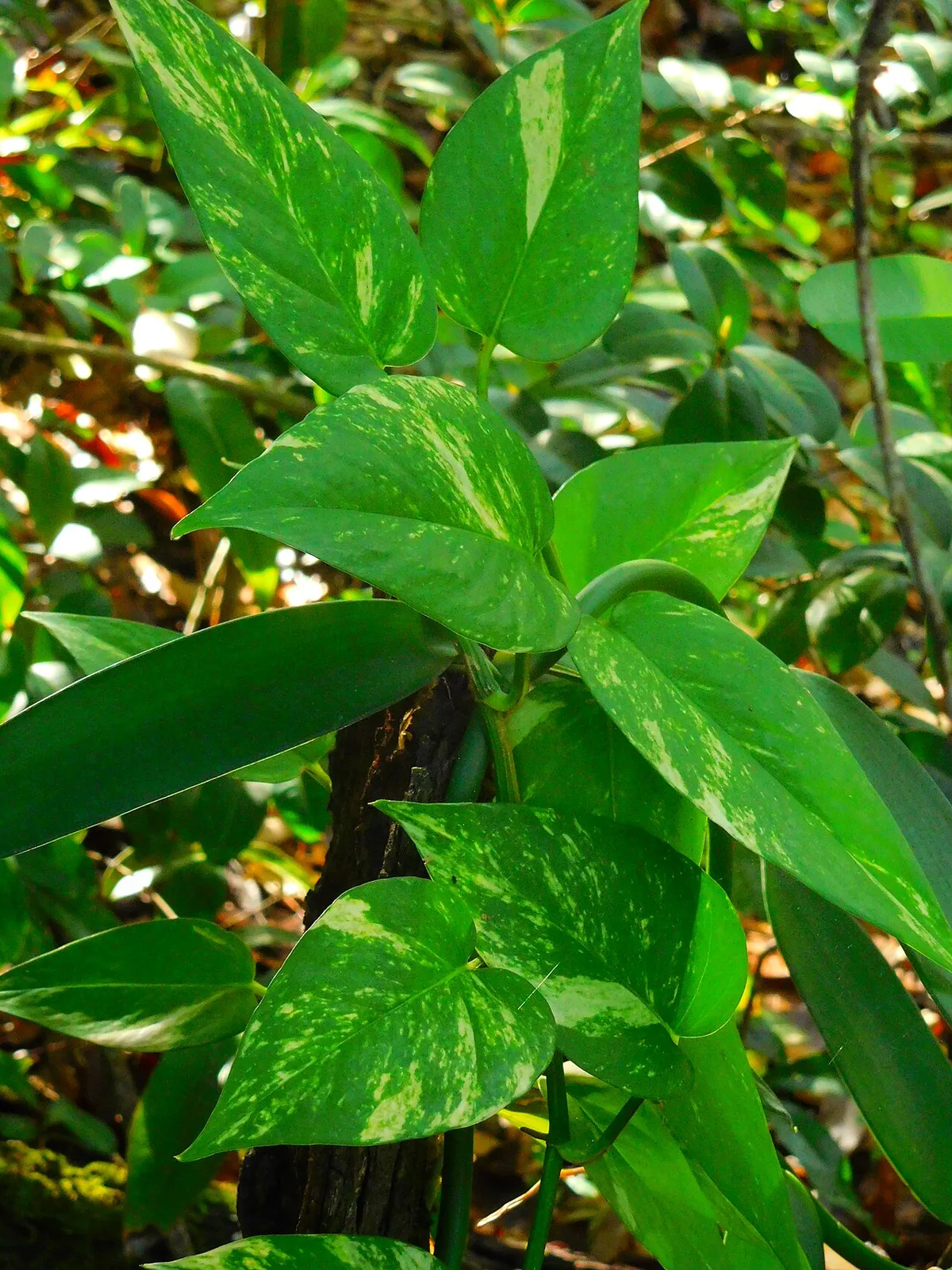
The Golden is the default pothos. It’s everywhere, it’s cheap, and it’s nearly indestructible. The leaves are heart-shaped with splashes of yellow-gold variegation that can range from subtle flecks to large blocks of color.
In low light, the gold fades to a pale, muted green. Give it more light, and the golden marbling pops.
The stems have a green-gold tint, and the whole plant has a classic, vining texture that feels almost waxy. If you’re not sure whether you have a Golden, look for the yellow-tinted variegation. White or cream patches point to a different cultivar.
Marble Queen Pothos
The Marble Queen is the one that confuses people, because it looks different depending on where it grows. The leaves are marbled with white and cream streaks that weave through the green. In bright light, the white can dominate so heavily that leaves look almost pure white with green speckles.
In low light, it reverts to a mostly green plant with white flecks.
Neon Pothos
The Neon is impossible to miss. It’s a solid, bright chartreuse-green with no variegation at all. The leaves are slightly thinner and more delicate than other pothos varieties.
This one is a great choice for low-light corners because it stays vibrant even without much sun. It also doesn’t revert, since there’s no variegation to lose.
Jade Pothos
The Jade is the plain-Jane cousin of the Golden. Solid deep-green leaves, no variegation, and a slightly thicker leaf texture. It’s often sold as a “basic” pothos, but it’s actually the most forgiving variety for dim rooms.
Since there’s no white or gold in the leaves, it doesn’t need as much light to stay healthy looking.
Manjula Pothos
The Manjula has rounded, almost heart-shaped leaves with a distinct umbrella-like curl around the edges. Variegation is a mix of white, cream, and silver-green, often with softer, cloud-like patches rather than sharp streaks. It grows slower than most other varieties, which makes it pricier.
You’ll usually find this one at specialty nurseries rather than big-box stores.
N’Joy Pothos
The N’Joy is a compact grower with smaller leaves and blocky white variegation that sits along the leaf edges and in patches. The white parts are usually separated from the green by a sharp, clear line with no speckling bridging the two. This is the key difference between N’Joy and Pearls and Jade.
Pearls and Jade Pothos
Pearls and Jade looks similar to N’Joy at first glance, but there’s one big giveaway: it has grey-green speckles and flecks that bleed into the white variegation. The leaf shape is also slightly more oval, and the white patches are more muted, often with a grey or silver tint. This variety is actually a patented mutation of the Marble Queen.
Cebu Blue Pothos
The Cebu Blue is a different beast entirely. The leaves are elongated, narrow, and have a distinct blue-silver sheen that no other pothos can match. Given enough light and something to climb, mature leaves can fenestrate, meaning they develop splits like a Monstera.
The juvenile leaves look completely different, so don’t be surprised if your new cutting looks nothing like the photos.
Baltic Blue Pothos
Baltic Blue is similar to Cebu Blue but with wider, darker leaves. It fenestrates earlier and easier, often while still young. The blue tint is less pronounced, and the leaves feel slightly thicker and more rugged.
Both are technically Epipremnum pinnatum, not aureum, but they’re sold as pothos.
Satin Pothos
The Satin Pothos, or Scindapsus pictus, isn’t a true pothos at all. But stores sell it as one, so we’re including it. The leaves are matte with silver splashes, and the texture feels almost velvety.
It’s slower-growing and slightly pickier about watering than a true pothos.
How to Tell Lookalike Varieties Apart Without a Tag
This is where things get tricky. Two varieties can look identical in a low-light photo and completely different side by side in person. Here’s a practical breakdown of the most common mix-ups.
N’Joy vs. Pearls and Jade
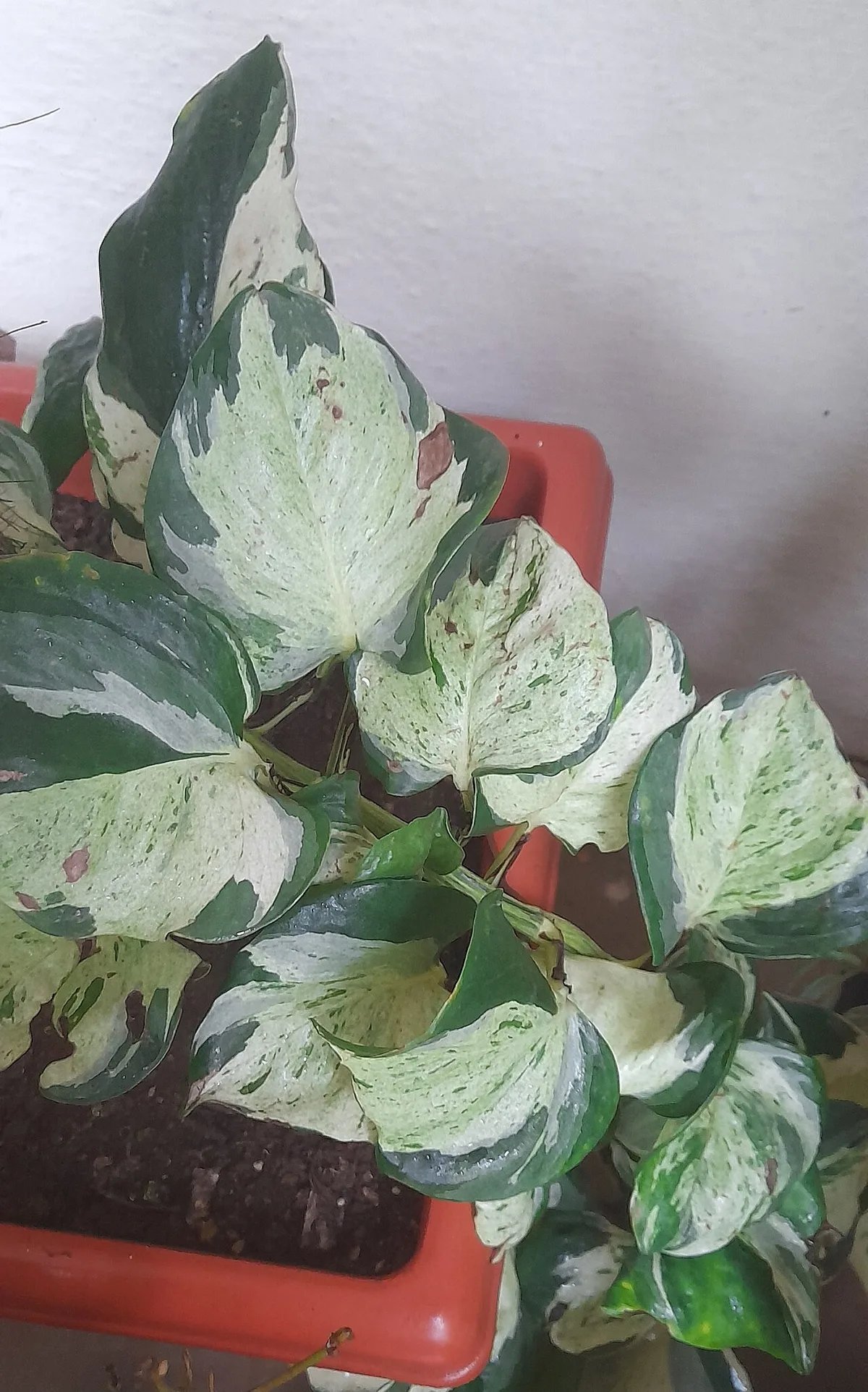
Image source: Wikimedia Commons / Yercaud-elango (CC BY)
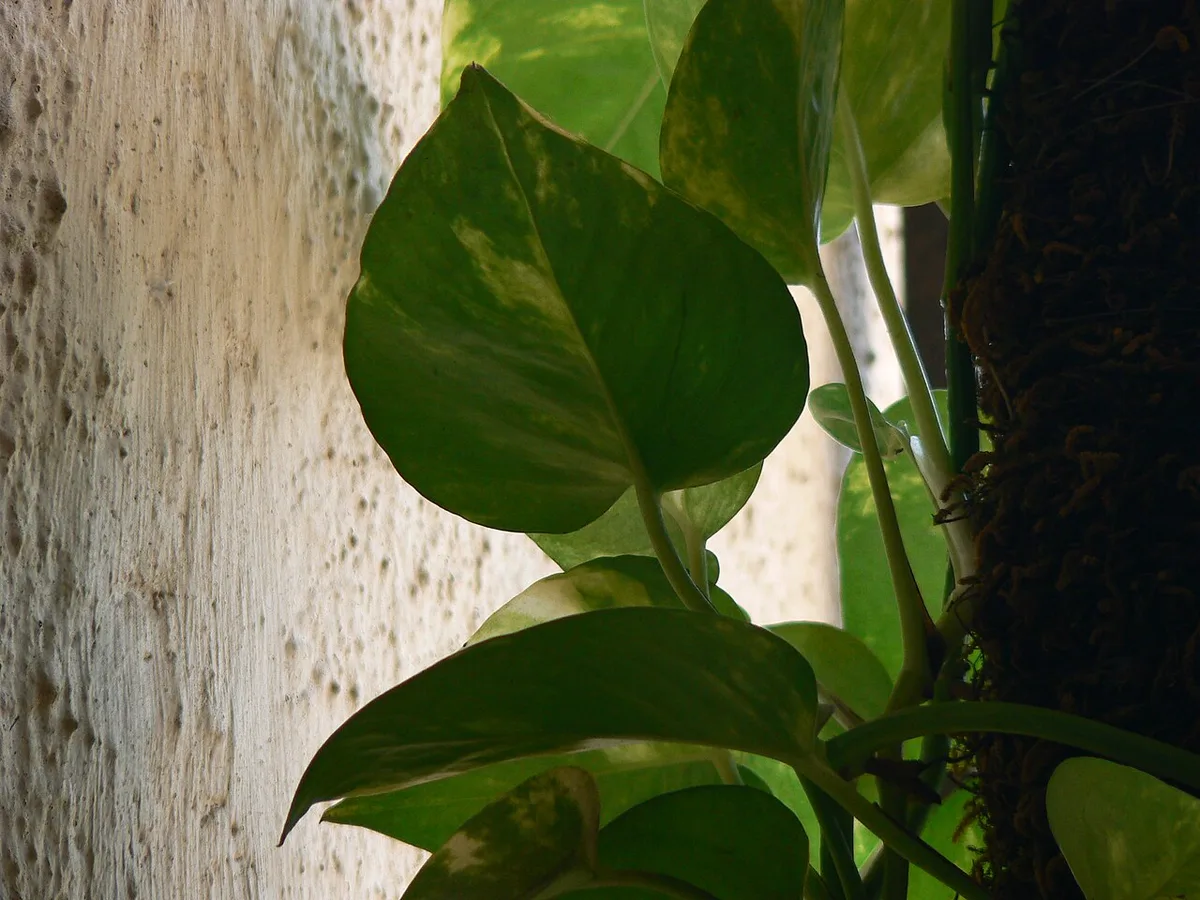
If you’re staring at a pot labeled N’Joy or Pearls and Jade, check the variegation edges. N’Joy has clean, sharp lines between white and green, with no speckles in the white areas. Pearls and Jade has grey-green flecks scattered throughout the white patches, plus a slightly more oval leaf shape.
Marble Queen vs. Snow Queen
Here’s a secret that saves you money. They’re the same plant. Snow Queen is a marketing name for a Marble Queen grown in incredibly bright light, so the white variegation dominates nearly the entire leaf.
If you give your Marble Queen enough sun, it becomes a “Snow Queen.” If you move a Snow Queen to low light, it reverts back to a typical Marble Queen look. Don’t pay a premium for “Snow Queen” cuttings.
Neon Pothos vs. Philodendron Lemon Lime
These two look almost identical from a distance. Both have bright chartreuse leaves. But the pothos has shiny, waxy leaves with a distinctly heart-shaped base.
The philodendron has more matte, softer leaves with a more tear-drop shape. Also, pothos stems are thicker and stiffer, while philodendrons have thinner, more trailing stems.
Scindapsus vs. Epipremnum
The Satin Pothos is a Scindapsus pictus, which is a different genus entirely. The easiest way to tell them apart is the leaf texture. Scindapsus leaves feel matte and slightly velvety, with silver patches that have blurry, soft edges.
Epipremnum leaves are glossy and waxy, with sharp, clear variegation lines.
Which Variety Should You Actually Buy?
The best pothos variety for you depends on your light conditions and how much fussing you want to do.
Best for Beginners: Golden, Jade, and Marble Queen
These three tolerate neglect better than any others. Golden regrows quickly even after heavy pruning. Jade survives low light without losing color.
Marble Queen is forgiving but needs a bit more light to keep its white variegation.
| Variety | Light Tolerance | Growth Speed | Difficulty |
|---|---|---|---|
| Golden | Low to bright | Fast | Easy |
| Jade | Low to medium | Moderate | Easy |
| Marble Queen | Medium to bright | Moderate | Easy |
Best for Bright Rooms: Snow Queen, Manjula, and N’Joy
If you have a sunny window, these varieties reward you. Their white variegation stays sharp and the plants grow slowly but steadily. The downside is that white leaves can burn in direct afternoon sun, so keep them a few feet back from the glass.
Best for Low-Light Spaces: Neon and Jade
Neon keeps its bright color in lower light, and Jade doesn’t need much sun to stay healthy. Avoid variegated varieties in dim corners, because they’ll produce more solid-green leaves as they reach for light.
Best for Collectors: Cebu Blue, Baltic Blue, and Harlequin
If you want something special, these are worth hunting for. Cebu Blue has the blue-silver sheen and fenestration. Baltic Blue splits its leaves even as a juvenile.
Harlequin is a rare sport with heavy white variegation and is usually sold as unrooted cuttings for serious collectors.
Best for Hanging Baskets vs. Climbing Poles
Trailing varieties like Golden, Marble Queen, and N’Joy are ideal for hanging baskets. They cascade beautifully and don’t need support. If you want the giant, fenestrated leaves you see on Instagram, you need a moss pole.
Cebu Blue and Baltic Blue are exceptions, they’ll climb happily and reward you with much larger leaves than their trailing counterparts.
A good rule of thumb is to match the variety to the spot you have. Don’t force a light-hungry Manjula onto a dark shelf, and don’t waste a bright window on a Jade. Pick the right plant for the space, and you’ll avoid most of the common problems that make people give up on houseplants.
Propagation and Display Ideas for Every Variety
Pothos are the easiest houseplants to propagate. You can stick a cutting in water, wait a few weeks, and you’ve got a brand-new plant. Here’s how to do it without killing the parent plant.
How to Propagate Any Pothos in Water or Soil
The water method is the most foolproof. Find a healthy vine with at least two nodes, those little brown bumps where leaves emerge. Cut just below a node with clean scissors.
Strip off the bottom leaf so the node is bare. Drop the cutting in a glass of water, making sure the node is submerged but the remaining leaves stay dry.
Place the glass in bright indirect light. Change the water weekly to prevent bacteria from forming. Roots should appear within two to four weeks, depending on the variety.
Variegated types like Marble Queen and N’Joy often root slower than solid-green ones like Jade or Golden.
The soil method works too, but it’s less forgiving. You can plant a cutting directly into moist potting mix after letting the cut end callus over for a few hours. Keep the soil consistently damp for the first couple weeks.
The cutting will root faster in soil than in water, but you can’t see the progress, so it’s riskier.
Once roots reach about two inches long, transfer water-rooted cuttings to soil. Be gentle, they’re fragile. Water thoroughly and keep the soil evenly moist for the first week before letting it dry out normally.
Making Your Pothos Look Fuller
The secret to a bushy pothos is pruning and pinning. If you have long, sparse vines with leaves only at the tips, don’t just let them trail. Cut the vines back by a third.
Then take those cuttings, propagate them, and plant the rooted cuttings back into the same pot.
You can also pin bare vines down onto the soil surface using U-shaped plant clips or bent paper clips. Each node in contact with moist soil will eventually grow roots. This fills out the top of the pot quickly and creates a much more lush appearance.
When and How to Use a Moss Pole
If you want oversized leaves, you need a moss pole. Pothos leaves get bigger when they climb. Attach the vine to a damp sphagnum moss pole using soft plant ties, making sure the aerial roots press against the moss.
Keep the moss consistently damp, and the roots will sink in. Cebu Blue and Baltic Blue respond especially well to this, producing fenestrated leaves that look completely different from their juvenile form.
How Light Changes Variegation
Variegated pothos need more light to maintain their white and cream patches. The white areas of the leaf contain no chlorophyll, so they can’t photosynthesize effectively. If a Marble Queen or N’Joy receives too little light, the plant produces more green leaves to survive.
Move it closer to a window and the variegation returns over several new leaves. Just remember, direct afternoon sun can scorch the white sections, so bright indirect light is the sweet spot.
Common Pothos Mistakes That Confuse New Plant Parents
Even with an easy plant like pothos, a few common errors lead to yellow leaves, root rot, and disappointment. Here’s what goes wrong most often.
Overwatering in the Wrong Potting Mix
Pothos like their soil to dry out between waterings. If your mix holds too much moisture, the roots suffocate and rot. The fix is simple: use a chunky, well-draining soil blend with perlite or orchid bark.
Water only when the top inch of soil feels dry to the touch.
Underestimating How Much Light “Bright Indirect” Really Means
Bright indirect light is not a dim corner. It’s a spot near a window where sunlight filters through a sheer curtain. If your pothos is growing slowly or losing variegation, it’s likely not getting enough light.
Move it closer to a window and watch the difference over a few weeks.
Confusing Reverted Growth with a Different Variety
When a variegated pothos doesn’t get enough light, it produces solid-green leaves. This is called reversion. Many people think they’ve bought a mislabeled plant, but it’s just the same variety adjusting to its environment.
Give it more light and new growth will show the variegation again.
Buying “Rare” Cuttings That Are Just Mislabeled Common Varieties
The internet is full of sellers charging triple for a “Snow Queen” that’s just a Marble Queen in bright light. Research the visual markers before you buy. If the price seems too good for a rare variety, it’s likely a common one in disguise.
Ignoring Root Health When Buying Unrooted Cuttings
Unrooted cuttings are risky. They can arrive dehydrated, rotting, or with no viable nodes. Check the node is intact and the stem is firm.
If the cutting is mushy or smells bad, don’t buy it.
Frequently Asked Questions About Pothos Varieties
Do pothos need direct sunlight?
No. Pothos prefer bright indirect light. Direct afternoon sun can scorch the leaves, especially white variegated varieties like Marble Queen and N’Joy.
A few hours of gentle morning sun is fine, but harsh midday rays will cause brown patches.
Why is my variegated pothos turning all green?
It’s reverting due to insufficient light. Variegated leaves lack chlorophyll, so the plant produces more green leaves to photosynthesize. Move it to a brighter location and the new growth will regain its variegation.
Are pothos toxic to pets?
Yes. Pothos contain calcium oxalate crystals that are toxic to cats and dogs when ingested. Symptoms include drooling, vomiting, and difficulty swallowing.
The ASPCA lists pothos as toxic, so keep them out of reach of curious pets.
How fast do pothos grow?
In optimal conditions, pothos can grow up to 12 inches per month during spring and summer. Growth slows significantly in winter or low light. Variegated varieties like Manjula grow slower than solid-green ones like Jade.
Can I mix multiple varieties in one pot?
Absolutely. Pothos varieties share the same care needs, so they coexist happily. Mix a Golden with a Neon for contrast, or pair a Marble Queen with an N’Joy for a varied texture.
Just ensure the pot has good drainage.
What’s the rarest pothos variety?
The Harlequin is one of the most sought-after, with heavy white variegation and a distinctive marbled pattern. It’s rarely sold in stores and usually appears in collector circles as unrooted cuttings. Expect to pay a premium if you find one.

Similar Posts