Why Plants Need Nitrogen: The Essential Nutrient Explained
Botanical Horticulturist & Food Preservation Specialist at Brittle Bloom · Certified Master Gardener & Master Food Preserver · 12+ Years in Plant Propagation & Food Preservation
Why do plants need nitrogen? It’s the building block of life for plants, plain and simple. Without enough of it, leaves turn yellow, growth stalls, and yields drop.
This isn’t a niche issue. Almost every garden and farm deals with nitrogen at some point.
To put it in perspective, a typical corn crop will pull 150 to 200 pounds of nitrogen out of the soil per acre, according to USDA research. That’s why the N in your fertilizer bag is so important. Let’s break down exactly what nitrogen does, how plants absorb it, and what happens when they don’t get enough.
Image source: iNaturalist / Tony Rebelo (CC BY-SA)
Quick Answer: What Nitrogen Does for Plants
Plants need nitrogen to make chlorophyll, amino acids, and DNA. Chlorophyll lets leaves convert sunlight into energy. Amino acids form the proteins plants need.
Without nitrogen, growth stops and leaves yellow. That’s the fastest way to spot trouble.
In our research, nitrogen deficiency is the most common nutrient issue in home gardens. University extension clinics see it constantly. As of 2026, the problem hasn’t gone away.
The good news is that fixing it is usually straightforward once you know what to look for.
The Core Facts: Nitrogen’s Role in Plant Growth
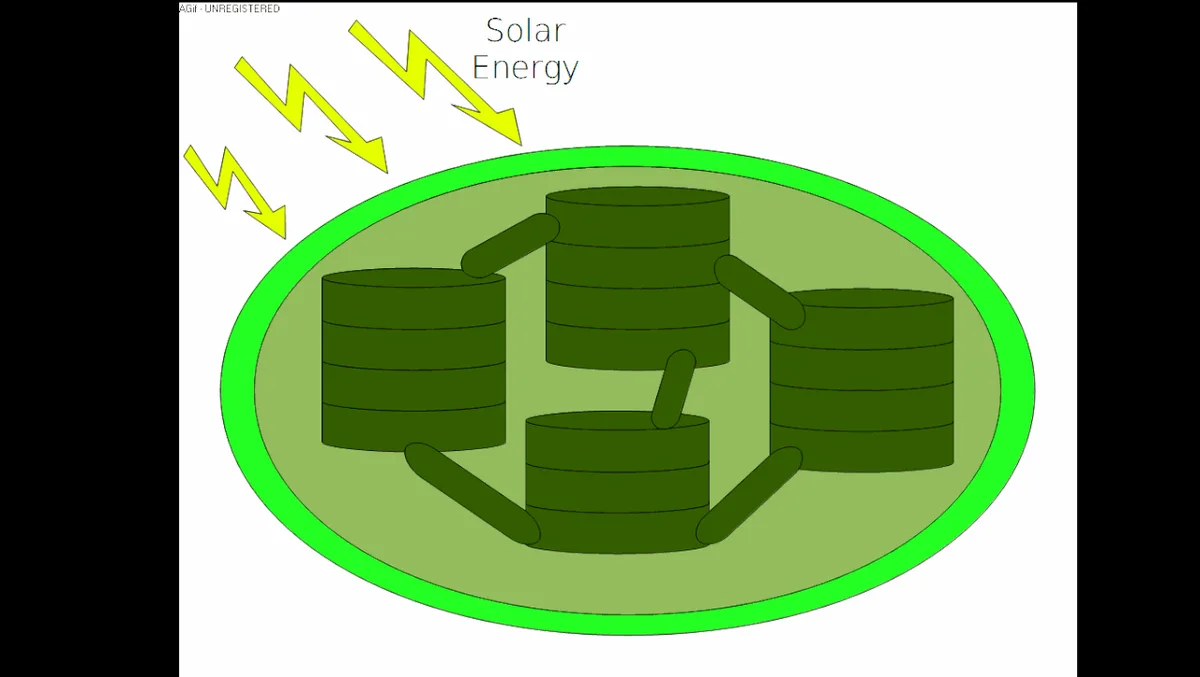
Image source: Wikimedia Commons / Left & Right Brains (CC BY-SA)
Chlorophyll and Photosynthesis
Nitrogen is a core component of the chlorophyll molecule. Without it, plants can’t manufacture chlorophyll. That’s why nitrogen-starved leaves lose their green color.
Chlorophyll captures sunlight and drives photosynthesis, turning light, water, and carbon dioxide into sugars. Those sugars fuel every other plant process.
Amino Acids, Proteins, and Enzymes
Nitrogen sits inside every amino acid. The plant stitches amino acids together to build enzymes and proteins. Those proteins control growth, repair tissue, and speed up chemical reactions.
In short, no nitrogen means no proteins. No proteins means no growth.
DNA, RNA, and Cell Division
Every new cell needs nucleic acids. DNA and RNA both contain nitrogen in their base pairs. When a plant divides cells, it needs nitrogen to copy its genetic material.
This is why young, actively growing shoots and roots have the highest nitrogen demand. A steady supply keeps cell division moving.
Nitrogen is also mobile within the plant. When the soil runs short, the plant pulls nitrogen from older leaves and sends it to new growth. That’s why deficiency signs show up on lower leaves first.
The plant is sacrificing the old to save the new.
Aggregate research across vegetable, grain, and ornamental crops shows a direct line between nitrogen supply and yield. Too little nitrogen and fruit set drops, grain fills poorly, and leaves appear pale. Too much and the plant pushes excessive leafy growth, sometimes at the cost of fruit quality.
How Plants Actually Get Nitrogen
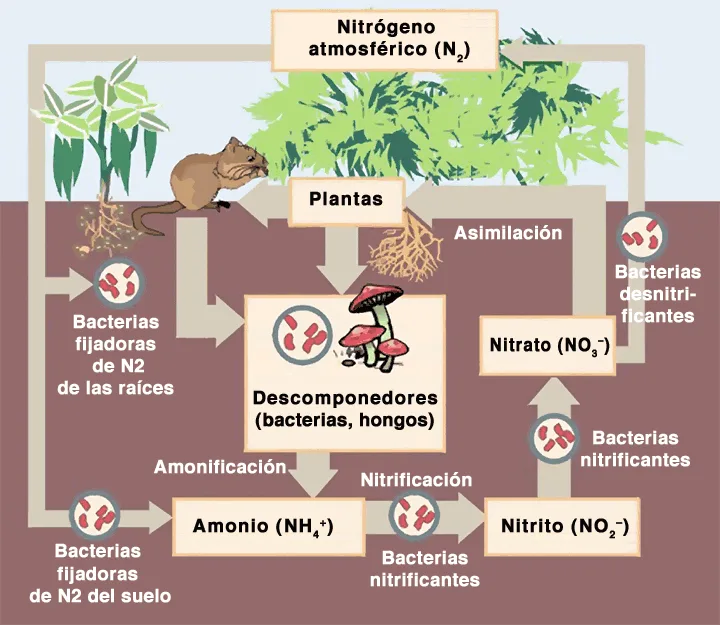
Image source: Wikimedia Commons / Wikimedia Commons contributor
The Nitrogen Cycle, Simplified
Nitrogen floats in the air as a gas, but plants can’t use it in that form. Soil bacteria convert atmospheric nitrogen into plant-friendly compounds. Organic matter breaks down and releases nitrogen as microbes decompose it.
This constant movement from air to soil to plant and back is the nitrogen cycle.
At the heart of it are two soluble forms: nitrate and ammonium. Nitrate (NO₃⁻) moves freely in soil water and is quickly taken up by roots. Ammonium (NH₄⁺) is more stable but needs soil bacteria to convert it.
Most plants happily take up both, though nitrate gives the faster boost.
Plant-Available Forms: Nitrate vs. Ammonium
Nitrate is the preferred form for most crops. It’s highly mobile, so roots can access it even in dry soil. But because it dissolves easily, rain can wash it below the root zone.
Ammonium clings to soil particles better. That makes it less prone to leaching, but it still needs conversion to nitrate over time.
This is why fertilizer blends matter. Single-nutrient fertilizers like urea break down into ammonium and then nitrate. Slow-release formulas time this conversion to match plant needs.
Why Legumes and Cover Crops Are Special
Some plants don’t need soil bacteria for nitrogen. Legumes like peas, beans, and clover host rhizobia bacteria in their roots. These bacteria fix nitrogen from the air and share it with the plant.
In return, the plant gives the bacteria sugars.
Gardeners can use this relationship to their advantage. Plant a legume cover crop in fall, let it grow, then till it under in spring. The plant matter releases stored nitrogen as it decomposes, feeding the next crop.
To learn more about how nitrogen cycles through your soil, the University of Minnesota Extension has a detailed breakdown on their Nitrogen Cycle and Nitrogen Management guide.
Signs of Trouble: Nitrogen Deficiency and Toxicity
Deficiency Symptoms and What They Mean
Symptoms of nitrogen deficiency include yellowing of older leaves, stunted growth, thin stems, poor flowering, and smaller yields. The pattern starts at the bottom of the plant and moves upward because nitrogen travels to new growth first.
If leaves turn pale green and then yellow, that’s a classic sign. When it spreads to upper leaves, the deficiency is severe. A quick soil test can confirm your suspicion before you add anything.
For lawns, a nitrogen-starved grass turns a uniform pale green instead of the rich, dark green people expect.
Too Much Nitrogen: Over-Fertilization Risks
Overloading plants with nitrogen can burn their roots and scorch leaves right after application. You also get excessive leafy growth. This produces tall, soft, green plants with little fruit or flower development.
Nitrogen toxicity shows up as dark, almost blue-green leaves and extremely lush top growth. That sounds great, but it makes plants more vulnerable to pests and disease. Soft tissue is an open invitation for aphids and fungal infections.
The fix is simple: water heavily to flush nitrogen through the soil, and cut back on future applications.
Environmental Consequences of Excess Nitrogen
When nitrogen runs off fields and lawns, it ends up in lakes and rivers. There, it fuels algal blooms and depletes oxygen, killing fish. As nitrate leaches below the root zone, it can contaminate groundwater.
The EPA sets a maximum of 10 mg/L nitrate-nitrogen in drinking water. Exceeding that is a public health concern.
| Issue | Deficiency | Toxicity |
|---|---|---|
| Leaf color | Pale green to yellow, starting on lower leaves | Dark, rich blue-green |
| Growth pattern | Stunted, thin stems, poor flowering | Tall, soft, spindly growth |
| Yield impact | Reduced fruit, grain, and overall biomass | Lots of leaves, few fruits or flowers |
| Common cause | Low soil nitrogen, poor organic matter | Over-fertilization, excess ammonium |
Mistakes to Avoid and Smart Application Tips
Common Fertilizer Errors
The biggest mistake is skipping a soil test and guessing wrong. Another is applying nitrogen too early in the season, right before heavy rain, or all at once instead of splitting doses. Many home gardeners also treat every plant the same.
Lawns need more nitrogen than many fruit trees. Vegetables like lettuce and spinach want steady nitrogen, but root crops like carrots and beets prefer lower nitrogen and more potassium. Matching nitrogen to your plant type makes a huge difference.
How to Choose the Right N-P-K Ratio
Read the three numbers on any fertilizer bag. They always stand for nitrogen, phosphorus, and potassium. For leafy greens, pick a ratio like 10-5-5.
For tomatoes and peppers, a more balanced 5-10-5 or 10-10-10 works well. For lawns, look for a high first number, like 30-0-4.
Slow-Release vs. Quick-Release Fertilizers
Quick-release nitrogen gives an immediate boost. Great for stalled seedlings or nitrogen-starved plants. Downside: it feeds fast and disappears fast.
Slow-release formulas break down over weeks or months, providing a steady, even supply. Organic options like compost and blood meal act as slow-release fertilizers.
Best Times and Methods for Application
Apply nitrogen in spring and early summer when plants are growing most. Avoid late-season applications that can push tender growth before frost. Side-dress around the base of plants, water after application, and split heavy feeders into two or three smaller doses.
This gives you better control and less runoff.

Similar Posts