Hanging Indoor Plants: Easy Care Tips and Beautiful Ideas
Botanical Horticulturist & Food Preservation Specialist at Brittle Bloom · Certified Master Gardener & Master Food Preserver · 12+ Years in Plant Propagation & Food Preservation
You’ve probably walked into a room, looked at a bare corner, and thought, “This needs something green up there.” Hanging indoor plants are the classic fix. They soften empty space, make ceilings feel taller, and turn wasted square footage into your favorite spot in the house.
But here’s what nobody tells you before you buy that cute little pothos and a macrame hanger: the plant, the pot, and a good soak of water can easily weigh 10 to 15 pounds. Manufacturer specs for standard drywall anchors top out around 50 pounds, but only if you install them perfectly. Getting this wrong means a cracked ceiling, a broken pot, and a very sad plant.
So let’s walk through the whole process, from light check to hanging it securely, so you get it right on the first try.
Quick Answer
Hanging indoor plants works when you match the plant to your available light and install a hook rated for the total weight. Choose low-light vines like pothos for dim rooms. Pick trailing figs or ferns for bright, indirect spots.
Secure the hook into a ceiling joist. If that’s not possible, use a toggle bolt rated for drywall.
Before You Buy: Check Light, Ceiling Type, and Weight
Your shopping list starts with a notepad, not a nursery. The three variables that decide whether hanging indoor plants thrive or slowly die are light, ceiling construction, and the finished weight of the planter.
Light first. Light is the single biggest filter for plant selection. Stand exactly where you plan to hang the plant and check the spot at 9 AM, noon, and 4 PM. Most homes have corners that seem bright but sit in deep shadow all day.
A north-facing window, for example, gives gentle indirect light that’s perfect for pothos. A south-facing window with direct sun will fry most trailing vines unless you pick a heat-loving succulent.
Ceiling construction matters just as much. You need to know whether you’re drilling into drywall, plaster, wood, or concrete. Here’s a quick reference:
| Ceiling type | What to use | Weight capacity |
|---|---|---|
| Wood joist (use a stud finder) | 1/4-inch eye hook screwed into the joist | 50 to 75 lb |
| Drywall with a joist above | Toggle bolt or molly bolt near the joist | 25 to 50 lb |
| Drywall with no joist | Heavy-duty toggle bolt in a 1/2-inch hole | Up to 40 lb |
| Plaster ceiling | Drill slow, use a molly bolt | 20 to 30 lb |
| Concrete or brick | Hammer drill with masonry anchor | 50+ lb |
Weight is the third filter. That cute ceramic planter weighs 4 pounds empty. Add soil and a soaked plant, and you’re staring at 10 pounds hanging from a single point. Weight test anything you buy by lifting the pot while it’s full of water.
If it feels heavier than you’d comfortably hold over your head, it’s too heavy for an adhesive hook, period.
Match the Plant to Your Light (Not the Other Way Around)
This is the most honest advice I can give you: don’t buy a plant you love and hope it adapts. Instead, measure your light and pick from the plants that genuinely thrive there. If you force a sun-loving plant into a dim corner, it will stretch, fade, and drop leaves within a few months.
If you hang a shade plant in direct sun, it will scorch in weeks.
Here’s a practical breakdown by light condition.
| Light level | Best hanging plants | What you’ll notice |
|---|---|---|
| Low light (north-facing or shaded corners) | Golden pothos, heartleaf philodendron, satin pothos | Slower growth, but reliable and forgiving |
| Medium indirect (east-facing window, a few feet away) | Spider plant, trailing inch plant, string of turtles | Steady growth, more variegation in leaves |
| Bright indirect (west or south window, filtered) | String of hearts, hoya, ferns, trailing begonias | Fast growth, long cascading vines, flowers on hoyas |
| Direct sun (right on a south windowsill) | Burro’s tail, string of pearls, jade | Intense color, compact growth, needs careful watering |
If you’re a beginner, start with golden pothos. It tolerates low light, survives missed waterings, and grows like a weed once it’s happy. If you’re in a bright bathroom with a shower that steams things up, a Boston fern will reward you with lush, arching fronds that love the humidity.
One quick visual tip: a photo of your chosen spot, taken during normal daylight hours, helps a lot when you’re standing at the nursery. Compare what you see on your phone screen to the conditions in the plant’s care tag. That ten-second check prevents most “it was fine at the store” tragedies.
Hooks and Hangers: What Works for Your Ceiling (and Your Landlord)
Now the part that keeps renters up at night. Can you hang indoor plants without wrecking your ceiling or losing your deposit? Yes, but you need to pick the right hardware for your situation.
If you own the place or have a forgiving landlord: drill into a ceiling joist with a screw-in eye hook. This is the gold standard. It’s the strongest, simplest, most reliable method.
Use a stud finder to locate the joist, pre-drill a small pilot hole, and twist in an eye hook rated for at least 50 pounds. That’s a solid, permanent install that will never drop your plant.
If you rent and want to avoid holes: adhesive hooks are the tempting option. Here’s the truth. Most peel-and-stick hooks fail after a few months because humidity weakens the adhesive, or the weight slowly pulls the pad off the paint.
They work fine for a 1-pound air plant in a tiny pot. They are not safe for a hydrated 10-pound pothos.
| Hanger type | Best for | Weight limit | Rental friendly |
|---|---|---|---|
| Screw-in eye hook (into joist) | Heavy plants, permanent install | 50 to 75 lb | No (leaves a hole) |
| Toggle bolt (through drywall) | Plants up to 30-40 lb | 30 to 40 lb | No (leaves a hole) |
| Adhesive hook | Very light plants only | 5 to 10 lb | Yes |
| Tension rod between walls | Displaying light vine pots | 15 to 20 lb | Yes |
| Wall-mounted arm bracket | Corner plants, heavier pots | 20 to 50 lb | Depends on mounting |
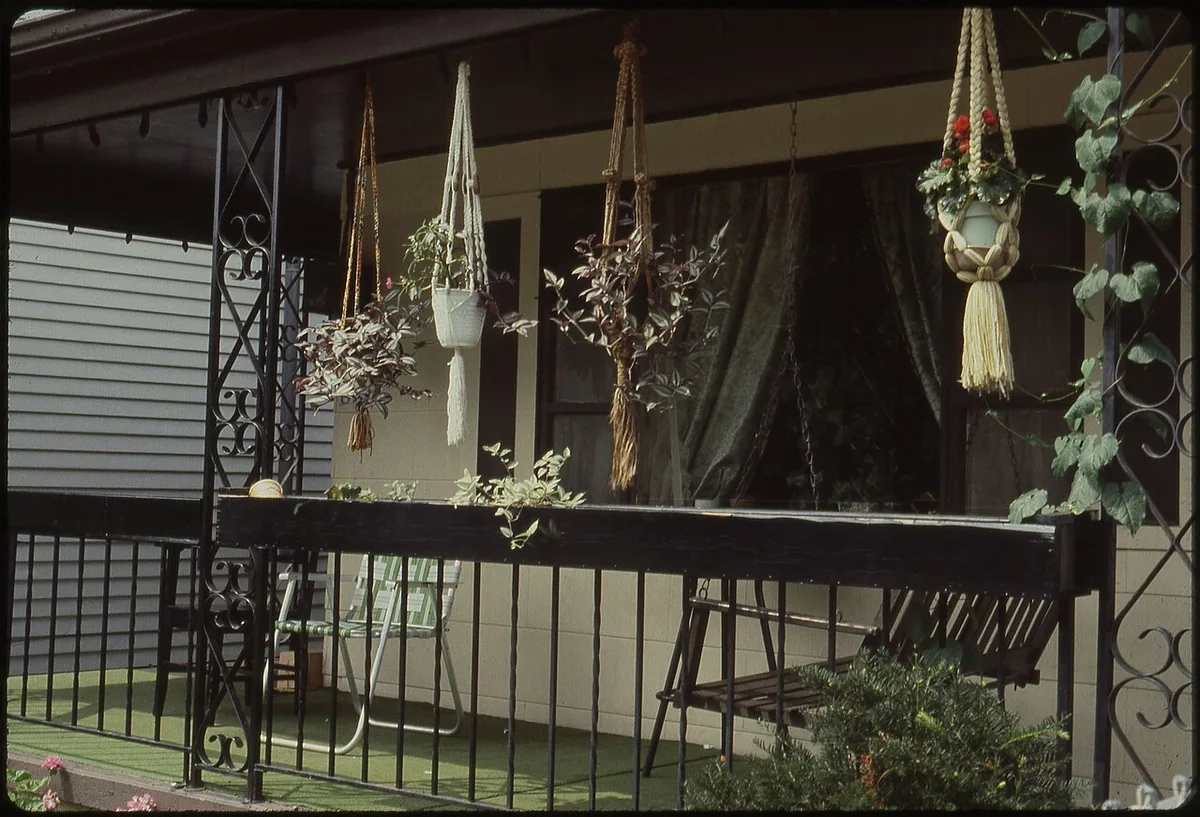
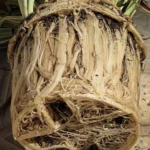
Image source: Wikimedia Commons / David E. Lucas
If you absolutely can’t drill, a tension rod across a window frame is a clever alternative. It supports light plants without any holes, and it puts your greenery right in the sun. Just remember: a 10-pound pot on a tension rod is asking for trouble.
Keep it light or reinforce the rod with a strap secured to the window frame.
Step-by-Step Installation: How to Hang It Securely
Ready to hang? Here’s the process, step by step. It’s simple, but each step matters more than you’d think.
- Locate the ceiling joist. Use a stud finder and slide it across the ceiling until it beeps. Mark the center. This is where your hook goes.
- Pre-drill a pilot hole. Choose a drill bit slightly smaller than your hook’s screw diameter. This stops the ceiling from cracking and makes screwing in the hook much easier.
- Screw in the eye hook. Twist it clockwise until the eye is flush against the ceiling. If you’re using a toggle bolt instead, drill a 1/2-inch hole, push the toggle through, and tighten until snug.
- Choose your hanger length. Macrame hangers range from 24 to 36 inches. A good rule: the plant should hang 6 to 12 inches below the hook, low enough to see but high enough to avoid heads and ceiling fans.
- Hang the planter. Attach the plant first, then lift it into the hook. This avoids the awkward “wire the plant while it’s dangling” dance.
- Test the strength. Give the whole setup a gentle tug before letting go. If it moves, wobbles, or creaks, stop and check your installation.
- Water and monitor. Check the hook once a week for the first month. Any sign of loosening means you need to re-tighten or switch to a sturdier anchor.
One very practical tip from our research: always hang the planter after you’ve watered it, not before. A fresh watering can add 2 to 3 pounds to the total weight. That’s the heaviest moment in your plant’s cycle, and if the hook can handle that, it can handle everything in between.
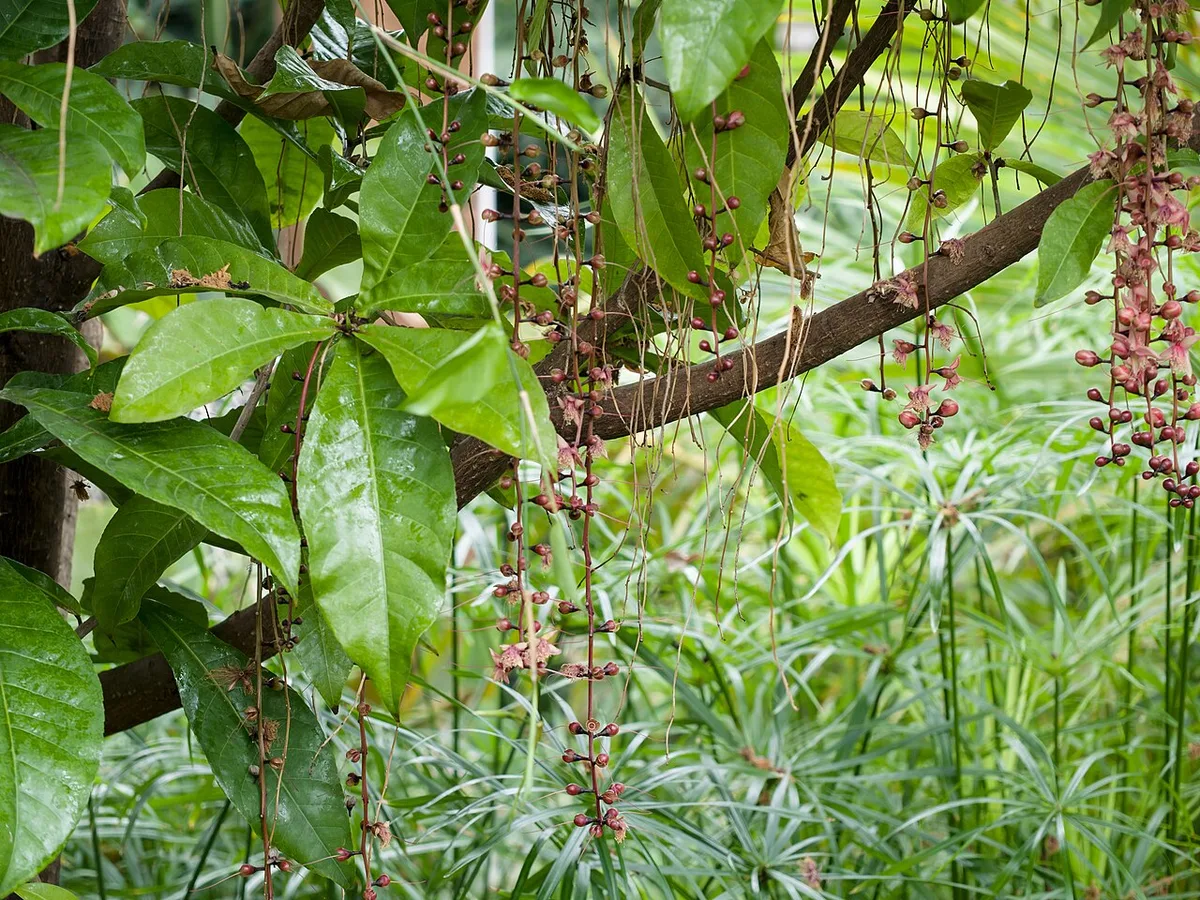
Image source: Wikimedia Commons / James Petts from London, England (CC BY-SA)
Watering and Care for Plants You Can’t Easily Reach
Now the daily reality hits: your plant is three feet above eye level, and you’re standing on your toes with a watering can. It’s awkward but manageable if you set up a routine.
The trick is to water from above, not from where you’re standing on the floor. Stand on a step stool or small ladder. Pour slowly at the soil surface, not from a height.
If you pour fast, the water splashes out of the pot and down onto your floor. Slow, steady pours give the soil time to absorb.
Check moisture the right way. The top 1 to 2 inches of soil should feel dry before you water most trailing houseplants. You can check by sticking your finger in from the top. Or use a bamboo skewer like a cake tester.
If it comes out with soil stuck to it, wait a couple more days.
Drip trays are non-negotiable. A hanging planter with a drainage hole needs a drip tray attached underneath. Otherwise you’ll get brown water rings on wood floors, and those don’t come out easily. Self-watering hanging planters solve this by building a water reservoir into the pot.
That’s a solid choice if you tend to forget or travel often.
| Care task | Frequency | Notes |
|---|---|---|
| Water | Every 5 to 14 days | Check soil moisture first |
| Rotate plant | Every 2 weeks | Prevents one-sided growth toward the window |
| Prune long vines | Every 4 to 8 weeks | Pinch off leggy growth above a node |
| Flush soil | Every 3 months | Run water through to wash out salt build-up |
| Check hanger hardware | Monthly | Tighten any loose hooks or knots |
Low light and low growth go hand in hand. If your plant is in a dim corner, it will grow slower, so it needs less water. That’s a feature, not a bug. Err on the dry side.
Overwatering is the number one killer of hanging indoor plants, mostly because the plant is out of sight and out of mind until the leaves start yellowing.
A quick note on pruning. Vines get leggy and sparse-looking over time. Don’t be afraid to cut them back hard. Pothos and philodendron respond well to aggressive pruning and will push out new growth right below the cut.
You can even propagate the cuttings in water and start a second hanging planter for free.
The Biggest Hanging Plant Mistakes (and How to Avoid Them)
Most of these failures share one root cause: picking the plant and hook before checking the spot. That’s backwards. Here’s what to avoid instead.
- Hanging too heavy on the wrong anchor. Aggregate home-repair reports flag failed drywall anchors as the top cause of dropped planters. If your hook isn’t in a joist or a toggle bolt rated for the loaded pot weight, redo it before it fails. Adhesive hooks belong under 5 pounds, full stop.
- Overwatering an out-of-sight plant. Since the pot sits above eye level, it’s easy to water on autopilot. Check the top 1 to 2 inches of soil before every pour. If they’re still damp, wait a few days.
- Blocking your own window light. A giant basket hanging dead-center in front of the window dims the whole room. Offset the hook to one side instead. Both you and the plant get what you need.
- Never rotating the pot. Vines grow toward their light source. Skip rotation and you’ll see one lush side and one bald side. Give the hanger a quarter turn every two weeks.
- Skipping drainage. A sealed decorative pot looks clean but turns into a swamp. Roots sitting in water rot within weeks. Use a nursery pot with holes, then tuck it into the pretty hanger.
- Ignoring pets. Pothos and philodendron contain calcium oxalate crystals that hurt cats and dogs. If your pets chew, choose spider plants, Boston ferns, or calatheas. Check the ASPCA toxic plant list before you buy.
The pattern is simple: check the weight, check the moisture, check the room. Fix those three and you win.
FAQs: Quick Answers Before You Shop
Can I hang plants from the ceiling without drilling?
Yes, but only for light plants. Adhesive hooks hold 5 to 10 pounds when new, and that drops in humid rooms. A tension rod across a window frame supports a bit more.
Anything over 10 pounds needs a screw-in hook or toggle bolt.
How much weight can a ceiling hook hold?
As of 2026, a screw-in eye hook anchored into a wooden ceiling joist holds 50 to 75 pounds. A toggle bolt in drywall holds 25 to 40 pounds, depending on size. Always weigh your planter while it’s fully watered and add a 20 percent safety margin.
What is the best hanging plant for low light?
Golden pothos is the number one pick. It tolerates dim corners, survives irregular watering, and grows fast once established. Heartleaf philodendron and satin pothos come close behind.
If the corner gets no natural light at all, add a small grow light and hang it 12 inches above the vine.
How often should I water hanging plants?
Every 5 to 14 days, depending on light, pot size, and indoor temperature. Check the top 1 to 2 inches of soil first. If dry, water slowly.
If damp, wait. In winter, cooler light slows growth, so most hanging plants need less water.
Which hanging plants are safe for cats and dogs?
Spider plant, Boston fern, calathea, and most hoya varieties are safe for pets. Golden pothos, heartleaf philodendron, and string of pearls are toxic if chewed. The ASPCA publishes a searchable list of toxic and non-toxic plants, so bookmark it before you shop.

Similar Posts