Can You Freeze Dry Eggplant
Botanical Horticulturist & Food Preservation Specialist at Brittle Bloom · Certified Master Gardener & Master Food Preserver · 12+ Years in Plant Propagation & Food Preservation
Can you freeze dry eggplant? Yes, and it's one vegetable that takes to freeze drying well once you understand the prep. Eggplant is almost all water and air, so it acts differently than dense vegetables like carrots.
That's not a bad thing. It just means the process has rules.
Eggplant is about 92% water by weight. In a freeze dryer, that moisture sublimates, and the finished pieces weigh roughly a tenth of the fresh weight. As of 2026, home freeze dryers handle the job in 24 to 36 hours per batch, with the exact time depending on slice thickness and pretreatments.
The short story is this: yes, it works, but what you get out depends on how you prepare it in the first place.
Freeze-Drying Eggplant: The Short Answer
Can you freeze dry eggplant? Yes, you can. Freeze drying works well on this vegetable.
Slice it thin, blanch it, and dry it. Expect crisp chips and easy rehydration.
The texture won't match fresh eggplant exactly, but it gets close enough for most recipes. You'll get something light, shelf-stable, and faintly earthy. That makes it a solid pantry option.
Here's what you need to know going in:
- Eggplant is roughly 92% water, which makes it a strong candidate for sublimation.
- Raw slices turn crisp and featherlight, perfect for chips or garnishes.
- Cooked or oil-coated eggplant goes rancid faster in long-term storage, so keep pieces plain.
- A standard home freeze dryer runs 24 to 36 hours for a full load.
- Properly sealed, freeze-dried eggplant keeps 5 to 10 years, with some manufacturers claiming longer.
Globe eggplant is the most forgiving variety to start with. Japanese and Italian types work, but they need thinner slices to dry evenly. Fairy eggplant is more of a novelty.
What counts as success? Slices that snap cleanly when you bend them. No cold, flexible spots, no leathery patches.
That snap test works for any vegetable you pull from the machine. In our research, the biggest factor isn't the machine. It's the prep.
Get that wrong and you'll end up with chewy bits. Get it right, and you'll have a pantry staple for years. If you're new to the process, our home freeze-drying basics guide walks through the whole workflow.
How Eggplant Behaves in a Freeze Dryer
A freeze dryer doesn't cook food the way a dehydrator does. It freezes it, then drops the pressure so ice turns directly into vapor. The vacuum chamber and cold trap pull that moisture out, leaving the cell structure largely intact.
That's why freeze-dried eggplant reconstitutes quickly.
Eggplant's spongy flesh is both a blessing and a challenge. The porous structure gives water a clear exit route, which speeds up the process. But those open cells also soak up oil, and oily pieces don't freeze-dry well.
Keep them bare.
Sublimation is the key step. It takes any remaining moisture from a solid to a gas without melting. You can see this happening during a run when frost collects on the chamber walls, which is a good sign.
The shelves themselves stay cold enough to keep the eggplant solid while water escapes.
As of 2026, home units run at around 500 millitorr and shelf temperatures near -20°F during the freeze phase. Thicker slices simply take longer, so a 1/4-inch round might be done in 24 hours. A 1-inch chunk may need closer to 36.
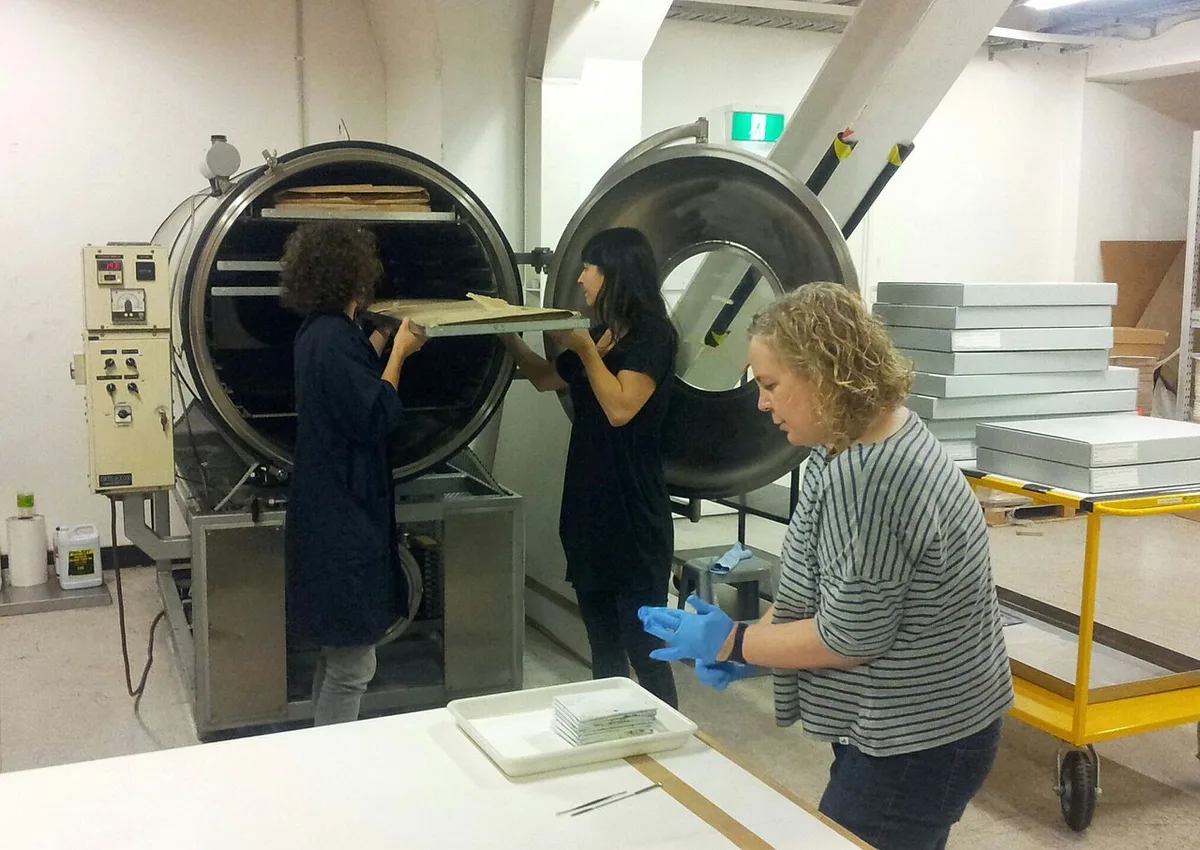
Image source: Wikimedia Commons / Archives New Zealand from New Zealand (CC BY-SA)
The USDA's food preservation guidance confirms freeze-dried vegetables are safe when residual moisture stays low and packaging keeps oxygen out. We'll get to those storage details shortly.
Prepping Eggplant for the Freeze Dryer
Prep decides whether you get crisp chips or leathery disappointment. The steps take about twenty minutes per batch.
Start with a wash. Eggplant can carry dirt in its calyx, so rinse it well and trim the green cap. Then slice into uniform 1/4-inch rounds.
Even thickness matters more here than any other step. Thin pieces dry fast but shatter. Thick pieces retain moisture and spoil.
If you want to cut bitterness, salt the slices for 10 minutes. Lightly sprinkle both sides, then rinse them off and pat dry. The salt pulls out dark liquid and makes the final taste milder.
You can skip this with young, fresh eggplant.
Blanching is optional, but it helps. A 3-minute steam blanch deactivates enzymes that cause browning. It also shortens the drying cycle by softening the plant's cell walls.
Once blanched, spread the slices on a clean towel to cool.
Arrange them in a single layer on the freeze dryer trays. Leave a little space between pieces so air can move. Overlapping causes fused sheets of eggplant that are annoying to break apart later.
Here's a quick prep comparison:
| Prep Style | Texture | Best Use | | Raw slices | Crisp, light | Chips, snacks | | Blanched | Rehydrates softer | Stews, lasagna | | Cooked with oil | Can go rancid | Use within months |
For long-term storage, skip the oil entirely. Oil doesn't freeze-dry, and it turns bitter over time. If you're planning to use the pieces as a snack, season after the cycle, not before.
Salt and spices don't behave the same through sublimation.

Image source: Wikimedia Commons / runran (CC BY-SA)
The same prep logic applies to asparagus and similar crops, which also turn leathery when dried wrong.
How to Use Freeze-Dried Eggplant: Snack, Powder, or Rehydrated Chunks
Once the machine finishes a cycle, you'll have a jar of brittle, faintly floral discs. The fun part is deciding what to do with them.
Eat them as chips. Freeze-dried eggplant has a natural crunch similar to a rice cracker. Sprinkle on sea salt or chili powder, and it's a genuinely good zero-oil snack.
They're light, so a whole trayful won't weigh much.
Grind them into powder. A spice grinder turns freeze-dried eggplant into a fine dust that thickens soups, stews, and tomato sauces. It adds body without starch or fat.
Store that powder carefully, because it will soak up ambient humidity and turn gummy. Our storing freeze-dried powder tips cover moisture and air exposure.
Rehydrate them for cooking. Drop the slices into warm water for 5 to 10 minutes and they soften right up. One cup of dried pieces makes about two and a half cups of rehydrated eggplant.
It won't be exactly like fresh, but in a curry, ratatouille, or lasagna, nobody will be able to tell.
You can also crush the dried slices into chunky bits. Those bits behave like diced eggplant once rehydrated, which is nice when you only need a small handful for a single dish.
Aim for a lower rehydration ratio if you want firmer pieces: one part dried to two parts water works for pasta sauce. Use three parts water for softer, stew-ready chunks.
Freeze-Dried vs. Dehydrated vs. Frozen Eggplant
So, should you freeze dry eggplant, dehydrate it, or just freeze it? It depends on how you plan to cook later.
Dehydrated eggplant is chewy, leathery, and dark. It works in soups where texture doesn't matter, but it doesn't rehydrate into anything close to fresh. It also takes 6 to 12 hours at a lower equipment cost.
For quick meals around the house, it's fine.
Regular frozen eggplant preserves texture well, but it takes up freezer space and stays good for only 8 to 12 months. Freeze-dried eggplant is the lightest and most storage-stable option. It keeps its shape, color, and most of its nutrition.
The catch is the equipment cost and the 24-hour cycle time.
Here's a quick comparison:
| Method | Texture | Shelf Life | Best For | | Freeze-dried | Crisp, rehydrates well | 5-10 years | Backpacking, pantry storage | | Dehydrated | Chewy, leathery | 1-2 years | Soups and stews | | Frozen | Soft, close to fresh | 8-12 months | Meals within the year |
If you want the structural breakdown, read how these methods compare. For long-term pantry setups, our freeze-dried food storage guide covers oxygen absorbers, Mylar, and moisture barriers.
There's also the money angle. Freeze drying costs more up front and uses more electricity per batch. Dehydrating is cheaper.
But if you're storing food for years, the shelf-life advantage tips the scales.
Mistakes That Ruin a Batch of Freeze-Dried Eggplant
Most failed eggplant batches come down to three mistakes: thick slices, oil, and premature packaging. Thick slices trap moisture in the center. The outer ring snaps, but the core stays spongy.
Always cut to a uniform 1/4-inch thickness.
Oil is the other killer. Fried eggplant may taste good, but the oil doesn't freeze-dry. It turns rancid inside sealed storage and ruins the batch.
Keep cooked eggplant oil-free.
Never seal a batch that still has cold spots. If any piece bends instead of snapping, the run isn't done. Test a piece from the center of the tray, not the edge.
The National Center for Home Food Preservation outlines safe moisture levels for dried vegetables.
- Slice uniformly or accept uneven drying.
- Skip the olive oil drizzle.
- Run a longer drying cycle for thicker pieces.
- Store with oxygen absorbers in Mylar, not bare plastic.
- Check pump performance before blaming the machine. Our used vs new freeze dryer guide helps spot wear early.
Frequently Asked Questions
Do you have to blanch eggplant before freeze drying?
No. Blanching is optional, but it helps. A 3-minute steam blanch stops enzyme browning and shortens the cycle.
Skip it if you want a crisper chip.
How long does freeze-dried eggplant last?
Sealed with an oxygen absorber in a Mylar bag, freeze-dried eggplant keeps 5 to 10 years. The exact time depends on storage temperature. Cool, dark, and dry beats a warm pantry shelf.
Can you freeze dry cooked eggplant?
Yes, but keep it oil-free. Cooked eggplant without oil freeze-dries fine. Oil causes rancidity and shortens shelf life drastically.
Does freeze-dried eggplant rehydrate well?
It rehydrates in 5 to 10 minutes in warm water. The texture leans soft, not exactly fresh, but it works in sauces and stews. Use a 2:1 water ratio for firmer pieces.
Final Verdict: Is Freeze-Drying Eggplant Worth It?
If you already own a freeze dryer, eggplant is a reliable crop to process. It dries quickly, stores well, and rehydrates into useful ingredients. You'll get years of pantry space from a single summer harvest.
What if you're buying a freeze dryer just for eggplant? That's a harder call. The machine costs thousands and runs 24 hours per batch.
Eggplant alone won't justify that. If you also plan to dry fruit, meat, and complete meals, it makes sense.
Freeze-dried eggplant won't replace fresh in every dish, but it comes close enough. For lightweight, long-term storage, it's a solid win.

Similar Posts