Spider Plant Light Requirements: How Much Sun Do They Need?
Botanical Horticulturist & Food Preservation Specialist at Brittle Bloom · Certified Master Gardener & Master Food Preserver · 12+ Years in Plant Propagation & Food Preservation
Spider plants are about as forgiving as houseplants get, but light is where most people trip up. You've probably heard "bright, indirect light" and then wondered what that actually means for the corner of your living room. That's the real question, and the answer depends on your windows, your climate, and how your plant responds.
Getting spider plant light requirements right isn't complicated, but it does require reading your specific space. The good news is that these plants tolerate a surprising range of conditions, from dim hallways to sunny windowsills. As of 2026, the consensus among horticultural sources like university extension programs is clear: moderate indirect light beats everything else, and your plant will tell you when it's unhappy.
Let's walk through exactly how to figure that out.
Quick Answer
Spider plants need bright, indirect light for 8 to 12 hours daily. Place them 1 to 3 feet from a window. East-facing windows work best.
North-facing windows are acceptable. South and west windows need distance or a sheer curtain. Direct sun scorches leaves.
Too little light fades variegation and stops pup production.
Read the Room: How to Tell What Light You Really Have
Before you move anything, you need to know what kind of light your space actually gets. Our eyes are terrible judges of light intensity. A room can feel bright to you while delivering far less usable energy than your plant needs.
Here's the simplest test. Hold your hand about 12 inches above where you want to place the plant, palm facing up. Look at the shadow your hand casts.
- Sharp, defined shadow with crisp edges: You're in bright, direct light. This is sunburn territory for spider plants unless you add a filter.
- Soft, fuzzy shadow with blurry edges: You've got bright, indirect light. This is the sweet spot.
- No visible shadow at all: You're in low light. Your spider plant will survive here, but it won't thrive.
This test works because it measures actual usable light, not perceived brightness. It's the same logic professional growers use when assessing greenhouse conditions.
Window Orientation Cheat Sheet
Your window direction matters more than any other variable. Here's how each one breaks down for spider plants in the Northern Hemisphere:
| Window Facing | Light Intensity | Best Placement | Notes |
|---|---|---|---|
| East | Gentle morning sun | 1 to 2 feet from window | Ideal for beginners |
| North | Low, consistent ambient | Right against the glass | Works, but growth slows |
| West | Strong afternoon sun | 3+ feet back or sheer curtain | Risky without protection |
| South | Hottest, most intense | 3 to 5 feet back or filtered | Best in winter, dangerous in summer |
The Southern Hemisphere flips this entirely. There, south-facing windows deliver the strongest light and north-facing windows provide the gentlest morning exposure. Know your hemisphere before you commit to a spot.
Measuring Light Without Fancy Tools
If you want real numbers, you can get them cheaply. A simple lux meter app on your phone works surprisingly well. Aim for roughly 2,000 to 8,000 lux for healthy spider plant growth.
Below 1,000 lux is too dim for anything except survival mode. Above 10,000 lux for extended periods will bleach those beautiful green and white leaves.
Matching Light to Your Space: A Simple Decision Guide
Okay, you know what light you have. Now let's match it to your situation. Spider plant light requirements shift based on what you're working with, so pick your scenario.
Bright Indirect Light Is the Sweet Spot
If you've got a spot that gets that soft, filtered light for most of the day, congratulations. This is where spider plants absolutely thrive. You'll see steady new growth, deep green leaves, and regular production of those little plantlets on runners.
This usually means an east-facing window or a spot a few feet back from a south or west window. Your plant will grow faster here than anywhere else. Pups will appear within months rather than years.
Low Light: Where It Works, Where It Fails
Spider plants tolerate low light better than most popular houseplants. They're not like calatheas that throw a fit over a draft. But "tolerate" doesn't mean "thrive."
In low light, expect slower growth and faded variegation. The white stripes on the leaves may turn pale green or disappear entirely. Your plant might stop producing pups altogether.
It won't die, but it won't look its best either.
If you're working with a north-facing window or a dim corner, keep the plant close to the glass. Every foot of distance cuts usable light dramatically. The difference between 12 inches from the window and 4 feet away is enormous.
Direct Sun: How to Make It Work Without Scorching
Yes, you can grow spider plants in direct sun. But you need to be smart about it. Morning sun from an east window is generally safe.
Afternoon sun from a south or west window will fry those leaves within days, especially in summer.
If all you have is a blazing south window, pull the plant back 3 to 5 feet or hang a sheer curtain. The fabric filters the intensity while still letting plenty of light through. Your plant will grow fine behind a translucent curtain.
Using Grow Lights: When and How to Supplement
Winter is when most spider plants struggle. Daylight drops, the sun sits lower, and your bright summer spot turns dim. If your plant looks leggy or stops growing from November through February, a grow light helps a lot.
Basic LED grow lights work fine. Position them 6 to 12 inches above the plant and run them for 10 to 12 hours a day. A simple timer makes this foolproof.
You don't need an expensive setup, just consistent supplemental light.
What Your Plant Is Telling You: Light Problem Symptoms
Your spider plant communicates constantly. You just need to know the language. Here's what common symptoms mean:
| Symptom | Likely Cause | Fix |
|---|---|---|
| Pale, washed-out leaves | Too much direct sun | Move further from window |
| Leaf tips browning | Low humidity or too much light | Adjust position |
| Stretching toward window | Not enough light | Move closer to window |
| Faded or lost white stripes | Low light | Increase exposure |
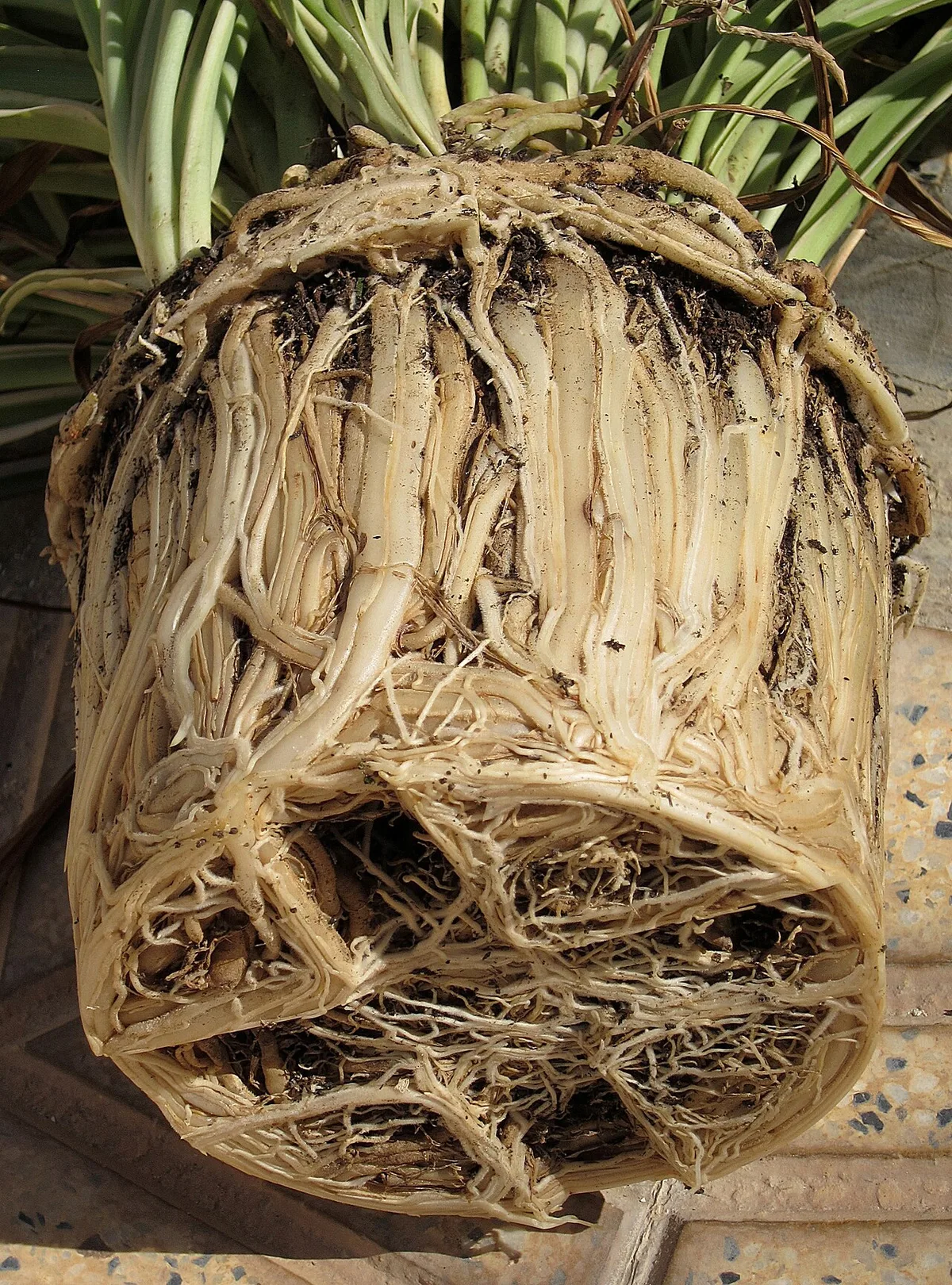
| No pups after a year | Low light or rootbound | Brighter spot and repot |
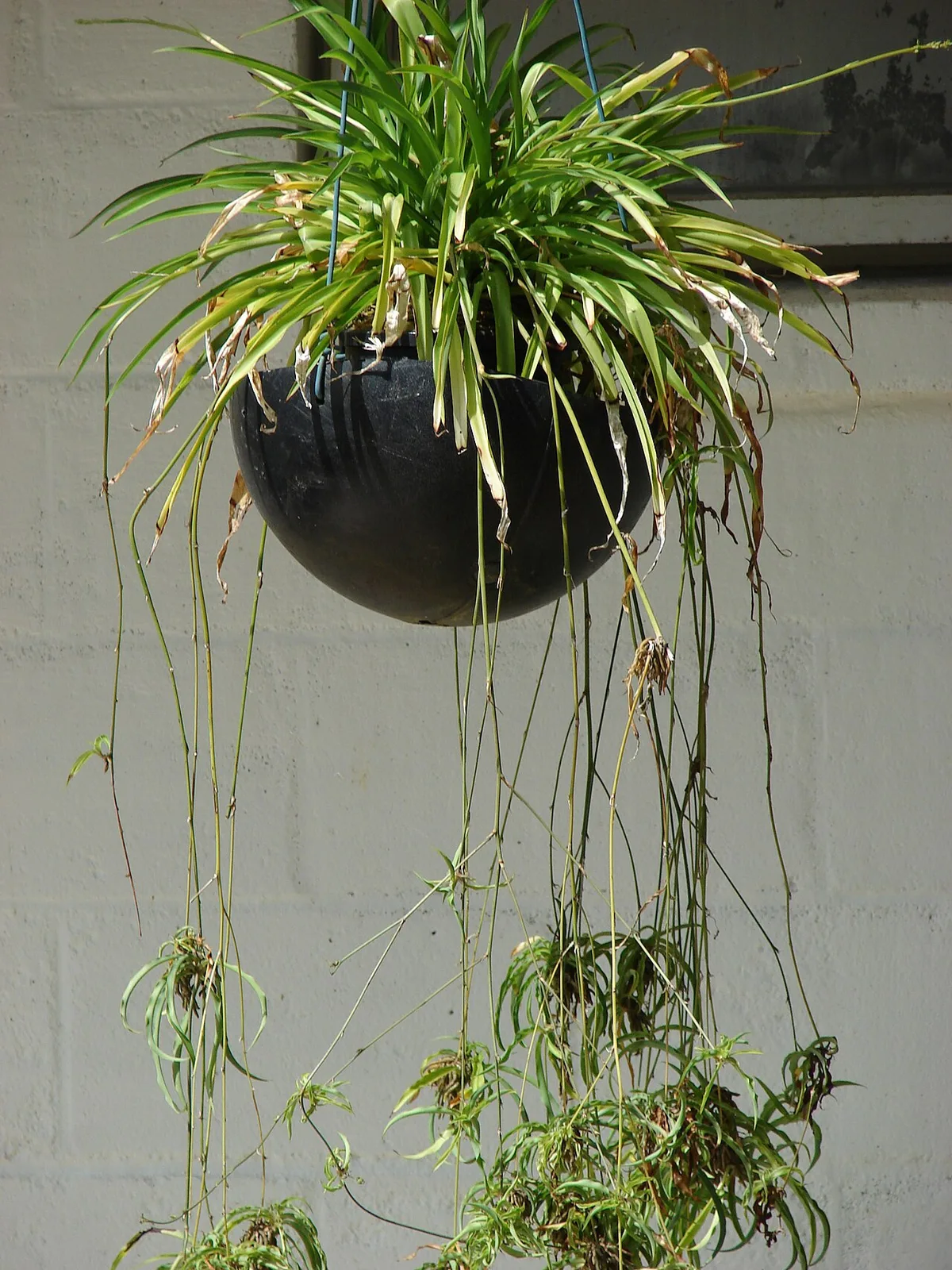
| Crispy brown patches | Sunburn | Filter light or relocate |
Stretching and Leaning
If your spider plant looks like it's reaching for the window, that's phototropism in action. The plant is literally growing toward the light source. This is a clear sign you need to move it closer or rotate the pot.
Rotate your plant a quarter turn each week. This keeps growth even and prevents that lopsided, desperate lean.
Losing Variegation
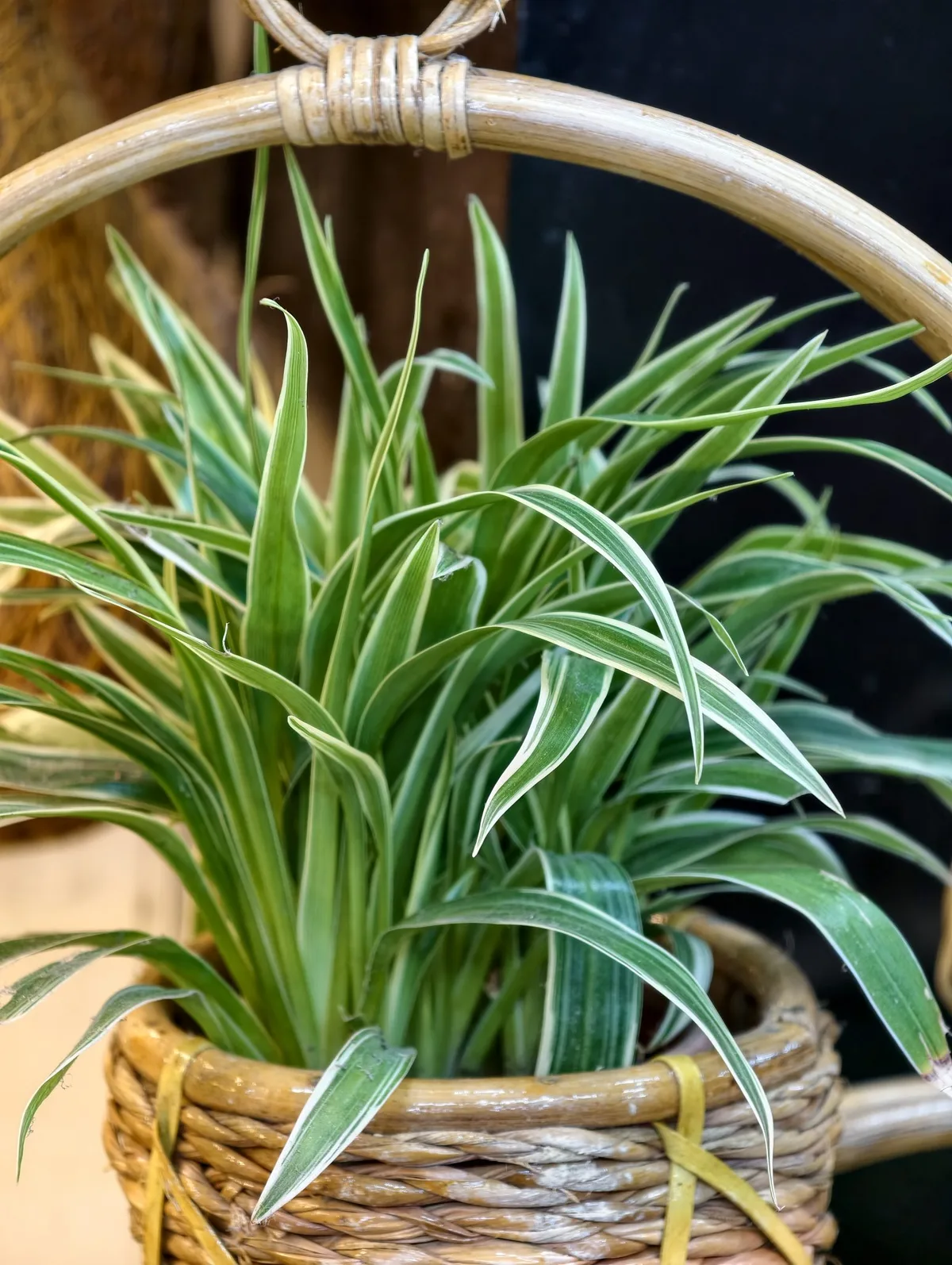
The white stripes on spider plant leaves are actually a lack of chlorophyll. In low light, the plant produces more chlorophyll to compensate, which means those stripes fade to green. If you notice your variegated plant turning solid green, it's begging for more light.
Move it somewhere brighter and the stripes should return over time. It's not instant, but it's reversible.
No Pups Despite Healthy Growth
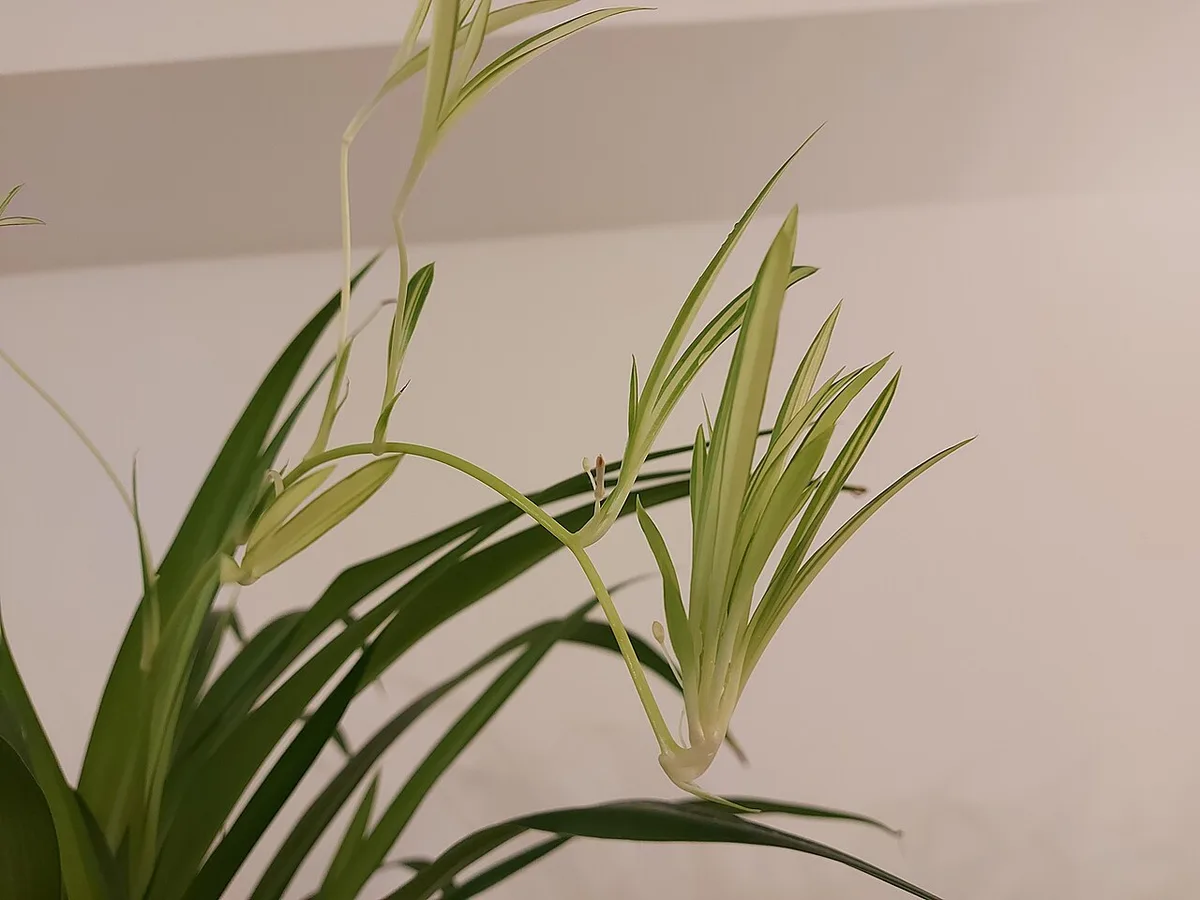
A spider plant that produces plenty of leaves but zero babies is usually starved for light. Pups take significant energy to produce. If you're not getting those arching runners with little plantlets, bump up the light exposure.
Seasonal Light Changes: Adjusting Through the Year
Light isn't static. It shifts with the seasons, and your spider plant's needs shift with it. This is where most people fail, because they set the plant in one spot and forget about it.
Summer: Protection From Harsh Afternoon Sun
Summer sun is intense, especially in the afternoon. That lovely bright spot from spring can become a leaf-frying hazard by July. Watch your plant closely as the season progresses.
If you notice pale patches or crispy edges on the leaves, that's sunburn. Move the plant back from the window before the damage gets worse. The green parts of the leaf are already dead and won't recover, but new growth will be fine.
Winter: Chasing the Warmer, Softer Light
Winter transforms your light situation. The sun hangs lower in the sky, so what was a safe spot in July might be the brightest location in your house by January. This is actually a good time to move your spider plant closer to a south or west window.
These plants slow down in winter. They're not actively growing much, so they need less water and less fertilizer. But they still need adequate light to survive dormancy without losing variegation.
A few feet closer to the window makes a meaningful difference.
When to Move Your Plant
Moving a spider plant to a significantly brighter spot can shock it. If you're jumping from dim corner to full sun, do it gradually. Move it into the new spot for a couple hours a day, then increase the duration over a week or two.
Sudden changes cause stress. Stressed plants drop leaves and look generally sad. The gradual approach lets your plant adjust its chlorophyll levels without drama.

Similar Posts