Can You Freeze Dry Honey
Botanical Horticulturist & Food Preservation Specialist at Brittle Bloom · Certified Master Gardener & Master Food Preserver · 12+ Years in Plant Propagation & Food Preservation
Can you freeze dry honey? Yes, you absolutely can, but it's not the same as freeze-drying fruit or scrambled eggs. Honey turns into something else entirely: a brittle, glassy, crunchy solid that tastes like pure honey and keeps almost forever.
The catch is that honey is chemically finicky, and if you don't handle it right, you end up with a sticky mess inside your freeze dryer.
In our research, honey's water activity sits around 0.5 to 0.6, which is higher than its thick texture suggests. As of 2026, home freeze dryers make this process totally doable, but you need to respect the learning curve. A standard cycle runs 24 to 36 hours at -30°F to -50°F for thin layers.
Let's walk through exactly how to pull it off.
The Short Answer: Yes, But It's Not Like Freeze-Drying Anything Else
Can you freeze dry honey? Yes, you can. The result is a crunchy, glassy, shelf-stable solid that tastes like pure honey.
But honey wants to foam and reabsorb moisture, so technique matters. Expect a longer cycle and airtight packaging for the finished product.
Why Honey Doesn't Behave Like Other Freeze-Dried Foods
Honey is mostly sugar and a little water. The sugar is mainly fructose and glucose. That ratio changes everything.
Most freeze-dried foods are solid cellular structures that hold their shape when water vaporizes. Honey is a concentrated sugar solution. When water leaves, the sugar doesn't know what to do.
It turns into a glassy, amorphous solid. That's the crunch you're after. But that same structure is extremely hygroscopic, meaning it pulls moisture right out of the air.
According to the National Honey Board, honey is roughly 80% sugar and about 17% water. That water activity, around 0.5 to 0.6, sounds low, but it's enough to make drying tricky. If you freeze dry honey in a thick layer, the outside dries into a crust while the inside stays syrupy.
The crust traps moisture, and you end up with a sad, sticky brick.
There's also the glass transition temperature. Honey's glass transition sits below room temperature in its liquid state. As it dries, that temperature rises.
If your freeze dryer stops too early, the honey sits in a rubbery phase, not a brittle one. That's why cycle times matter.
Honey breaks the usual freeze-drying rules. You can't just pour it into a tray and press start. You need thin layers, pre-freezing, and sometimes a bit of patience.
The Big Decision: Chunks vs. Powder (And What It Means for Your Workflow)
Before you start, decide what you actually want. Freeze-dried honey comes in two basic forms: crunchy chunks or fine powder. Each one forces different decisions downstream.
Chunks are the most natural route. You pour honey into thin trays, freeze, dry, and break the brittle sheet into bite-size pieces. They're perfect for snacking, topping yogurt, or mixing into trail mix.
Chunks also keep better because they have less surface area.
Powder is more useful in baking and seasonings, but it's a fight to make and store. Pure honey powder is extremely hygroscopic. The moment you grind it, it starts pulling moisture from the air and clumping.
Commercial powders add maltodextrin or silicon dioxide to keep it free-flowing. You can skip those, but then you must work fast and package immediately. Leave the powder open for five minutes, and you've got a sticky paste.
| Factor | Honey Chunks | Honey Powder |
|---|---|---|
| Texture | Crunchy, glassy | Fine, dry powder |
| Easier to make | Yes | No, needs grinding |
| Best for | Snacks, toppings | Baking, drinks |
| Storage risk | Low moisture pickup | High moisture pickup |
| Shelf life | Years if sealed | Months if not careful |
The choice also affects how much time you spend after the freeze dryer finishes. Your workflow changes dramatically once you pick a direction. Whichever you choose, you're still getting a preserved shelf-stable ingredient that's far lighter than liquid honey.
The chunk route is better for beginners. Powder is a long-term storage project for the adventurous.
From Tray to Crunch: Step-by-Step Guide for Honey Chunks
Making honey chunks is straightforward once you know the prep work. The goal is a thin, even layer that freezes flat and dries uniformly. Keep the layer consistent across the whole tray.
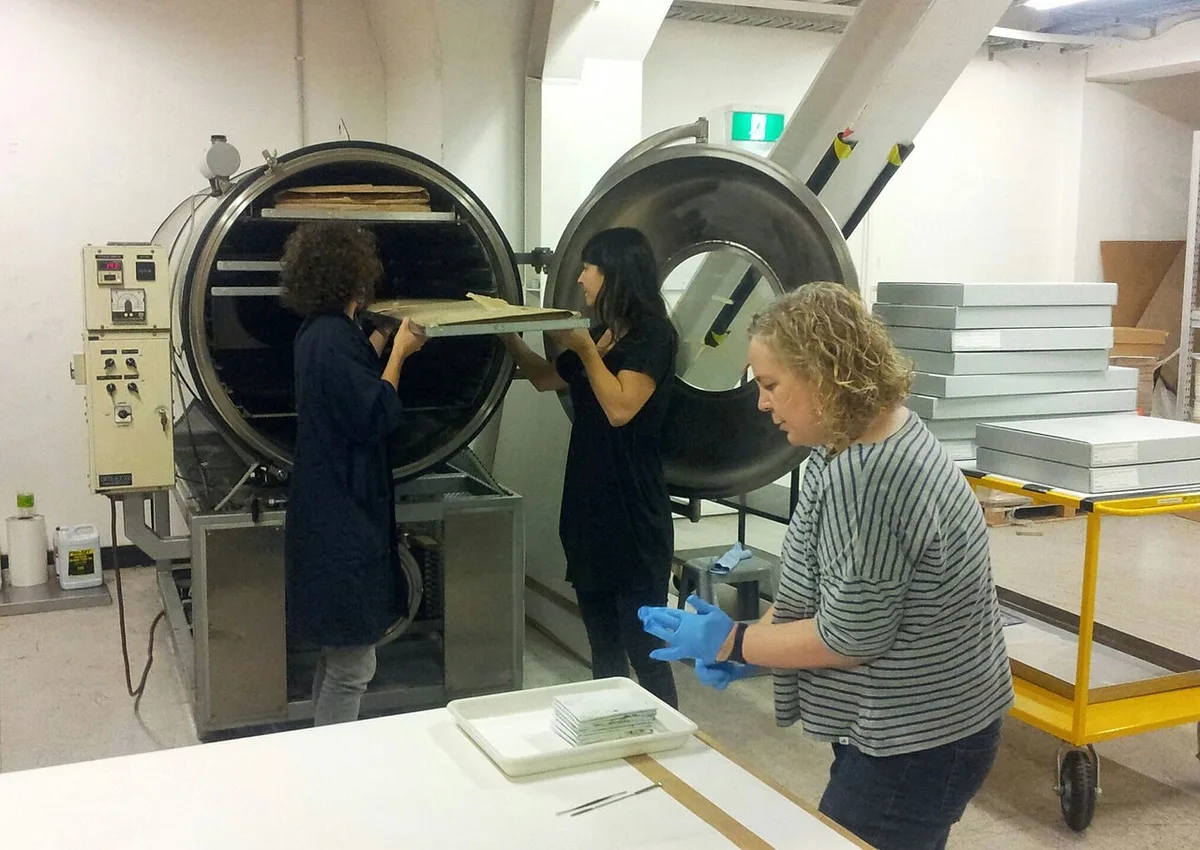
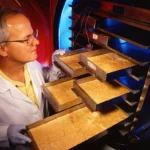
Image source: Wikimedia Commons / Archives New Zealand from New Zealand (CC BY-SA)
Step 1: Line Your Trays
Use parchment paper or a silicone baking mat. Bare trays make cleanup miserable. Honey is sticky, even when frozen.
Silicone mats peel away easier than parchment once the honey goes brittle.
Step 2: Pour Thin
Pour honey into a layer about a quarter-inch thick. Thinner dries faster and more evenly. Thicker layers crust over and trap moisture inside.
Step 3: Pre-Freeze
Pop the trays into your freezer and let the honey freeze solid. This prevents foaming and boiling in the vacuum chamber. A full 24 hours in the freezer works best.
Step 4: Run the Cycle
Set your freeze dryer to a standard cycle. Honey chunks typically take 24 to 36 hours. The timer behavior is worth watching.
If your cycles run long, check your machine's sensor and vacuum performance. A steady vacuum level is a good sign. If your machine struggles to pull vacuum, the honey might be foaming or the chamber seals could need attention.
Step 5: Break and Store
Once done, snap the brittle sheet into pieces. Store immediately in an airtight container. Exposure to humidity will soften the crunch fast.
Vacuum-sealed bags work, but jars are easier for everyday use.
The key is patience. Honey chunks are done when they crack cleanly and don'tbend or flex. When it does, the honey is dry.
If it bends like taffy, it needs more time. Restart the machine and check again in a few hours.
From Chunks to Powder: Grinding, Sifting, and Winning the Battle Against Humidity
Making honey powder is the ambitious route. The freeze-drying part is the same. The real challenge starts after the cycle ends.
Pure honey powder is aggressively hygroscopic. It will pull moisture from the air faster than most kitchen ingredients. Work fast, and package everything before you celebrate.
Start with fully dried honey chunks. Any residual moisture will turn your powder into paste. Break the chunks into smaller pieces before grinding.
A blender or food processor works fine, but use short pulses. Prolonged grinding heats the sugar, and heat makes it sticky.
Sift the powder through a fine mesh strainer. Return the larger bits to the grinder and pulse again. Expect some loss to clumping.
That's normal. Commercial honey powder uses anti-caking agents like maltodextrin to avoid this. You don't need them, but you must work efficiently.
Packaging is the whole game. Airtight glass jars work best, ideally with a food-safe desiccant packet inside. The moisture barrier determines whether your powder stays fluffy for a year or turns into a brick in a week.
Vacuum-sealed mylar bags also work. If you're sealing jars without a vacuum attachment, squeeze out as much air as possible.
Keep the powder away from steam, sinks, and humid pantries. Even a jar that's been opened briefly can let enough moisture in to cause clumping. Store the powder somewhere cool and dark, and it will keep for years.
What Goes Wrong: Common Freeze-Dried Honey Mistakes (And How to Fix Them)
Honey foam is the classic failure. You skip pre-freezing, and the vacuum chamber makes the honey bubble like a science project. The fix is simple: freeze the trays for a full 24 hours before starting.
If you see foam, scrape it off and run the batch again. It's still edible, just ugly.
Thick layers are mistake number two. Honey that's deeper than a quarter inch dries unevenly. The outside turns brittle, and the middle stays syrupy.
If that happens, the batch isn't ruined. Break it up and run it again. Spread the sticky pieces thinner and restart.
Grinding too long is the next trap. A blender running for two minutes creates friction heat. That heat melts the sugar, and the powder turns to paste.
Short pulses only. Shake the blender between bursts. Stop when you have a dry powder and immediately sift.
Then there's the humidity battle. Open powder absorbs water in minutes. Even on a dry day, kitchen humidity can be enough.
Work fast, package immediately, and include a desiccant packet in the jar. Skimp on packaging, and you'll find clumps within a week.
Aggregate user reviews report that most failures trace back to impatience. Rushing the freeze cycle leaves residual moisture behind. Trust the process.
Test a small batch first.
Freeze-Dried Honey vs. Every Other Shelf-Stable Option
Liquid honey already lasts a long time. So why bother freeze-drying it? Weight and convenience.
Honey is heavy, and a jar is awkward for camping. Freeze-dried honey is light, portable, and doesn't drip. It also won't crystallize in your pantry.
Store-bought honey powder usually contains maltodextrin or anti-caking agents. You're not getting pure honey. Homemade freeze-dried honey is 100% honey.
That matters if you want a clean label or prefer raw honey without processing.
Spray-dried honey is a commercial alternative. It's made by spraying honey into hot air, which can degrade delicate aromas. Freeze-drying preserves more of the natural flavor because it happens at low temperatures.
For snacking or topping, chunks beat both.
Dehydrated honey is basically a sticky, leathery syrup. It doesn't dry fully and still needs refrigeration. It's not a smart storage solution.
For long-term prepping, freeze-dried honey wins on shelf life and weight. For everyday baking, commercial powder is more convenient because it flows freely. For pure flavor, nothing beats your own freeze-dried chunks.
Pick based on your goal, and store them properly.
FAQs: Your Sweetest Questions, Answered
How long does freeze-dried honey last?
Properly sealed freeze-dried honey lasts for years. The key is moisture control. Store it in an airtight jar with a desiccant packet, and keep it away from humidity.
In our research, properly stored chunks and powder easily reach 10 years without flavor loss.
Can you freeze dry raw honey?
Yes, raw honey freezes dry well. Watch the moisture content. Raw honey that's high-moisture can be slower to dry.
If you see foam during the cycle, pre-freeze longer next time. The final product tastes stronger because water is gone.
Why did my honey foam in the freeze dryer?
Honey foams when it isn't fully frozen before the vacuum pulls. The trapped air expands and bubbles up. Freeze your trays for a full 24 hours before starting.
That prevents foaming completely.
Is freeze-dried honey safe for babies?
No. Honey of any form, including freeze-dried, should never be given to children under one year old. It can contain spores that cause infant botulism.
Per FDA guidance, the warning applies to all honey products. Wait until the child is at least 12 months old.

Similar Posts