Pothos Light Requirements
Botanical Horticulturist & Food Preservation Specialist at Brittle Bloom · Certified Master Gardener & Master Food Preserver · 12+ Years in Plant Propagation & Food Preservation
Pothos light requirements seem to confuse more people than they should. You've probably heard "bright, indirect light" and thought, what does that even mean? The truth is, pothos won't keel over and die if you get it wrong.
It will just slowly stop growing, lose its pretty variegation, or develop leaves that look washed out and sad.
Here's the good news: your plant will tell you exactly what it needs, and you don't need a light meter or a botany degree to understand it. As of 2026, aggregate grower reviews and university extension research point to the same conclusion. The key isn't measuring light in foot-candles.
It's learning to read the visual language of the leaves themselves. Once you know what to look for, finding the perfect spot takes about thirty seconds.
Why Reading the Leaves Matters More Than Any Light Meter
Forget buying expensive light meters. Your pothos is its own best light meter, and it communicates through its foliage constantly. Every leaf color, every gap between nodes, every new growth point is a signal about whether it's getting what it needs.
Think of it this way. If the plant looks full, lush, and has tight leaf spacing, you're doing it right. If it looks stretched, faded, or weirdly pale, something's off.
The plant doesn't lie. It's just biology responding to its environment.
The visual approach works better than technical measurements for one simple reason. Your eyes can spot a healthy plant instantly, but numbers don't tell you anything about how your specific window, your specific climate, and your specific variety interact. The leaves aggregate all those variables into one clear picture.
The Only Light Rule You Need to Remember
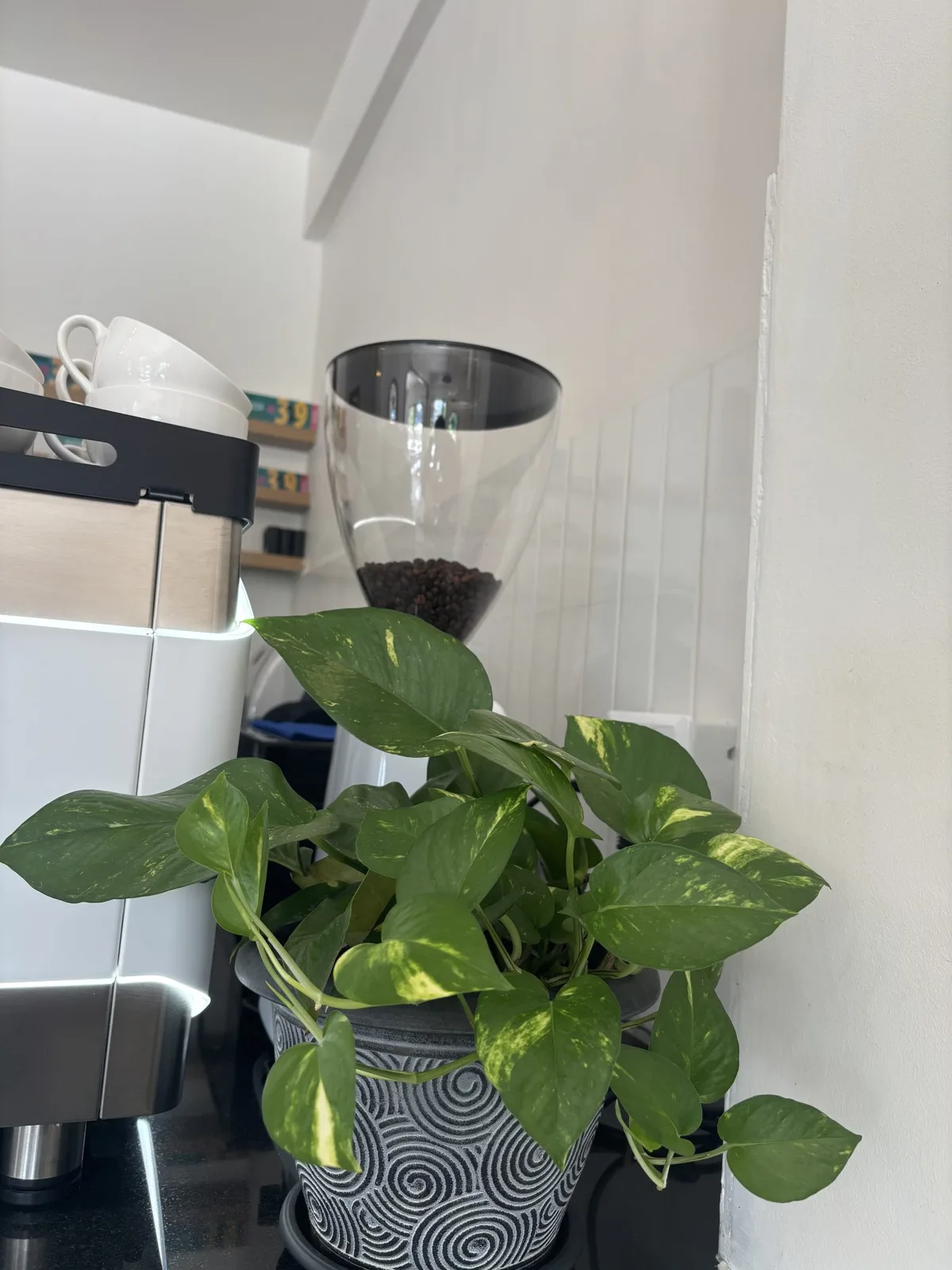
Pothos wants bright, indirect light. That's it. That's the whole secret.
In practical terms, it means a spot where the plant receives plenty of light during the day, but where the sun's harsh rays never hit the leaves directly.
A few feet away from an east or south-facing window is usually perfect. Right next to a north-facing window works too, though growth will be slower. The easiest way to check is the hand shadow test.
Hold your hand about a foot above the plant. A sharp, dark shadow means direct sun. Too intense.
A soft, blurry shadow means indirect light. Perfect.
Manufacturer specifications and university extension guides generally agree on the numbers. Pothos survives in as little as 50 to 70 foot-candles, but it thrives in 200 to 800 foot-candles. That's a wide range, which is why visual cues matter more than precise measurement.
If your plant looks good, it's getting enough light.
| Light Condition | Hand Shadow | Pothos Response |
|---|---|---|
| Direct sun | Sharp, dark outline | Leaf burn, bleaching |
| Bright indirect | Soft, blurry outline | Fast growth, strong variegation |
| Low light | No visible shadow | Leggy vines, solid green leaves |
Reading Your Pothos: Visual Cues for Too Little Light
If your pothos is in a dim corner or too far from the window, it won't die immediately. It will just quietly protest. The first sign you'll notice is stretched, leggy vines.
The gaps between leaves get longer and longer, because the plant is desperately reaching for more light.
Then the variegation starts to fade. Those beautiful white or yellow splashes turn solid green. The plant is producing more chlorophyll to capture every scrap of available light, and pigmentation is the first casualty.
A once-colorful Marble Queen can look like a plain green plant within a few months.
Growth slows to a crawl. If your pothos hasn't produced a new leaf in weeks and the soil is fine, light is the likely culprit. A diagram of a low-light pothos would show sparse vines, wide leaf spacing, and a uniformly dark green color.
Compare that to a healthy plant with dense growth and visible variegation.
Reading Your Pothos: Visual Cues for Too Much Light
Too much light is less common, but it happens. The classic mistake is putting a pothos right on a south-facing windowsill where it bakes in afternoon sun. The leaves can't handle that intensity, even though the plant is technically a tropical species.
The first symptom is a washed-out, bleached appearance. Leaves that were once rich green turn pale yellow or almost white. This is different from the yellowing caused by overwatering, which usually starts at the lower leaves.
Light damage affects the leaves most directly facing the sun.
Brown, crispy edges are another giveaway. The leaf tissue essentially gets scorched, much like skin in direct sun. You might also notice wilting even when the soil is moist, because the plant is losing water faster than its roots can keep up through intense light exposure.
If you spot these signs, move the plant back from the window or filter the light with a sheer curtain. Recovery takes a few weeks, but pothos is resilient. New growth will come in healthy once conditions improve.
| Symptom | Too Little Light | Too Much Light |
|---|---|---|
| Leaf color | Solid dark green | Pale yellow or bleached |
| Vine spacing | Long, stretched gaps | Compact but scorched |
| Leaf edges | Healthy | Brown and crispy |
| New growth | Absent | Small and pale |
The Direct Sun Question: When Bright Becomes Burn
Can pothos handle any direct sun? Yes, but only the gentle kind. A few hours of morning sun from an east-facing window is actually beneficial.
It's soft, diffused, and gives the plant a nice boost without risk of damage.
Afternoon sun is the problem. That's the intense, high-angle light that comes through west and south-facing windows in the afternoon. It's too harsh for pothos leaves, especially when it passes through glass.
The glass magnifies the heat and concentrates the light into a stronger beam.
A pothos in direct afternoon sun will show stress within days. Bleached patches appear first, then crispy edges. The University of Florida IFAS Extension notes that pothos naturally grows under tree canopies in its native habitat, which means it's adapted to filtered light, not full sun exposure.
If you only have a hot, sunny window, don't give up. Pull the plant a few feet back from the glass. That simple distance softens the light significantly.
Or hang a sheer curtain to diffuse the beam. Both solutions turn a dangerous spot into a perfectly good home for your pothos.
Variety Matters: Matching Light to Your Pothos Type
Not all pothos are created equal. The amount of light your plant needs depends heavily on its variety, specifically how much variegation it carries. Think of variegation as a trade-off.
Those beautiful white and yellow patches lack chlorophyll, which means those parts of the leaf can't photosynthesize. The plant needs extra light to compensate for the inefficient patches.
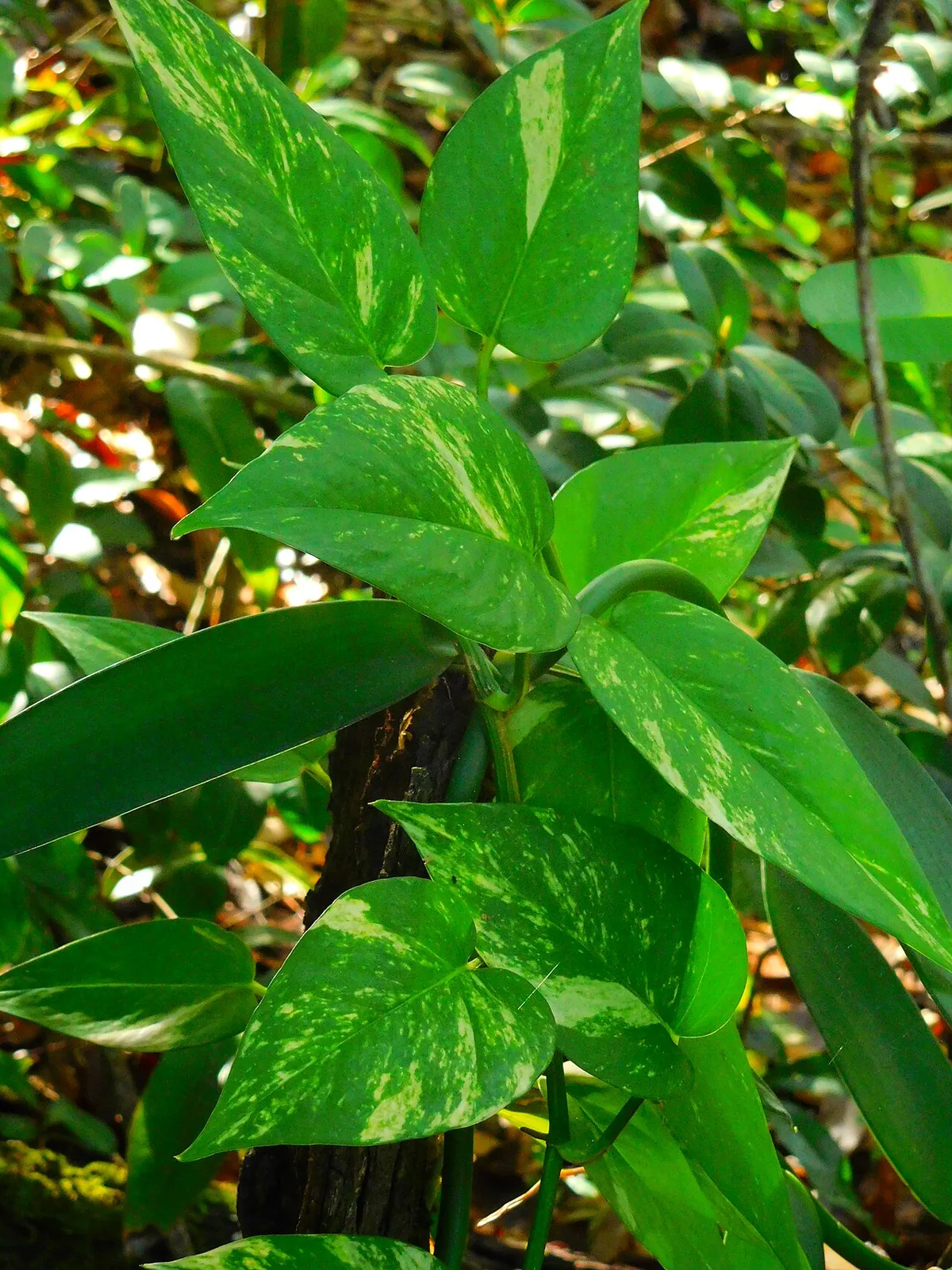
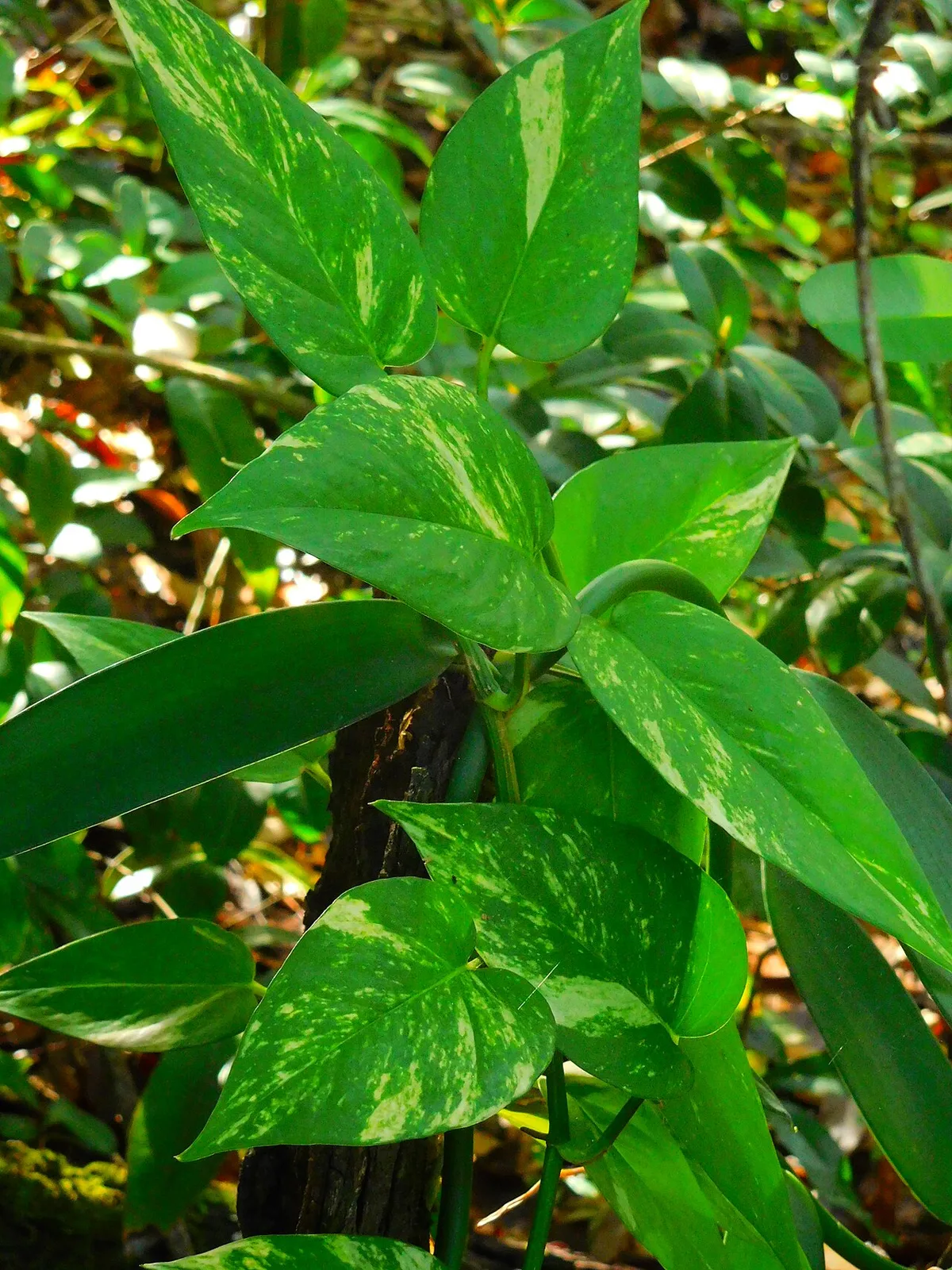
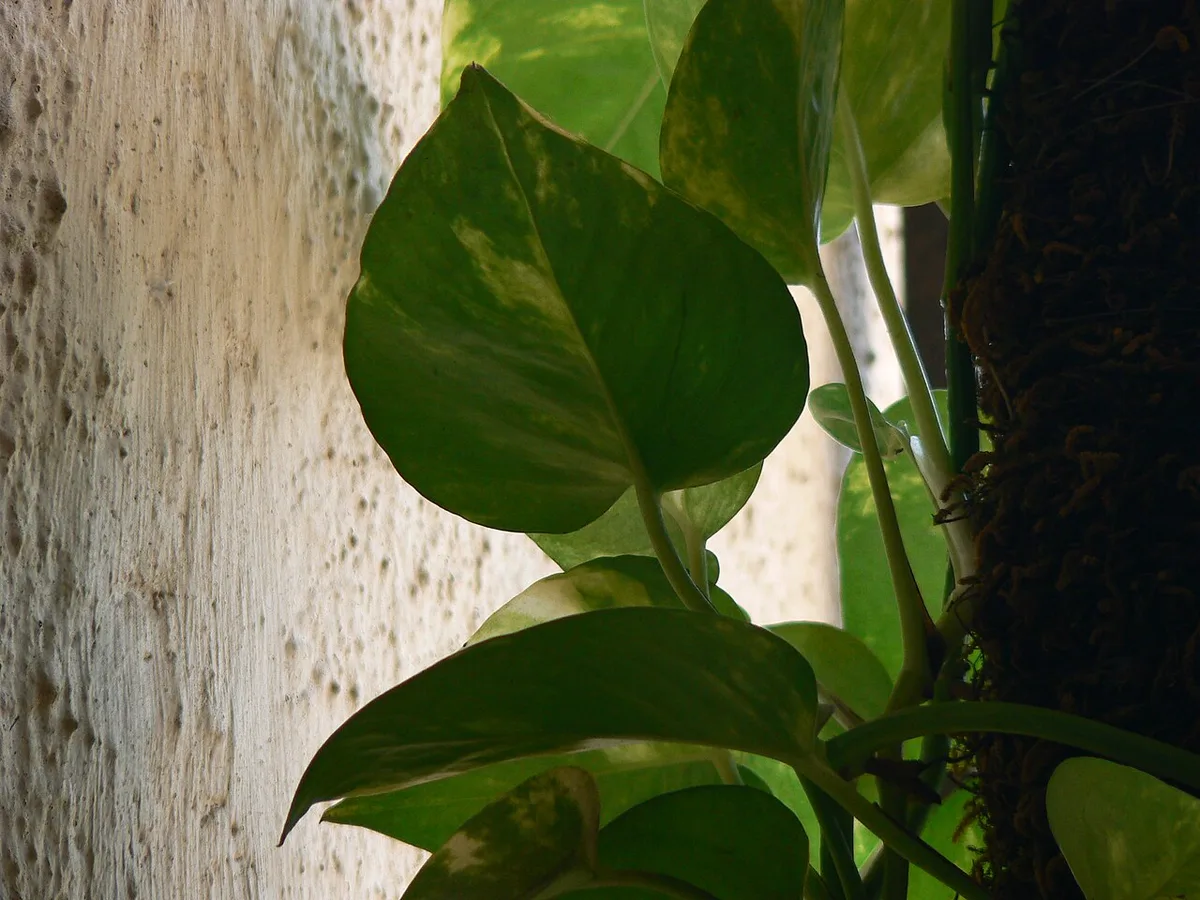
Golden Pothos is the forgiving classic. It tolerates lower light fairly well, but to keep those golden splashes popping, it wants medium-to-bright indirect light. In dim corners, it will slowly revert to solid green.
A photo comparison of two Golden Pothos, one in bright light and one in low light, makes this obvious within a few months.
Marble Queen Pothos is the high-maintenance sibling. Its heavy white marbling means it needs more light than any other common variety. Bright indirect light, close to a window, is non-negotiable if you want to keep that stunning pattern.
Low light turns it into a plain green plant that looks nothing like its name.
Jade Pothos is the complete opposite. With zero variegation, it's the most low-light tolerant of the group. It handles shady corners and north-facing rooms with grace.
It trades the flashy colors for resilience, making it perfect for darker spaces. If you have a spot where nothing else survives, Jade is your answer.
Neon Pothos sits somewhere in the middle. Its bright, lime-green foliage needs medium-to-bright indirect light to maintain that electric glow. In darker conditions, the leaves fade to a dull, muted green that loses all its charm.
| Variety | Light Preference | Low-Light Tolerance | Key Visual Cue |
|---|---|---|---|
| Golden | Medium to bright indirect | Good | Gold splashes fade in low light |
| Marble Queen | Bright indirect | Poor | White marbling disappears quickly |
| Jade | Low to medium indirect | Excellent | No variegation to lose |
| Neon | Medium to bright indirect | Fair | Neon color dulls in low light |
If you're unsure which variety you have, look at the leaf pattern. Heavy white or cream means high maintenance. Solid green means you're safe almost anywhere.
For high-variegation types, keep them within a few feet of a bright window or consider supplementing with a grow light.
A Quick Reference Chart for Light and Leaf Appearance
Sometimes you just need a fast answer. If your pothos looks a certain way, here's what it's telling you. This chart condenses everything we've covered into a quick visual guide you can check in seconds.
| Leaf Appearance | What It Means | What to Do |
|---|---|---|
| Solid dark green, tight spacing | Getting enough light for survival | Fine, but growth will be slow |
| Solid dark green, leggy vines | Not enough light | Move closer to a window |
| Faded variegation, solid green patches | Light too low for variety | Increase light exposure |
| Pale, bleached, or yellowish leaves | Too much direct sun | Move away from window |
| Brown, crispy edges | Sun scorch | Filter light with sheer curtain |
| Compact growth, strong variegation | Perfect light conditions | Leave it alone, you're winning |
The hand shadow test works every time. Sharp shadow means direct sun. Move the plant back.
Blurry shadow means bright indirect light. Perfect. No shadow means low light.
Accept slower growth or relocate.
One caveat about yellowing leaves. Light stress looks different from water stress. Yellowing from light usually affects the top, sun-facing leaves.
Yellowing from overwatering starts at the bottom and makes leaves feel mushy. Check the soil before you move the plant around. If the soil is soggy, adjust watering first.
Then revisit the light situation.
FAQs: Light Questions Pothos Owners Keep Asking
How many hours of light does a pothos need?
Pothos needs about 10 to 12 hours of indirect light per day. The plant follows a light cycle, storing energy during bright periods and using it at night. Consistent, bright days promote steady growth.
Shorter winter days naturally slow the plant down, which is normal. Supplement with a grow light if you want winter growth to continue.
Can pothos live in a room with no windows?
Technically, yes, but only temporarily. A pothos can survive for weeks in a windowless room under fluorescent office lighting, but it won't thrive. Growth will stall, variegation will fade, and the plant will slowly decline.
For a permanent no-window setup, use a full-spectrum LED grow light. Run it 10 to 12 hours a day, and your pothos will be fine.
Why is my pothos turning solid green?
This is a light issue. Your plant isn't getting enough light to support its variegation, so it's producing more chlorophyll to stay alive. The white and yellow patches fade as the plant prioritizes survival over looks.
Move it closer to a window or add a grow light. New growth will come in variegated once conditions improve. Old leaves won't change back, but new ones will.
Should I use a grow light for my pothos?
Only if you're working with low natural light. Grow lights are excellent for dark corners, offices, or winter months. A full-spectrum LED positioned 12 to 18 inches above the plant works best.
Keep it on for 10 to 12 hours. Your pothos will respond with fresh growth and strong variegation. Many growers find grow lights unlock growth in spots they thought were hopeless.
Why are my pothos leaves turning yellow?
Check the soil first. Overwatering is the most common cause of yellow leaves, especially at the bottom of the plant. If the soil is dry, the yellowing might be light stress instead.
Leaves facing a hot window will bleach and yellow. Adjust your watering routine first, then evaluate the light conditions.
Can pothos grow in artificial light?
Yes, absolutely. Standard office fluorescent lighting is enough for pothos to survive. For actual growth and maintained variegation, you'll want brighter artificial light.
Full-spectrum LEDs are the best choice. If you're dealing with a tricky spot, you can also rotate your pothos between brighter and darker areas. A few weeks in good light, then a few weeks in the darker spot, keeps the plant balanced.
We've seen plenty of offices keep pothos alive for years under basic ceiling lights alone.

Similar Posts