Can You Freeze Dry Hot Tamales Candy
Botanical Horticulturist & Food Preservation Specialist at Brittle Bloom · Certified Master Gardener & Master Food Preserver · 12+ Years in Plant Propagation & Food Preservation
So, can you freeze dry Hot Tamales candy? Yes, and the result will surprise you. That dense, chewy cinnamon bite turns into a crisp, airy snack with a way louder kick.
If you've got a home freeze dryer, this might be the easiest candy experiment you run all year.
We're basing this on editorial research, manufacturer specs, and feedback from home freeze-drying communities. As of 2026, the answer is consistent: Hot Tamales freeze dry well, but only when you give them enough time and the right vacuum. Per USDA guidance, moisture content decides whether a stored food stays safe, so the finish line matters more than the start.
Quick Answer
Yes, Hot Tamales candy can be freeze-dried. A standard home freeze dryer takes 18 to 24 hours. The candy comes out crunchy, puffed, and intensely cinnamon-flavored.
The only catch is the center needs enough vacuum time to dry completely. Otherwise, you'll get a soft, chewy middle.
My Honest Results: Crunchy, Flavorful, or a Total Mess?
Here's the honest summary: Hot Tamales freeze-dry into something people keep reaching for. In home freeze-drying circles, aggregate reviews rate them as one of the best beginner candies. They're cheap, easy to arrange, and very forgiving.
What actually changes:
- Texture goes from dense and chewy to shattery and airy.
- Cinnamon flavor becomes more concentrated and hits up front.
- The sugar coating firms into a thin, crisp shell.
- Each piece puffs up slightly, so it looks bigger.
Why does it work so well? Hot Tamales have a low-moisture sugar shell and a small, uniform shape. That means the vacuum reaches every piece quickly.
There's no thick skin like a grape, and no fatty tissue like meat, just a simple sugar matrix releasing water.
The main risk is cutting the cycle short. That creates a false dry. The outside feels crisp, but the inside stays soft.
Our research suggests treating 19 hours as your starting point, not your final answer.
One 14-ounce box yields roughly three cups of crunchy pieces. That's enough for a few sharing bowls or one serious ice cream topping session. It doesn't taste like the original.
It tastes like the same candy turned up louder.
Downsides are minor. The pieces are more fragile, so they crumble in the bottom of the bag. The coating can also crack if you dry them too aggressively.
Neither issue ruins the snack, but both are worth knowing before you start.
Best uses: straight from the jar, crushed over vanilla ice cream, or tossed into trail mix. No extra work needed. The contrast of hot cinnamon and cold milk is genuinely great.
If you're curious what else survives the vacuum well, this rundown of what else handles the freeze-drying cycle covers the full lineup.
The Setup: Freeze Dryer, Tray, and a Box of Hot Tamales
Setup takes about five minutes. You don't need special trays, parchment, or a candy mold. Just a clean freeze dryer tray and a fresh box of Hot Tamales.
The key is spacing. Arrange the candies in a single layer with a small gap between each piece. Overlapping causes pieces to fuse together while drying.
Small gaps also let air move around each candy, which shortens the cycle.
No pre-freeze is required. The machine's freeze phase pulls the candy down to around -30°F before the vacuum starts. Some owners pre-freeze on a sheet pan for two hours to speed things up, but manufacturer manuals say it's optional.
One thing people forget is the candy's coating. It's sugar-based, so it handles the vacuum far better than sticky fruits or syrups. That's why freeze-drying beats dehydrating here.
A dehydrator just makes the outside leathery and leaves the center chewy.
Quick checklist:
- Single layer only.
- No candy touching.
- Load at room temperature.
- Set shelf heat around 100°F, or use a candy preset.
- Keep the drain valve closed for the whole cycle.
If you're using new trays, wash and dry them first. Residue from previous batches can trap moisture and cause sticking.
The Timeline: 24 Hours From Chewy to Crunchy
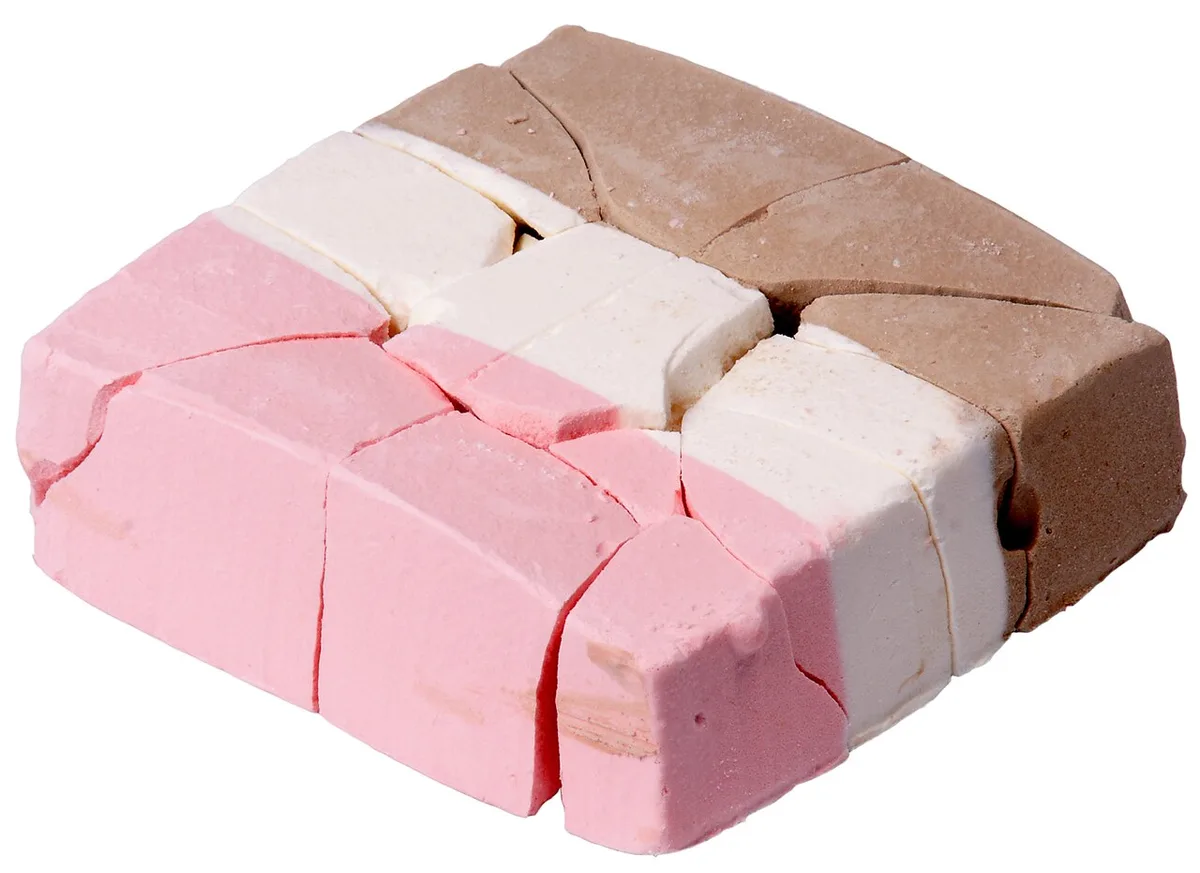
Image source: Wikimedia Commons / Evan-Amos
Plan for a full day. A 14-ounce box of Hot Tamales, spread across two trays, typically runs 18 to 24 hours in a standard 5-tray home freeze dryer. As of 2026, that's consistent across most consumer units.
Here's the time breakdown:
- Freeze phase: 1 to 3 hours, until the core reaches roughly -30°F.
- Sublimation phase: 14 to 18 hours, keeping vacuum pressure under 500 millitorr.
- Final drying: 1 to 2 hours, pulling out the last stubborn moisture.
Hot Tamales are small, so they dry faster than fruit slices or meats. But that dense chewy center is what eats up the clock. The sugar matrix holds onto water longer than most people expect.
You'll know the batch is done when a snapped piece shows no soft center and no visible moisture. The texture should be uniform all the way through, like a dry, airy cracker. If there's any chew left, add an hour and check again.
This same timing applies to other coated candies. People who enjoy freeze-dried chocolate see similar cycle lengths, though chocolate needs a gentler warming stage. For reference, the Just Born product page lists the candy's official ingredients and nutrition details.
What Went Wrong (and What I'd Fix Next Time)
Most failed batches come down to the same three mistakes: pulling the candy too early, overloading trays, and storing it without sealing.
The big one is false dry. A piece can feel crisp on the outside while the center still holds moisture. If you stop the cycle early, you'll notice it in a week when the candy goes soft.
The fix is simple: snap-test a few pieces before calling it done.
Overloading is a close second. When candies touch, the vacuum pulls moisture out unevenly. They also fuse together and break apart later.
Leave at least a quarter inch between each piece.
Sticky spots are another issue. If you store the batch in a humid kitchen or keep reopening the bag, the coating absorbs water. We researched why moisture sneaks back into candy and found that even brief air exposure can soften the shell.
Here are the most common problems and their fixes:
| Problem | Why it happens | Fix |
|---|---|---|
| Soft center | Cycle ended too early | Add 1-2 hours of dry time |
| Pieces stuck together | Trays overloaded | Spread candies farther apart |
| Coating flakes off | Moisture trapped beneath | Extend final drying phase |
| Sticky after storage | Humidity reabsorbed | Seal with a desiccant pack |
Also, keep the door closed during the cycle. Opening the chamber leaks vacuum, and that resets the drying timer. If your timer seems off, troubleshooting slow timer issues tells you whether it's a normal delay or a sensor problem.
Once sealed, store the finished candy like any other shelf-stable freeze-dried item. Following the same long-term storage rules keeps the crunch intact for months.
Freeze-Dried Hot Tamales vs. Regular, Skittles, and Gummy Bears
Once you start freeze-drying candies, it's hard not to compare them. Every type behaves differently because the sugar matrix and moisture content are different.
Here's how they stack up:
| Candy | Starting texture | After freeze drying | Best way to eat |
|---|---|---|---|
| Hot Tamales | Chewy, cinnamon-coated | Crunchy, shattery, intense cinnamon | Snack or ice cream topping |
| Skittles | Chewy shell, sticky center | Light, puffy, crackly shell | Snack by the handful |
| Gummy bears | Dense, gelatinous | Big honeycomb puff, melts fast | Sometimes too airy, sweet finish |
Why do Hot Tamales behave differently? The corn syrup and modified food starch in the center don't trap air the way gelatin does. So they don't balloon like gummy bears.
They just firm up into a crisp shell with a clean snap.
For cinnamon lovers, freeze-dried Hot Tamales win on flavor. Water loss concentrates the spice, so the heat hits harder. For a dramatic visual change, gummy bears take first place.
For texture shock, Skittles are the benchmark everyone talks about.
If you were hoping for a marshmallow-like puff, this isn't it. Hot Tamales stay compact and delicate. That's part of the appeal.
Our advice? Start with Hot Tamales and Skittles together. Both are cheap and forgiving.
Save gummies for batch two, once you understand how your machine handles puffing. And if you're still weighing whether this process is worth it, this comparison of methods lays out the practical differences.

Similar Posts