Snake Plant Propagation: 3 Simple Ways to Grow New Plants
Botanical Horticulturist & Food Preservation Specialist at Brittle Bloom · Certified Master Gardener & Master Food Preserver · 12+ Years in Plant Propagation & Food Preservation
Your snake plant has filled its pot, or maybe you snapped a leaf and don't want to toss it. Snake plant propagation is one of the most forgiving plant projects you can take on. The real challenge isn't getting roots to grow.
It's picking the method that matches your plant and your goal.
Botanists and growers agree on the fundamentals. Leaf cuttings root in two to four weeks in water. Division gives you an established plant the same day you split it.
Let's match the method to your situation.
Quick Answer
Snake plant propagation means growing new plants from a parent plant. Three main methods exist: division, water cuttings, and soil cuttings. Division works fastest and keeps variegation.
Leaf cuttings take longer but produce more plants. Pick the method that fits your plant.
Start With Your Situation: Which Propagation Method Fits?
Before you cut anything, look at what you're working with. The right method depends on your plant's condition and what you want from it.
If your snake plant is crowded and pushing pups out of the pot, division is the obvious choice. You get several established plants in one afternoon. Each divided section already has roots, so there's no waiting game.
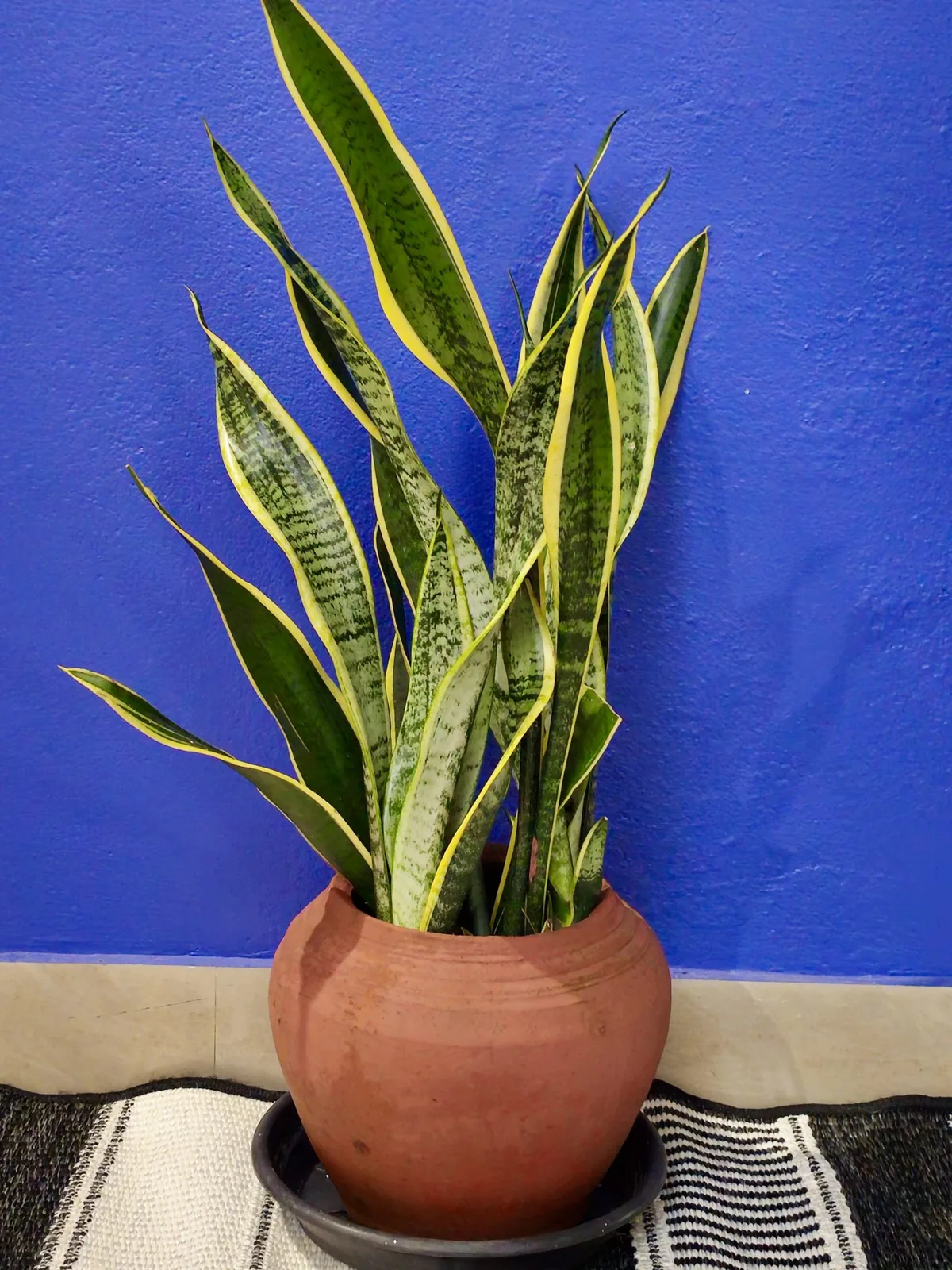
If you have a single healthy leaf, or you want a bigger batch of new plants, leaf cuttings are your route. One leaf can become several cuttings if you slice it into segments. Just know that variegated varieties like Laurentii can lose their yellow edges when grown from leaf pieces.
If your plant is struggling, check for rot at the base. You can salvage healthy leaves as cuttings while discarding the damaged root system. That's a valid rescue plan, not a loss.
So the decision tree looks like this:
- Overcrowded pot with pups → divide
- Single leaf or broken leaf → water or soil cutting
- Variegated plant you want to keep identical → divide
- Maximum number of new plants → leaf cuttings
- Rotting base but healthy leaves → take leaf cuttings
If you're torn, start with division when possible. It's faster, safer, and gives you the exact same plant.
How Snake Plant Propagation Actually Works
Snake plants grow from underground stems called rhizomes. These chunky structures store water and push up new rosettes of leaves. That's why a healthy plant naturally spreads into a cluster over time.
Understanding that explains everything about propagation. Division works because each separated rhizome piece already carries roots and growth points. Leaf cuttings work because snake plant leaves have meristem tissue near the base.
That tissue can generate roots and eventually a pup.
As of 2026, botanists classify snake plants as Dracaena trifasciata. You'll still see the old name Sansevieria on older labels. University extension sites like NC State Extension document the genus shift and care requirements.
The variegation catch deserves attention. Leaf cuttings from variegated plants often revert to solid green. The variegation lives in the leaf tissue itself, and new growth from a cutting may not carry those genes.
Division always preserves variegation because you're moving intact rosettes.
One more thing to know: snake plants are slow to moderate growers. Patience matters. Most leaf cuttings show roots within a month, but a full new plant with pups can take two to three months.
That's normal, not a failure.
Division Step-by-Step: The Fastest Way to New Plants
Division gives you instant results. Here's how to do it without stressing the parent plant.
Start by checking the pot. If the roots are packed tight and pups are pushing against the sides, it's time. Spring and early summer are ideal, but indoor division works any time the plant is actively growing.
Slide the whole plant out of its pot. Gently tease the root ball apart with your fingers. If it's stubborn, use a clean knife to cut through the rhizome.
Each division needs at least three to five roots and one or more rosettes.
Pot each division in fresh, well-draining mix. A cactus or succulent blend works well. Choose a pot with drainage holes, and keep it snug.
Snake plants prefer being slightly rootbound.
Water lightly after potting, then let the soil dry out completely before watering again. Place the new pots in bright, indirect light. Avoid direct sun for the first week while the roots settle.
What does a diagram of this look like? You'd see the rhizome connecting multiple rosettes, with cut lines marking where to slice. The key is keeping each piece balanced between roots and leaves.
If you only want one or two new plants, you don't have to divide the whole clump. Cut off a single pup with its roots attached, then repot the parent without disturbing the rest.
Leaf Cuttings: Water vs. Soil Propagation
Leaf cuttings are the classic snake plant propagation method. They're easy, they produce lots of new plants, and water propagation lets you watch roots appear in real time.
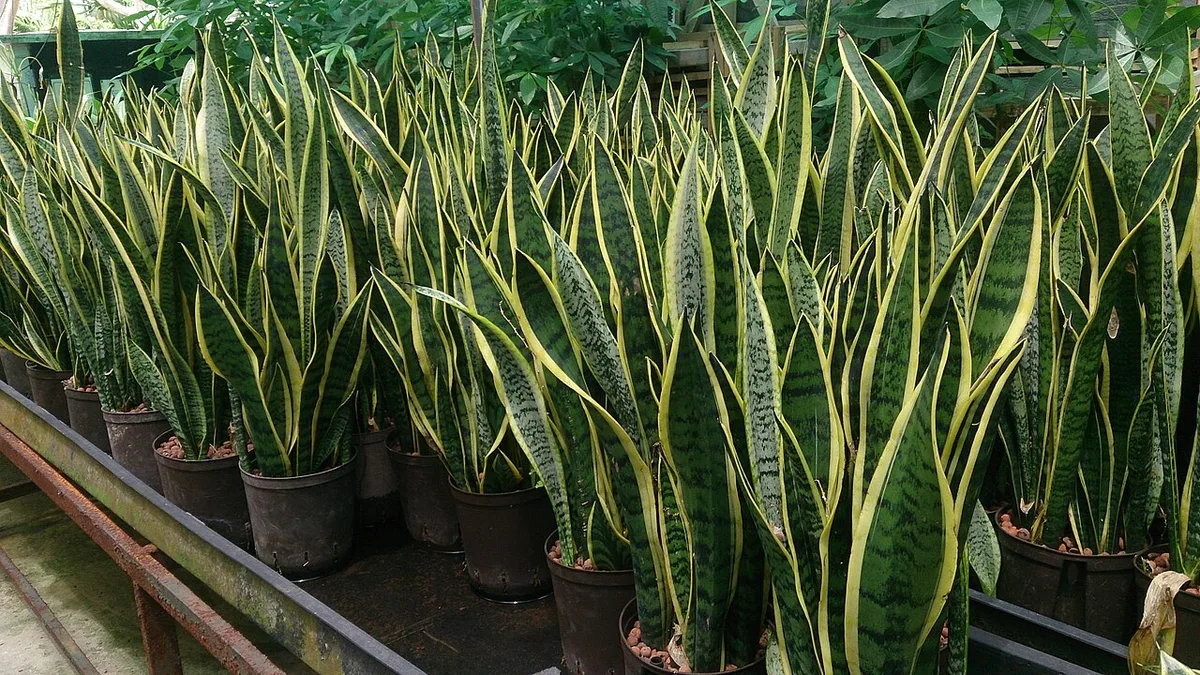
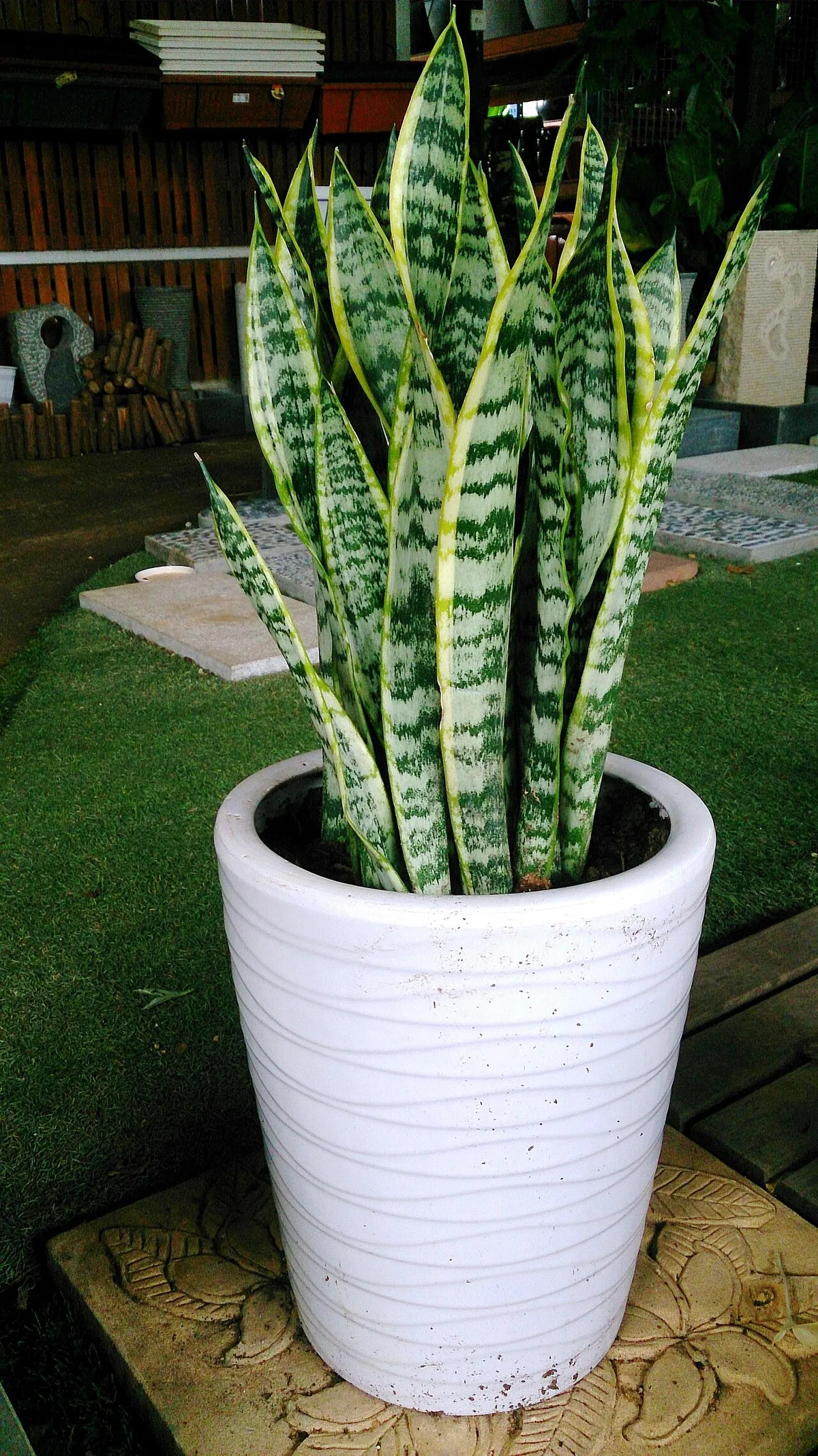
Image source: Wikimedia Commons / Mokkie (CC BY-SA)
Water Propagation Step-by-Step
Cut a healthy leaf at its base with a sterile knife. Let the cut end callus for one to three days, which prevents rot. Place the leaf in a jar with about an inch of water.
Keep the cut end submerged, not the whole leaf.
Change the water weekly. Roots appear in two to four weeks. Once roots reach about an inch long, move the cutting to soil.
Soil Propagation Step-by-Step
You can skip the water entirely. Let the cutting callus, then dip the end in rooting hormone if you like. Plant it about one inch deep in a moist, well-draining mix.
Water sparingly and keep it in bright, indirect light.
Soil cuttings take longer to show progress, usually four to six weeks. But they skip the transplant shock that water-rooted cuttings often face.
Water vs. Soil: Which Should You Try?
| Water | Soil | |
|---|---|---|
| Rooting time | 2 to 4 weeks | 4 to 6 weeks |
| Visual check | Easy | Hard |
| Transplant shock | Higher | Lower |
| Rot risk | Low if changed weekly | Moderate if overwatered |
| Best for | Watching roots grow | Smooth transition |
Try water for the fun of watching roots grow. Use soil if you want to skip a step and avoid shocking the roots later.
Mistakes to Avoid: Why Snake Plant Cuttings Fail
Most failed snake plant propagations trace back to a handful of mistakes.
Watering too much tops the list. Snake plant cuttings don't need much moisture. In soil, the mix should go almost dry between waterings.
Soggy soil invites rot, and rot kills cuttings before they root.
Skipping the callus stage is another classic error. A fresh cut is a wet wound. Letting it dry for one to three days forms a protective callus that blocks rot.
Skip it, and your cutting may turn mushy in a week.
Ignoring variegation is a quieter failure. Many people don't realize that leaf cuttings from variegated snake plants often produce plain green offspring. If striped leaves matter to you, division is the only reliable method.
Moving water-rooted cuttings to soil too late also causes problems. Long water roots adapt to a liquid environment. When they hit soil, they can struggle.
Transfer cuttings once roots are about an inch long.
Using the wrong pot or soil ranks, too. A huge pot holds too much moisture. Heavy garden soil compacts and smothers roots.
Stick with a small pot and a gritty, well-draining mix.
And one more: snake plant leaves contain saponins, which are mildly toxic to cats and dogs. The ASPCA lists this plant as toxic. Keep cuttings out of reach while you're propagating.
Aftercare: Repotting Rooted Cuttings and Pups
Once roots appear, your job isn't done. The way you pot and water new snake plants determines whether they thrive or stall.
For water-rooted cuttings, wait until roots reach about one inch long. That usually takes two to four weeks. Anything longer and the roots become adapted to water, which makes the soil transition harder.
For divided pups, check that each section has three to five healthy roots. Then pot immediately. Use a 4 to 6 inch pot with drainage holes.
Snake plants like snug quarters, so don't size up too fast.
The right soil makes a big difference. A cactus or succulent blend works well. You can also amend regular potting mix with perlite at a one-to-one ratio.
This keeps the mix airy and prevents water from pooling around the roots.
Water the pot lightly after planting. Then step back. Let the soil dry out completely before the next watering.
Snake plants store water in their leaves and rhizomes, so they forgive neglect far better than over-attention.
Place the new plants in bright, indirect light. Direct afternoon sun can burn young leaves. Morning sun is fine, but filtered light is safest for the first few weeks.
Do not fertilize for at least two months. Fresh potting mix already contains nutrients. Adding more too soon can burn the tender new roots.
Signs of healthy new growth: firm leaves, a waxy sheen, and eventually a tiny pup pushing up beside the cutting. That pup is your proof of success.
Snake Plant Propagation FAQs
Can I propagate a snake plant from a broken leaf?
Yes. A broken leaf works just fine. Cut off the damaged portion with a sterile knife.
Let the cut end callus for one to three days. Then root it in water or soil. The leaf will grow roots and eventually form a pup, though variegated leaves may lose their striping.
How long does snake plant propagation take?
Water rooting takes two to four weeks. Soil rooting takes four to six weeks. Division gives you an established plant immediately.
Full new growth from a leaf cutting takes two to three months. Expect the slowest progress in winter, when the plant rests.
Does rooting hormone actually help?
It helps but isn't required. Snake plants root readily on their own. Rooting hormone can speed things up and reduce rot risk, especially for soil cuttings.
If you use it, dip the callused end just before planting. Shake off the excess powder.
Should I use water or soil for rooting?
Choose water if you enjoy watching roots grow. It's satisfying and easy to monitor. Choose soil if you want a smoother transition.
Soil-rooted cuttings face less transplant shock. Both methods work, so pick whichever fits how hands-on you want to be.
Why are my leaf cuttings curled or wrinkly?
Curling usually means the cutting is losing moisture. A leaf cutting has no roots to drink water, so it uses stored energy. Keep the air humid and keep the cutting in bright, indirect light.
Avoid direct sun. Wrinkling can also mean the base wasn't callused well.
Can I propagate snake plants in winter?
You can, but expect slower results. Snake plants naturally slow down in cooler months. Roots may take twice as long to appear.
If you're patient, winter propagation works. For the best success rate, wait until spring or early summer when the plant is actively growing.
Final Decision Guide: Which Propagation Method Should You Use?
You now have the full picture. Let's narrow it down to a simple call.
Divide your snake plant if:
- The pot is overcrowded
- You want to preserve variegation
- You want new plants the same day
Choose water leaf cuttings if:
- You have a single healthy leaf
- You want to watch roots form
- You don't mind transplanting later
Choose soil leaf cuttings if:
- You want to avoid transplant shock
- You're okay waiting without visible progress
- You prefer set-and-forget propagation
For most people, division is the smartest route. It gives you established plants with zero wait time. It preserves the exact look of your parent plant.
And it solves the overcrowding problem at the same time.
Leaf cuttings make a fun experiment and multiply your collection faster. Just keep the variegation caveat in mind. If stripes matter, divide.
Whichever method you pick, the basics stay the same. Use clean tools. Let cut ends callus.
Water sparingly. Give bright, indirect light. Then give it time.
Snake plants are famously patient. Return the favor, and you'll have more plants than you know what to do with.

Similar Posts