Snake Plant Care: The Complete Guide to Thriving Plants
Botanical Horticulturist & Food Preservation Specialist at Brittle Bloom · Certified Master Gardener & Master Food Preserver · 12+ Years in Plant Propagation & Food Preservation
Let's be honest. You've probably killed a houseplant before. Maybe it was a fern that dried to a crisp, or a succulent that turned to yellow mush.
But the snake plant is supposed to be different. It's the plant that survives everything, right?
Yes, mostly. But even the legendary snake plant has one weakness. It's overwatering.
This snake plant care guide will fix that. We'll cover light, soil, water, and troubleshooting. Before you know it, you'll have one thriving on neglect rather than just surviving it.
Without proper drainage, even a drought-tolerant plant will suffer. Per NASA's Clean Air Study, snake plants can filter indoor air pollutants like formaldehyde and benzene. That structural root system needs to breathe.
A plant sitting in soggy soil is the fastest way to kill it. Let's dive into the routine that keeps them happy.
Quick Answer
To care for a snake plant: give it bright, indirect light. Water only when the top two inches of soil are bone dry. Use a well-draining soil mix.
Fertilize once in spring and once in summer. Avoid cold drafts and direct afternoon sun. Repot every 2-3 years if root-bound.
Keep it between 60-85°F for optimal growth.
Wait, Before You Water That Snake Plant: The #1 Killer and How to Avoid It
You love the look of a tall, architectural snake plant. It fits perfectly in that corner by the window. You probably bought it because you wanted something low maintenance.
Yet you've heard the horror stories.
The number one way these plants die is not neglect. It's kindness in the form of excessive watering. You water it because the soil looks dry on top.
But the bottom stays wet for days. This creates the perfect condition for root rot.
Think of it like this. A snake plant stores water in its thick, fleshy leaves. It's a succulent, even if it doesn't look like one.
It's naturally adapted to long dry spells in West Africa. It does not need a drink every week.
Here's your decision rule. Before you even pour water, stick your finger into the soil. If it feels damp two inches down, skip the watering.
If it's bone dry, give it a thorough soak. This simple check saves more plants than any other tip in this guide.
The Squeeze Test: A Quick Visual Check
Many plant owners use the "squeeze test" on the leaves. Gently press a leaf between your thumb and forefinger. A healthy leaf should feel firm and plump.
If it feels soft, squishy, or wrinkled, it's likely holding too much water.
Another common tactic is lifting the pot. Potted plants that need water feel noticeably lighter. This takes a little practice, but it's a reliable indicator.
If the pot feels heavy and the soil is dark, don't water it.
The Real Reason Snake Plants Thrive on Neglect (And What That Means for Your Routine)
Snake plants have a unique survival trick called Crassulacean Acid Metabolism, or CAM photosynthesis. Most plants open their stomata during the day to take in carbon dioxide. Snake plants do the opposite.
They open their pores at night. This saves water loss during the hot daytime hours. It also means they release oxygen and take in carbon dioxide while you sleep.
That's why they're popular in bedrooms. This mechanism is the core reason they tolerate drought so well.
Because of this, your routine should mimic their natural cycle. They don't need frequent, light watering. In nature, heavy rains saturate the soil, then it dries out completely for weeks.
Your watering should replicate those cycles.
Why Drainage Matters More Than Any Other Factor
We've touched on it, but it bears repeating. A pot with no drainage hole is a coffin. Without an escape route, excess water pools at the bottom.
It suffocates the roots and invites fungal growth.
If you've fallen in love with a pot without holes, don't panic. You can use it as a decorative cachepot instead. Keep the snake plant in a plastic or terracotta pot with drainage.
Slide the whole thing inside the pretty one.
The soil ingredient is just as important. Standard potting soil is too dense and holds moisture for too long. You want something chunky and gritty.
You don't need fancy specialty mixes. Just blend a standard potting mix with perlite and coarse sand.
Position your plant in bright, indirect light. They tolerate low light, but they thrive with more.
Let the soil dry out completely between waterings. This can mean every 2-4 weeks depending on your home.
Er on the side of too dry. You can always water again. You can't un-rot a root.
How to Build a Care Routine That Survives Your Schedule
A successful routine doesn't require a strict calendar. It requires observation. Your snake plant's needs change with the seasons, the light, and the temperature.
The schedule you keep in July will be different from the one in January.
Light: The Only Variable That Truly Matters
Light determines how fast the soil dries out. It also drives photosynthesis and growth rates. Here's the simple breakdown:
- Bright, indirect light: This is the sweet spot. It sits near an east-facing window or a few feet from a south-facing window.
- Low light: It will survive in a north-facing room, but growth will slow to nearly zero. You must water less frequently.
- Direct afternoon sun: This can scorch the leaves, causing sunburn patches. Morning sun is usually gentle enough.
Watering: The Squeeze Test and the Two-Inch Rule
Follow the "two-inch rule." Insert your finger straight down into the soil. If the top two inches of soil are completely dry, it's time to water. If there's any moisture, wait a few more days.
When you do water, do it thoroughly. Water until it runs out of the drainage holes. Then, empty the saucer.
You want to flush out accumulated salts, not let the pot sit in a puddle. During winter, reduce this frequency to once a month or less.

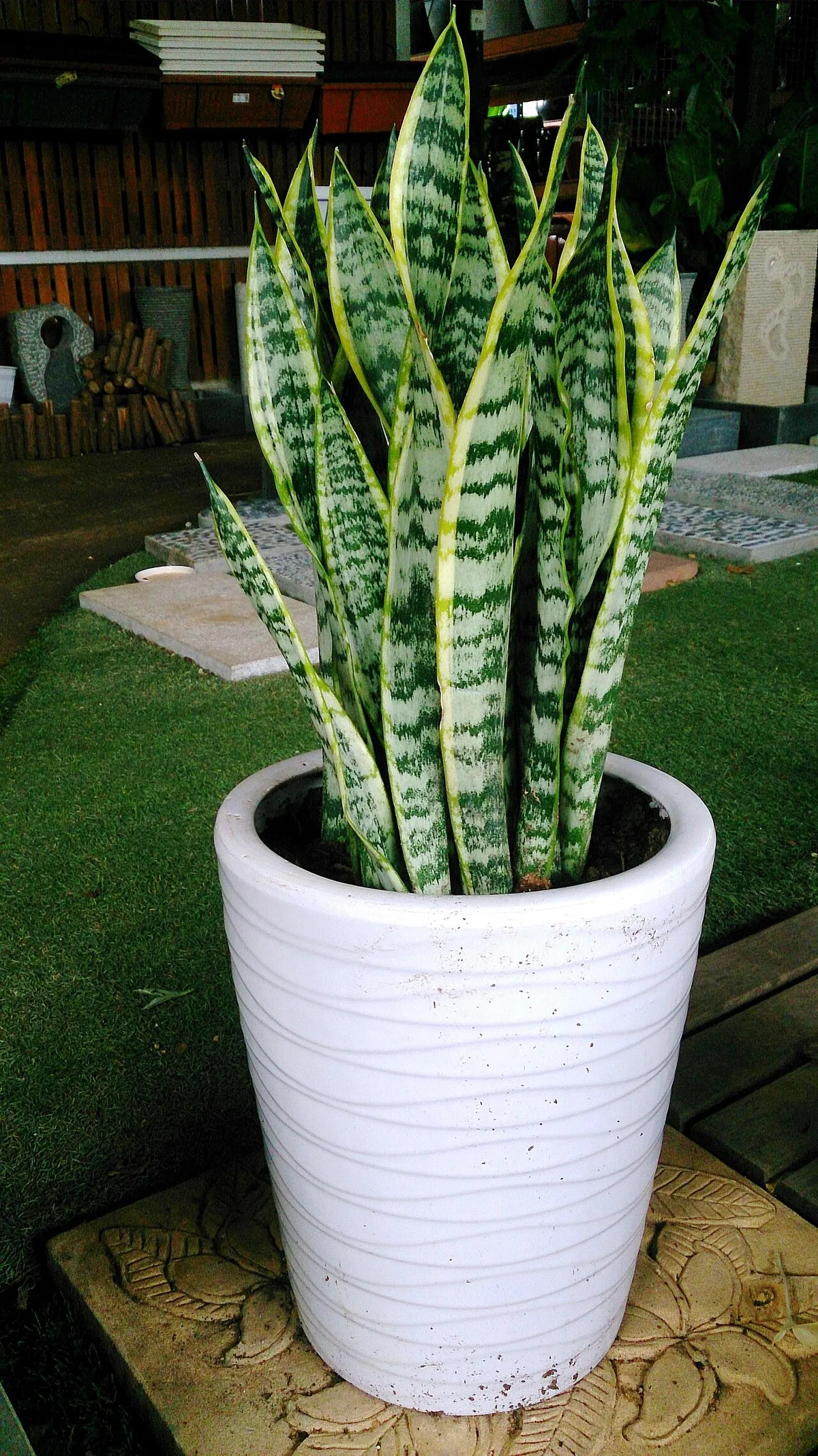
Image source: Wikimedia Commons / Hrco (CC BY-SA)
Soil and Potting: Setting Yourself Up for Success
Your soil mix should drain rapidly. Steer clear of "moisture-control" blends, which can retain too much water. A good mix resembles a kitchen sink that empties quickly.
| Mix Component | Role | Ratio |
|---|---|---|
| All-purpose potting mix | Base and nutrients | 2 parts |
| Perlite | Aeration and drainage | 1 part |
| Coarse sand or orchid bark | Grit and texture | 1 part |
Terracotta pots are excellent for snake plants. They're porous, allowing the soil to dry out faster. Plastic pots work too, but you'll need to water less often.
Just make sure whatever you choose has at least one drainage hole at the bottom.
When the Leaves Turn Yellow (Or Mushy): A Quick Troubleshooting Triage
You've checked the soil. You've adjusted your schedule. But something still looks off.
Don't panic. Most snake plant problems are diagnosed by understanding the symptoms.
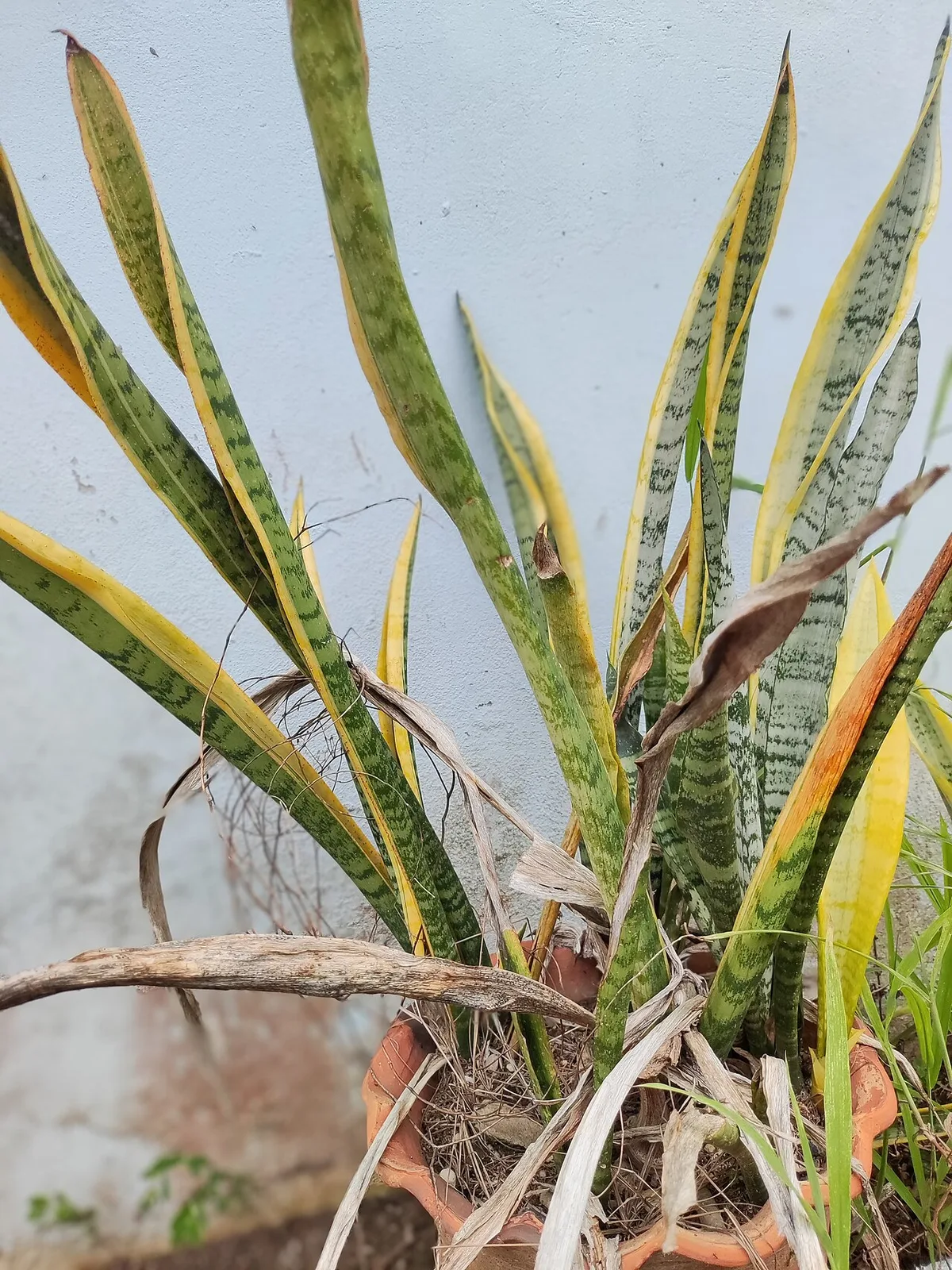
The most common issue is leaf discoloration. Yellow leaves almost always point to overwatering. But it's important to distinguish between a bit of yellowing at the base and total leaf failure.
Overwatering Symptoms vs. Underwatering Symptoms
The fix for your plant depends on which problem you have. Here's a quick table to help you decide.
| Indicator | Overwatering | Underwatering |
|---|---|---|
| Leaf color | Yellow, sometimes pale | Brown, crispy edges |
| Leaf texture | Soft, mushy, wrinkled | Thin, dry, curled |
| Soil smell | Musty or rotten | Earthy, dry |
| Base of plant | Mushy, brown, or black | Firm, healthy |
If the soil is wet and the leaves are mushy, you're in the danger zone. If the leaves are wrinkled and the soil is bone dry and pulling away from the pot, your plant is thirsty. Give it a deep soak.
Root Rot Recovery: Can You Save It?
If you catch it early, yes. Pull the plant out of its pot. Gently shake off the soil and inspect the roots.
Healthy roots should be firm and light-colored. Rotten roots will be brown, black, and slimy.
Using sterile scissors, cut away all affected roots and any mushy leaves. Repot the healthy parts in fresh, dry soil. Do not water it for at least a week.
This allows the cuts to callous over and reduces the risk of further infection.
Pests and Other Unwanted Guests
Snake plants have tough, waxy leaves, but they're not immune to pests. Mealybugs and spider mites can find a home in the crevices. If you notice fine webbing or cottony masses, treat the plant with a gentle insecticidal soap.
Repotting, Dividing, and Propagating: The Only Advanced Skills You'll Ever Need
This is where the fun begins. Snake plants are incredibly easy to multiply. There's no need for expensive equipment or complicated cloning gels.
A sharp knife and some fresh soil are all you need.
When to Repot (And When to Leave It Alone)
These plants actually prefer to be slightly root-bound. It mimics their natural crowding. Repotting too often can stress the plant.
Only move it when the roots are visibly pushing through the drainage holes or cracking the pot, which usually happens every 2 to 3 years.
If you do repot, choose a container only one size up. Moving into a pot that's too large will hold extra soil, which holds extra water. This greatly increases the risk of root rot.
How to Divide and Multiply Your Collection
Spring is the perfect time for propagation. Here's the process:
- Remove the plant from its pot and shake off the soil.
- Gently untangle the rhizomes (the thick horizontal roots).
- Locate clumps with separate leaf clusters and healthy roots.
- Using a clean knife, cut the rhizomes into sections.
- Plant each division in its own pot with fresh soil.
- Do not water for one week. This step is critical to prevent rot.
Leaf Cuttings in Water vs. Soil
You can also propagate from a single leaf. Use a sharp knife to cut a 4-inch segment. Let the cut end callous over for a day or two.
You can then plant it directly in soil, or suspend it in a jar of water.
Water propagation lets you watch the roots grow. However, the roots you get in water are different from soil roots. Transitioning them can sometimes cause shock.
Our research suggests planting directly into soil is smoother and simpler, despite taking longer to show visible roots.
Straight Answers to the Questions Every Snake Plant Owner Googles
Why Are My Snake Plant Leaves Turning Yellow?
The likely culprit is overwatering. Check the soil immediately. If it's wet, you have root rot starting.
Stop watering and let the pot dry out completely. If the yellowing leaves are mushy at the base, you'll need to repot and trim the rot. If the soil is dry and leaves are crispy instead, that's underwatering.
Adjust accordingly.
How Often Should I Water a Snake Plant?
There's no fixed calendar. The average is every 2 to 4 weeks in spring and summer, dropping to once a month or less in winter. Your home's humidity, pot material, and light all change this timing.
Always test the top two inches of soil first. If it's bone dry, water thoroughly.
Does a Snake Plant Need Direct Sunlight?
No, direct afternoon sun will scorch the leaves. They prefer bright, indirect light. They'll tolerate low light, but growth slows dramatically.
An east-facing window or a spot a few feet from a south-facing window is ideal. Morning sun is gentle enough if it's not too intense for long.
Can I Propagate a Snake Plant from a Leaf Cutting?
Yes, it's easy and reliable. Cut a 4-inch segment from a healthy leaf, let the cut end callous for a day or two, then plant it directly in moist, well-draining soil. Roots form in about 4 to 8 weeks.
Division is faster, but leaf cutting gives you many new plants from a single leaf.
Is a Snake Plant Toxic to Pets?
Yes, mildly. They contain saponins, which cause nausea, vomiting, and diarrhea if ingested by cats or dogs. The ASPCA classifies it as toxic.
If you have curious pets, place the plant somewhere they can't reach. Contact your vet immediately if you suspect your pet has eaten any part of the plant.
So, Is a Snake Plant Right for You? The Honest Verdict
After everything we've covered, here's the straight answer. If you're someone who forgets to water, works long hours, or travels often, a snake plant is basically perfect. It forgives neglect better than almost any other houseplant.
If you're a serial overwaterer who loves to fuss over plants, you need discipline. The urge to water weekly will harm it. Choose a terracotta pot and a gritty soil mix to counterbalance your instincts.
But for most people, the snake plant is the ideal entry point into houseplants. It offers architectural form, air-purifying qualities per research, and dramatic tolerance for poor conditions. It will thrive as long as you remember the golden rule.
When in doubt, wait another week. A thirsty snake plant recovers quickly. A drowning one doesn't.
Keep things simple, check the soil before watering, and you'll have a thriving plant for decades. You've got this.

Similar Posts